Operating Procedures For Feed Mill Crusher
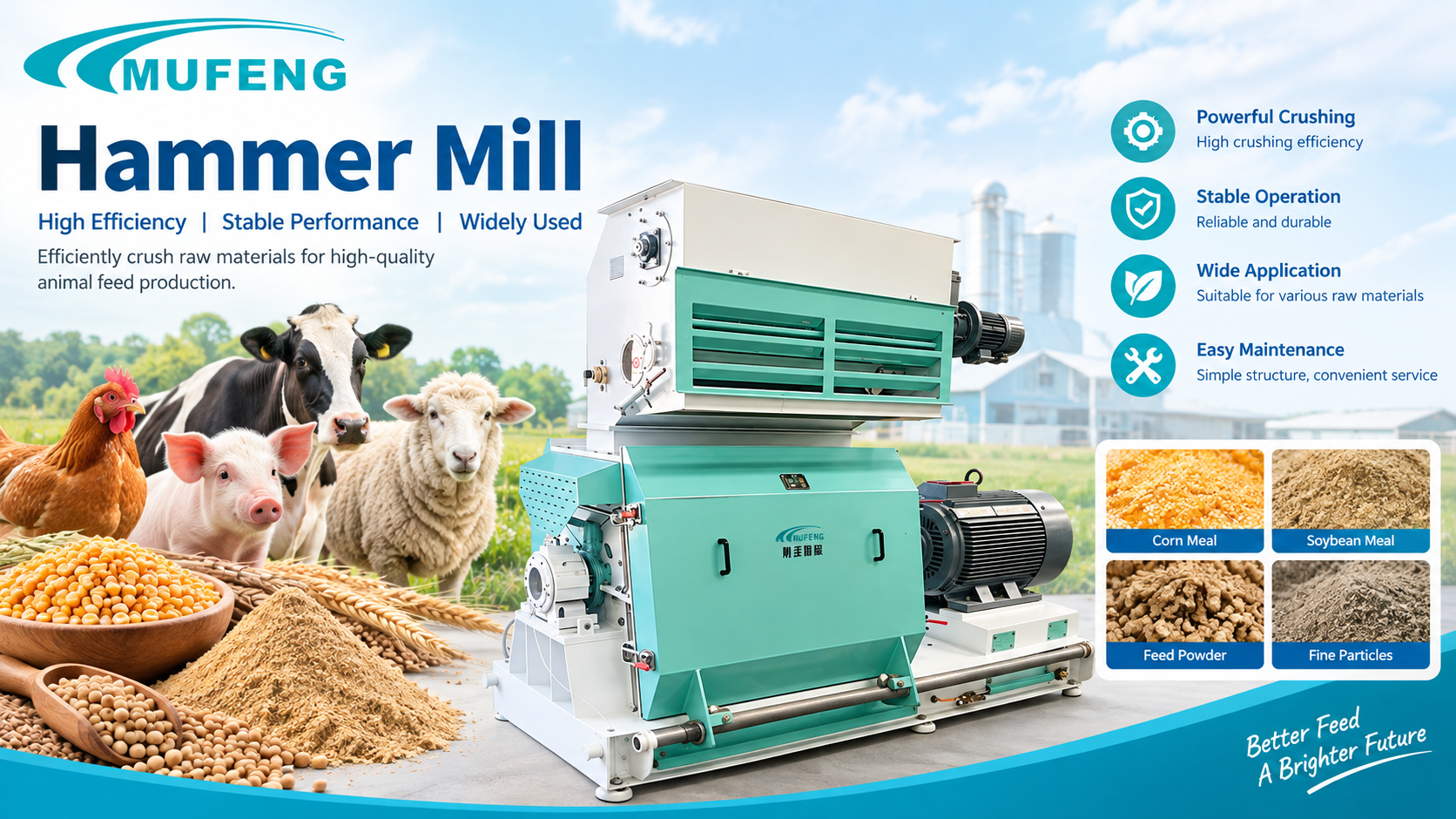
This document specifies the standardized operating procedures for pulverizers in feed production, covering pre-startup preparation (screen selection and installation check, inner chamber cleaning, safety interlock and component inspection, rotation direction confirmation), operating steps (no-load start-up after starting the dust collection system, feeding with current controlled at 80%-95% of the rated value, regular particle size inspection, ordered shutdown sequence), operational precautions (no-load start requirement, residual material clearing before restart, safety protection during inspection/maintenance, immediate shutdown for abnormal vibration/noise, use of qualified wear parts), post-shutdown procedures (equipment inspection, impurity cleaning, site cleaning, tool storage and shift handover), and routine maintenance (daily inspection/cleaning, bearing lubrication every six months, damaged/worn part replacement with dynamic balance check for rotor, full cleaning and screen removal for long-term idle), to standardize the operation and maintain safe, stable operation of the pulverizer.