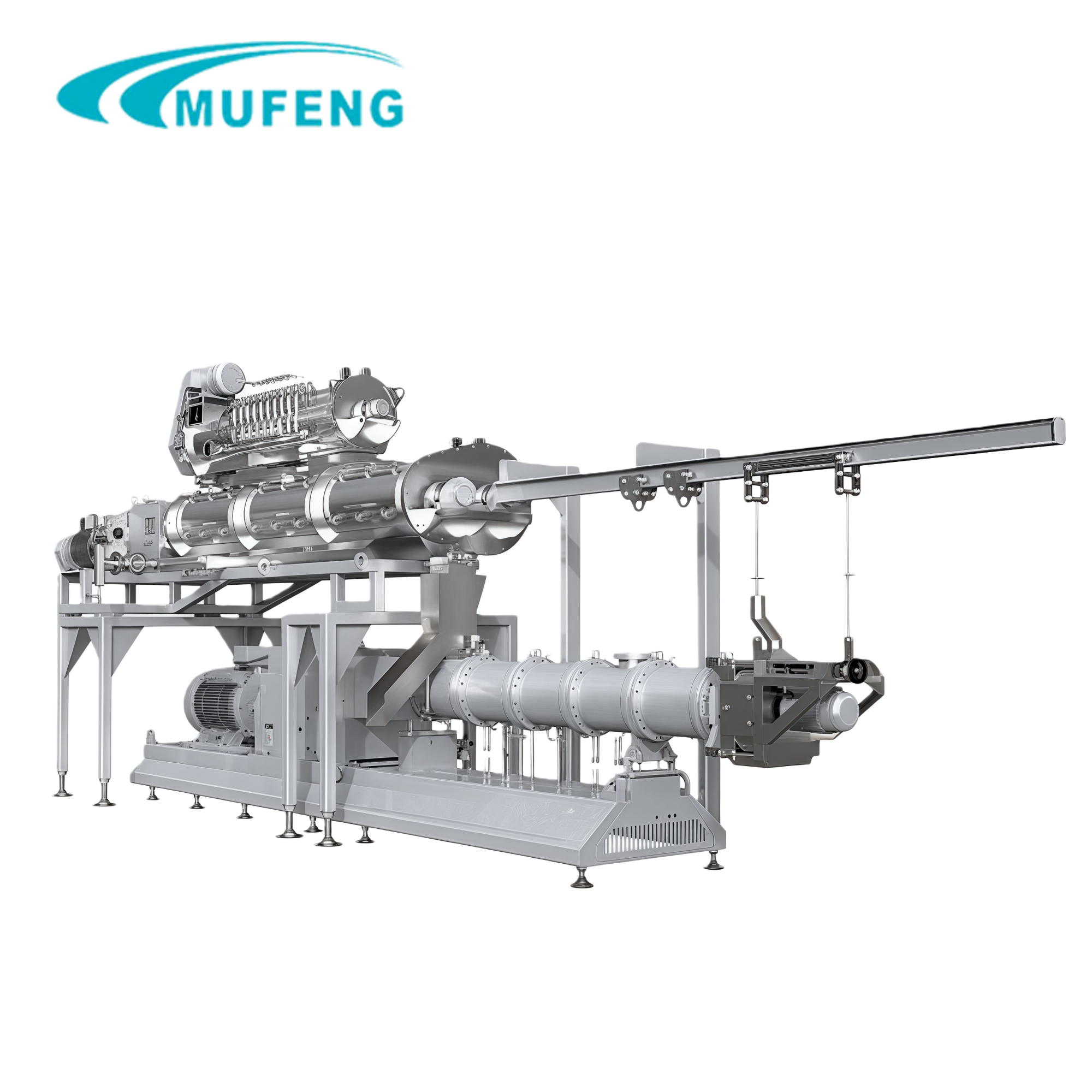
Extrusion Processing Technical Process: Common Operational Problems of Single-Screw Extruders During Operation
Causes of Material Backflow to Extruder Feed Inlet Several factors may cause material to backflow into the extruder feed inlet, all of which ultimately stem from a reduction in the extruder's conveying capacity. The specific factors are as follows:a) Feed rate exceeds the maximum throughput capacity of the extruder screwIf the feed rate exceeds the screw’s handling capacity, material will eventually backflow to the extruder feed inlet. For single-screw extruders, theoretically, increasing the screw speed can enhance this throughput. However, the extruder’s transmission components, such as the gearbox, limit a significant increase in screw speed. Before drastically changing the screw speed, the adjustable range should always be verified.b) Excessive steam injectionWhen the steam injection rate is 1-4% of the dry material handling rate, it has no impact on the screw’s conveying capacity. If the injection rate exceeds this range, the injected steam may block material passage through the steam injection zone, leading to backflow to the feed inlet. Reducing the steam injection volume resolves this issue.c) Excessive resistance during extrusion processingHigh resistance is often caused by structural resistance of the screw before the die head or excessively small die plate perforation area. A sudden increase in resistance can be observed through the pressure reading before the die head, which causes over-filling of the extruder barrel and thus backflow. Increasing the die plate opening area solves this problem.d) Wear of screw elements and barrel linerWorn screw elements severely reduce conveying capacity. For example, a bald leading edge of the screw flight increases leakage flow, which raises barrel filling and eventually causes backflow. A worn or partially worn barrel liner also lowers screw conveying capacity, possibly leading to feed section blockage.
2026-04-15
Mufeng Intelligent Successfully Delivers First Shipment of 6t/h Modern Fish Feed Production Line to Uzbekistan Client
Recently, the first shipment of the 6t/h modern fish feed production line, which was transacted between Mufeng Intelligent Equipment Co., Ltd. (hereinafter referred to as "Mufeng Intelligent") and a professional aquaculture cooperative in Tashkent Region, Uzbekistan, has been successfully delivered. After receiving the goods, the client feedbacked, "Mufeng’s equipment is neat in appearance, of excellent material, and its core components have fine craftsmanship, fully meeting our previous technical requirements", and officially extended an invitation to Mufeng Intelligent’s technical and engineering team to inspect its under-construction feed factory base.
2026-04-14
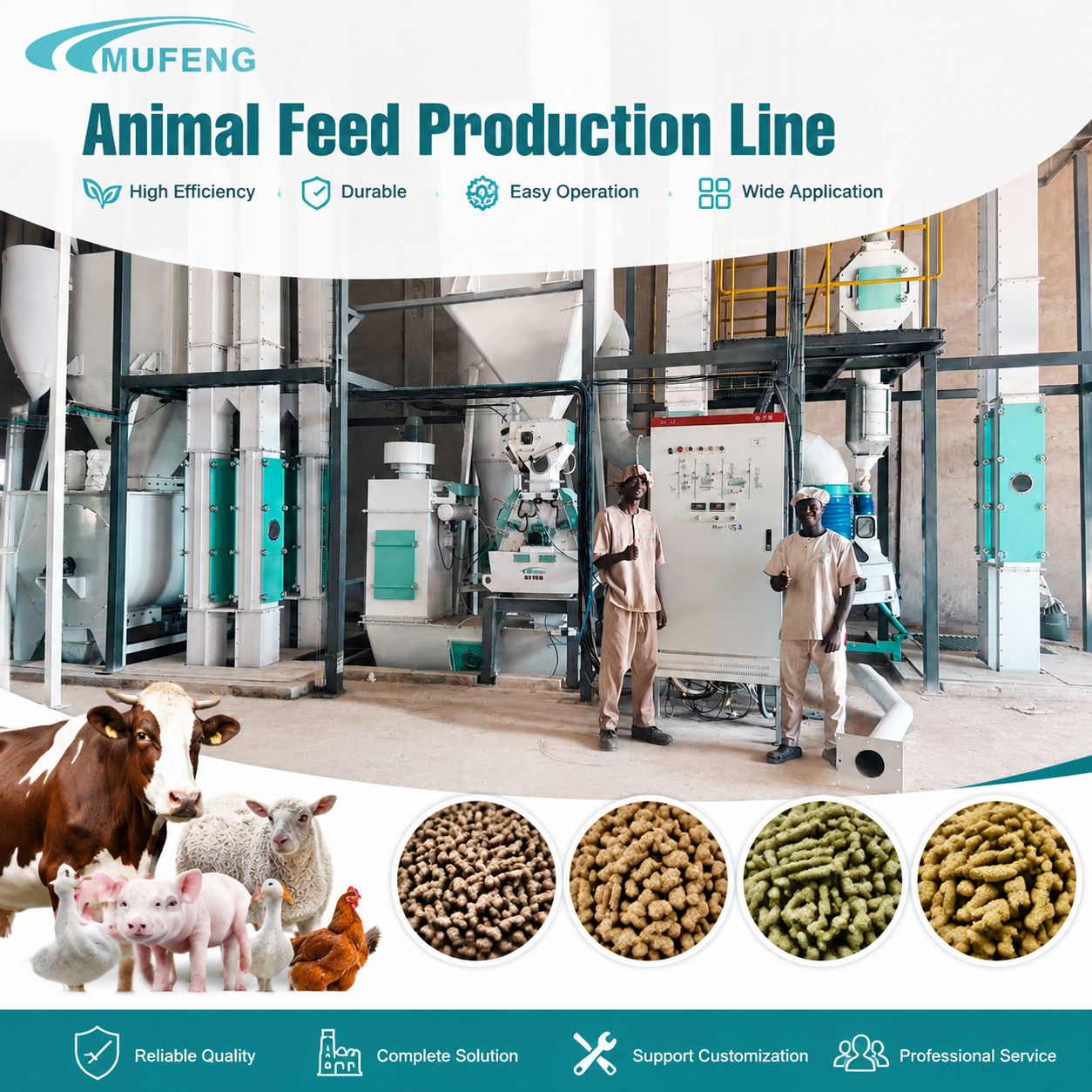
Mufeng Intelligent Equipment Bangladesh 10t/h Animal Feed Plant Successfully Launched, Customer Thumbs Up with Photos
Recently, the 10t/h intelligent animal feed processing project undertaken by Henan Mufeng Intelligent Equipment Co., Ltd. in Bangladesh was successfully put into operation. The person in charge of a well-known comprehensive breeding enterprise in Bangladesh immediately sent photos of the production workshop, automation control room, granulator operation, and finished pellets, highly affirming the engineering quality, equipment performance, and overall service of the project.
2026-04-13
High Quality Shrimp Feed Solution
Currently, the pain points of shrimp feed products are high powder content, poor water stability, and irregular particle lengths. Mufeng has newly launched an expansion shrimp feed process, which is essentially different from traditional conditioning. Among them, expansion conditioning increases mechanical energy input: under a certain pressure, the material undergoes strong extrusion and kneading, causing changes in the physical and chemical indicators of starch, protein, fat, etc., in the feed. According to the results feedback from application cases, using the expansion pretreatment process to produce shrimp feed has several advantages:
2026-04-12
Top Ten Cost Control Measures for Feed Factory Production
High-quality feed raw materials, scientific compound feed formulas & processing parameter standards, and rational processing equipment & technology are three essential factors ensuring compound feed quality. Among them, the first two are mainly determined by the Purchasing, Technology, and Quality Control departments; feed mills are primarily responsible for ensuring proper processing and manufacturing of raw materials.
2026-04-11
Key Points Of Processing Technology and Quality Control For Aquatic Puffed Feed
Extruding process technology for producing puffed feed has become a trend in the development of aquatic feed processing technology. The unique function of the extruder is to change the weight of the feed, thereby producing floating, slow settling, and settling puffed fish feed. Floating fish feed not only improves feed efficiency, but most importantly, allows farmers to see the feeding situation of fish, avoiding overfeeding and reducing feed waste. However, due to the relatively complex processing technology of aquatic puffed feed compared to other processing techniques, the processing quality of aquatic puffed feed is often unstable or some varieties cannot produce qualified products in the actual production process. There are many factors that affect the processing quality of aquatic puffed feed. Only by fully understanding the impact of extrusion process equipment and the physicochemical properties of feed raw materials on processing quality, and scientifically changing the extrusion and puffing operating conditions, can the processing quality of aquatic puffed feed be effectively controlled and the one-time pass rate of products be improved.
2026-04-10
Operating Procedures for Quality Assurance Device in Granulation Process
2026-04-09
Ten Reasons for Decline in Feed Hammer Mill Production Capacity and Corresponding Solutions
Analysis of Causes for Reduced Hammer Mill Capacity and Corresponding Solutions The main approach for us to analyze the causes of reduced hammer mill capacity is: 1)Inspect the materials to be crushed; 2)Check the screen apertures; 3)Inspect the installation of the screen mesh; 4)Check the position of the feed guide plate; 5)Check the pulse jetting of the dust collector’s solenoid valve and inspect the filter bags; 6)Check the configuration of the dust collector’s fan; 7)Check the hammer-screen gap and wear status; 8)Check the wear status of the screen pressure plate; 9)Check the hole arrangement and opening rate of the screen mesh; 10)Check the air supply damper of the supporting impeller feeder; 11)Check if there is air leakage in the settling chamber (especially in the pneumatic conveying system); 12)For the secondary crushing process, inspect the formula materials and oil content.
2026-04-08
A Brief Discussion On The Dust Generating Points In Feed Processing Workshops?
The dust problem in the feed processing process is the focus of the safety production and environmental protection work of the feed factory. And it is understood that when the feed factory produces and processes raw materials, different amounts of dust will be generated in different processes, such as material transportation, mixing, crushing, screening, packaging and other production links. Today, the editor will share with you the dust generation points in the feed processing workshop.
2026-04-07
Get A Free Quote

    *

    *

    Production Line

    Production Capacity

    *Messages

    x