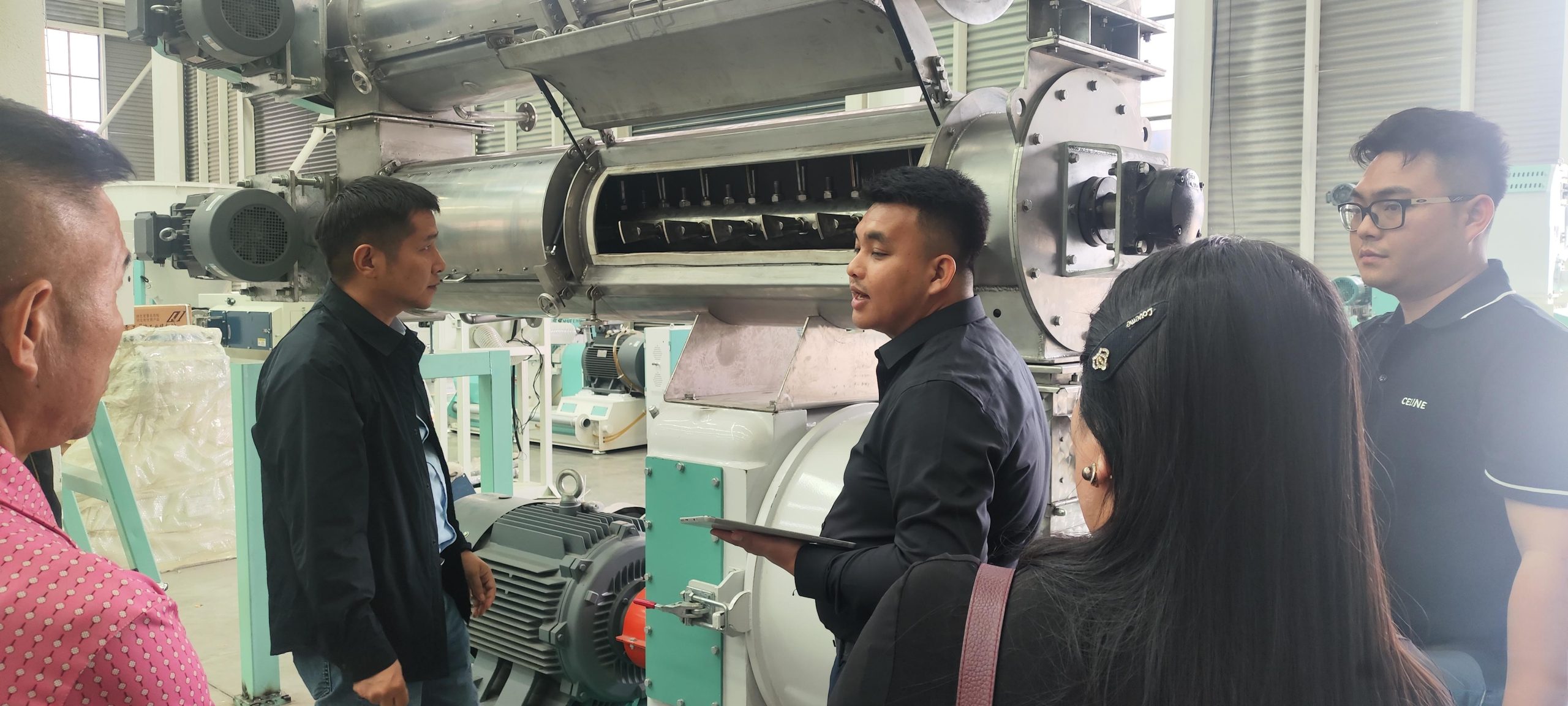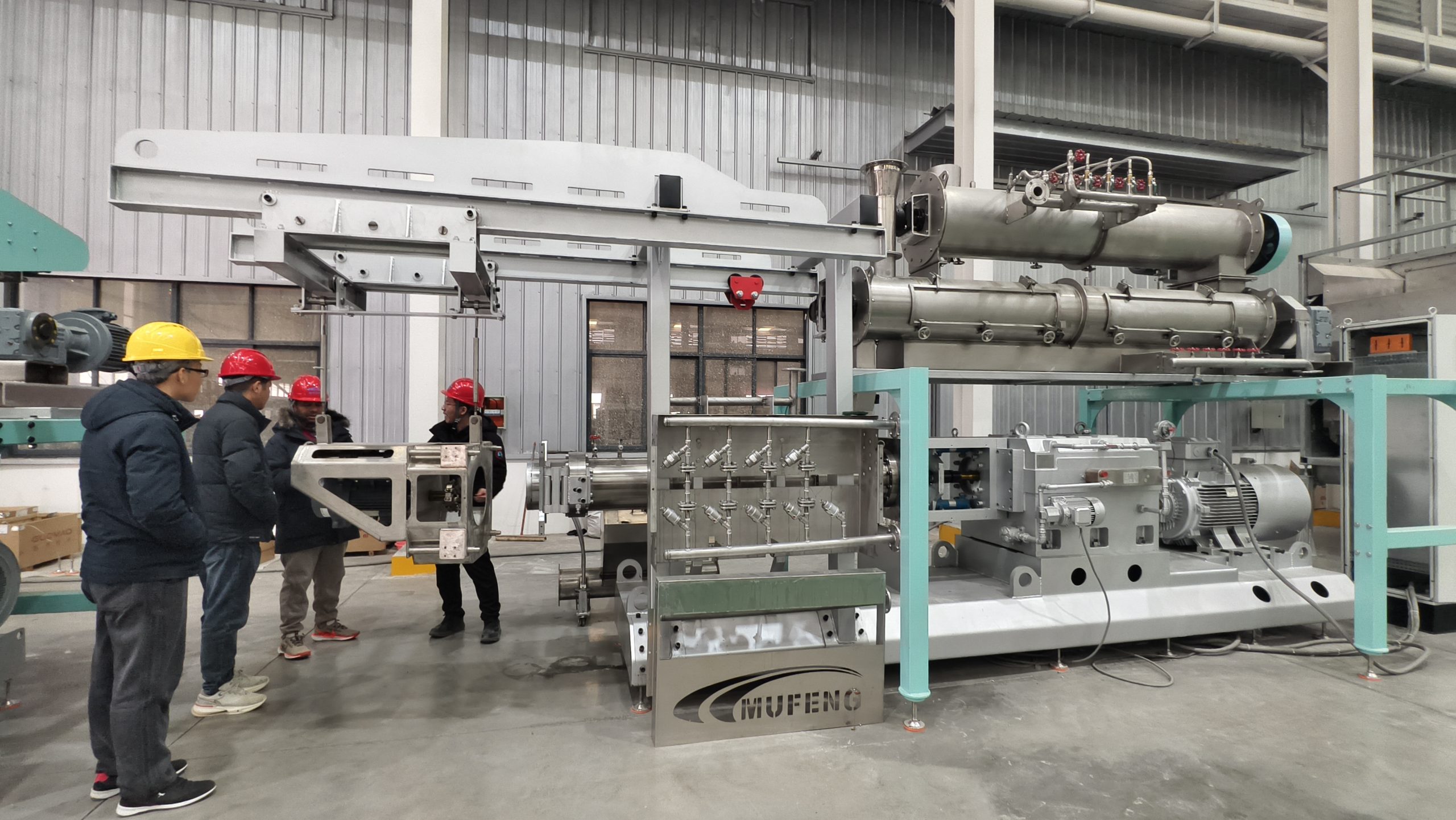

High-quality feed ingredients, scientifically formulated feed recipes (along with standardized processing parameters), and appropriate processing equipment and techniques are the three fundamental elements for ensuring the quality of compound feed. The first two elements are primarily determined through the collaboration of the procurement, technical, and quality control departments, while the feed mill itself focuses on ensuring the efficient processing and manufacturing of these ingredients. Raw material costs account for 70%–85% of total feed production costs; given the integration of the global economy, these prices are largely driven by supply and demand, introducing a significant degree of uncertainty. As feed mills increasingly prioritize and implement refined management practices, the ability to control costs during the production and processing stages has emerged as a key competitive factor.
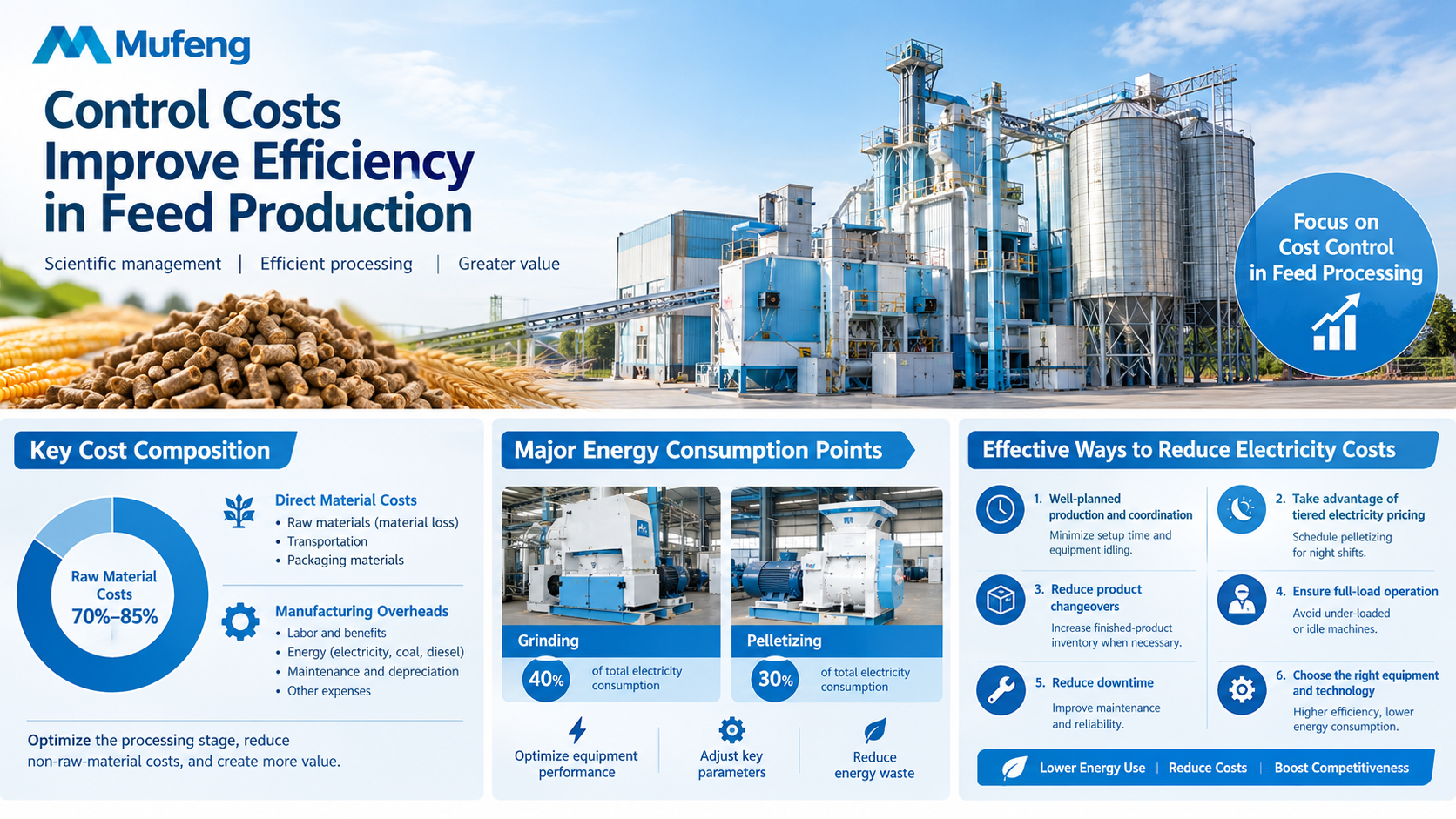 Feed production and processing costs encompass all expenses incurred by a feed mill in the manufacturing of products or the provision of services, including direct material costs and manufacturing overheads. Direct material costs consist of raw material expenditures (comprising both material consumption and material loss/shrinkage), transportation costs, and the costs of packaging materials such as woven bags, labels, and sewing thread. Manufacturing overheads refer to expenses incurred in organizing and managing production, including wages for workshop and piece-rate staff, employee benefits, labor protection costs, social insurance contributions, depreciation, rental fees, environmental protection expenditures, energy costs (electricity, coal, and diesel), maintenance expenses, and other miscellaneous manufacturing costs (such as office supplies, travel expenses, business hospitality, and daily operational items). Efforts to tap into potential savings and reduce consumption—excluding the cost of the raw materials themselves—focus on implementing scientific and rational cost control throughout the feed processing stage, with the ultimate goal of lowering processing costs and generating greater value for the enterprise.
Electricity costs represent the largest share of a feed mill’s energy expenses. Grinding is not only an essential step in feed processing but also one of the most energy-intensive operations; the grinding process typically accounts for approximately 40% of a feed mill’s total electricity consumption. Consequently, the efficiency of the grinding process has a direct impact on electricity costs. Grinding efficiency is significantly influenced by several factors, including the types of raw materials used, the target particle size, the performance of the grinding equipment, the adjustment of the hammer-to-screen clearance (for instance, when using a 2.0mm screen, the clearance should be set to 10–13mm; this clearance must be adjusted based on the screen aperture size), the wear level of the hammers, whether the grinder is operating at full capacity, and the effectiveness of the cyclone and pulse-jet dust collection systems. In a feed mill, the pellet mill accounts for approximately 30% of the total electricity consumption. Three key operational parameters for a pellet mill are steam supply, feed rate, and the gap between the ring die and the rollers. The steam supply and feed rate are primarily determined by the moisture content and the formulation of the material being processed. Improper adjustment of these parameters can easily lead to blockages (clogging), which reduces production capacity and increases electricity consumption per ton of output. If the gap between the ring die and the rollers is too small, both components will experience accelerated wear; conversely, if the gap is too large, the material layer between the rollers and the die becomes too thick and unevenly distributed, preventing the material from being extruded and causing a blockage. Furthermore, a higher compression ratio in the ring die results in harder pellets but lower output and higher electricity costs. A lower open-area ratio (porosity) of the ring die increases the risk of blockages. Additionally, greater wear on the rollers leads to lower output and causes increased wear on the ring die itself.
Key methods for reducing electricity consumption in a feed mill include:
2.Coal Costs
Some feed mills use natural gas or oil as boiler fuel; however, the steam cost for oil- or gas-fired boilers is more than three times higher than that of coal-fired boilers. For facilities using coal-fired boilers, it is advisable to settle coal payments based on the volume of steam produced rather than the weight of the coal. Settling by weight makes it difficult to ensure coal quality and increases the risk of adulteration. When implementing a steam-based settlement system, management must carefully monitor the monthly steam volume—as steam flow meter readings can be manipulated—to prevent illicit collusion between boiler operators and coal suppliers. Theoretically, steam consumption should remain below 5% of the total volume of pelleted feed produced.
Feed mills should also conduct regular inspections to check for leaks in steam piping, ensure that steam-water separators are functioning correctly, and verify that burners are operating at maximum efficiency. Particular attention should be paid to the quality of coal. Poor-quality coal can prevent steam pressure from reaching the required 0.6–0.8 MPa (before pressure reduction), making it difficult to supply the dry saturated steam necessary for the pellet mill. This negatively impacts both pelletizing efficiency and pellet quality; furthermore, it results in insufficient moisture during the feed conditioning process, leading to greater raw material loss. Steam piping insulation should be inspected regularly to minimize heat loss and reduce coal consumption. Feed mills should also optimize production scheduling to avoid operational bottlenecks—for instance, situations where steam reaches the required pressure but the equipment is not yet ready, or conversely, where equipment is ready but the steam fails to meet the necessary pressure requirements. Both scenarios lead to wasted steam and reduced production efficiency. Ideally, pellet production should be continuous to avoid the waste that occurs whenever a pellet mill is started up (due to the need to vent steam and drain condensate).
Feed mills utilize various wear parts directly in the production process, including ring dies, rollers, hammer mill beaters, screens, hoppers, belts, bearings, motors, bag-sewing machine components, gears, and sprockets. Plant managers should analyze monthly maintenance expenditures and strengthen the end-to-end management of spare parts procurement. Key focus areas include: 1) Establishing optimal inventory levels to avoid tying up excessive capital; 2) Maintaining accurate records of parts requisition and consumption; 3) Defining standard ranges for normal consumption; and 4) Periodically evaluating the quality of parts supplied by vendors. For example, while stainless steel ring dies are significantly more expensive than alloy steel versions—even when the compression ratio and aperture size are identical—they offer superior quality assurance, a longer service life, and better wear resistance, ultimately resulting in a lower total cost of ownership. It should also be noted that even among stainless steel ring dies, quality can vary considerably between different manufacturers. Based on a cost of 6,500 yuan per stainless steel ring die for a 420-model pellet mill, if each die produces 16,000 tons, the die cost amounts to 0.41 yuan per ton; if each die produces only 8,000 tons, the cost rises to 0.81 yuan per ton. Furthermore, it should be noted that frequent die changes significantly negatively impact both the service life of the dies and overall production output.
High maintenance costs are typically driven by several factors: first, a lack of focus on restorative maintenance for equipment and tools, leading to unnecessary new purchases; second, poor maintenance proficiency, which results in repeated repairs—particularly frequent medium-to-major overhauls—and higher cumulative costs; third, excessive loss of maintenance parts, whether due to poor procurement quality (e.g., substandard items being passed off as quality parts), or loss, theft, or damage; fourth, a lack of oversight in the procurement of spare parts at feed mills, driving up purchasing expenses; fifth, high costs for auxiliary maintenance materials (such as steel, welding rods, oxygen, acetylene, grinding wheels, and cutting blades); and sixth, insufficient preventive maintenance, which leads to total equipment failure and, consequently, much higher repair costs. Equipment management should prioritize prevention over repair. Robust daily maintenance can significantly reduce failure rates and ensure smooth, uninterrupted production.
With the ongoing development of the feed industry, the pace of upgrading feed processing equipment in my country has accelerated in recent years, with an increasing focus on specialization. Manufacturers have introduced energy-efficient, high-performance, and specialized new processing equipment to the market. These advancements play a clear role in boosting production efficiency, lowering costs, ensuring consistent product quality, and increasing the value-added potential of the final products. Feed mills should proactively adopt equipment that reduces energy consumption and operational costs. In particular, for production lines or individual machines that have been in service for many years—characterized by high energy consumption, low efficiency, and poor safety standards—mills should intensify technical upgrades to lower the overall costs of the production process.
When upgrading equipment, priority should be given to implementing full automation wherever possible. For example, when comparing a production line with a capacity of 5 tons per hour—which relies on manual feeding, automated batching, and manual stacking of finished products—to a 40-ton-per-hour line featuring automated feeding, automated batching, and mechanized stacking, it becomes clear that the latter requires fewer workers while offering a significantly higher production capacity. When producing the same volume of feed, the labor costs for the latter are substantially lower. High labor costs often stem from limitations in the production process; a low degree of automation and mechanization necessitates a larger workforce, leads to higher physical strain on workers, increases expenses related to loading and unloading, and results in lower per-capita productivity. Therefore, implementing full automation throughout the entire process—from the entry of raw materials into the facility to the final stacking of finished products—minimizes the need for manual intervention. This not only reduces labor costs but also saves on time, space, and safety-related production costs. More importantly, provided the equipment is functioning correctly, both production volume and product quality remain consistent. In contrast, manual operations are subject to variables such as individual capability and worker motivation, which can lead to fluctuations in output and quality. Where conditions permit, facilities should explore and promote the use of automated bulk raw material intake and bulk finished product transport, which can eliminate labor costs associated with loading, unloading, and packaging, as well as the costs of packaging materials.
Raw materials typically account for 70–85% of a feed mill’s total production costs. The ability to keep raw material losses within a reasonable range serves as a key indicator of a feed mill’s management proficiency. Feed mills must strictly enforce weighing and inventory-taking procedures for both raw materials and finished products, enabling the timely identification and analysis of the causes behind any abnormal losses on a monthly (or bi-monthly) basis. Losses of raw materials during the feed processing stage can be attributed to several factors: dust loss (occurring during unloading, grinding, and cooling, or due to poor sealing in equipment and conveying pipelines, leading to material leakage or spillage); moisture loss (during unloading, storage, grinding, and cooling); measurement errors (involving raw material weighing, batching scales, packaging scales, etc.); and other losses, such as spoilage of raw materials or finished products, high levels of impurities in raw materials, failure to promptly clean out material buildup (residue), damaged packaging, rodent infestations, or theft.
Feed mills should place significant emphasis on addressing dust-related losses. For instance, in areas where corn or soybean meal is unloaded, facilities that are currently enclosed on only two sides and the top could be upgraded to be enclosed on three sides and the top—leaving only one side open for vehicle access. This modification significantly reduces airflow, allowing dust from the soybean meal or corn to settle naturally rather than being carried away by the wind. Where feasible, feed mills should consider installing automatic hydraulic unloading platforms to minimize dust loss during the unloading of bulk raw materials.
For many feed mills, moisture loss accounts for more than 50% of total raw material loss during processing. It is crucial to closely monitor the moisture content of finished feed; maintaining an appropriate moisture level is a key quality indicator. Excessive moisture can cause the feed to become moldy, while insufficient moisture leads to greater weight loss for the mill. Furthermore, moisture levels that are either too high or too low can negatively affect the palatability of the finished product. Ideally, the temperature of the finished feed should be no more than 5°C above the ambient temperature, and its moisture content should be kept below 13%. Moisture loss primarily occurs during storage, grinding, and cooling. During storage, mills should minimize raw material inventory in silos during the summer to prevent significant moisture evaporation caused by high temperatures. During the grinding process, moisture loss can be controlled by avoiding over-grinding, lowering the temperature within the grinding chamber, regulating the air pressure and suction volume of pulse-jet dust collectors, and improving overall grinding efficiency. For instance, after replacing its grinding equipment, a feed mill saw a 25% increase in grinding efficiency. Assuming a standard moisture loss of 0.5% during the grinding process, the 25% boost in output results in a conservative reduction of moisture loss by 0.13%. For a feed mill producing 10,000 tons of finished feed per month (with 80% of the raw materials requiring grinding), this translates to a reduction in loss of 10.4 tons (10,000 tons × 0.13% × 80%). At a value of 3,000 yuan per ton of finished feed, this represents a cost saving of 31,200 yuan. In the cooling stage, parameters such as airflow volume, duration, fan speed, and material level settings in the cooling tower should be adjusted according to the season. Typically, the air velocity in the cooling ducts should be maintained between 15 and 20 m/s. Furthermore, adjusting the material level sensor in the cooling tower is a straightforward method for controlling the moisture content of the finished feed; this requires regular monitoring of laboratory moisture test results to ensure timely adjustments. Another effective way to reduce raw material loss is to implement online moisture monitoring and controlled moisture addition throughout the production process—specifically during grinding, mixing, conditioning, and at the finished-feed stage. Provided that safety standards are met, moisture can be added during the mixing or conditioning phases to offset moisture loss.
Evaluating and balancing the relationship between raw material costs and production/manufacturing costs is a key indicator of the quality of feed formulation technology. For example, certain sticky, high-sugar raw materials may be inexpensive, but they often have poor processing characteristics. Their high sugar content can cause them to adhere to storage bins and equipment, which not only impairs mixing efficiency but also increases the load on conveying equipment over time. This can lead to issues such as slower discharge from the mixer’s bottom auger and reduced overall production efficiency. In severe cases, it may even cause the belts of bucket elevators to break. Furthermore, incorporating multiple liquid ingredients into a single formula extends mixing times and reduces the number of batches that can be processed, thereby increasing production costs. The more complex a formula is, the longer the batching cycle becomes—which lowers production efficiency and, consequently, raises production costs. Therefore, feed mills should maintain timely communication with formulators regarding the processing characteristics and associated costs of various raw materials. When developing formulas, formulators must consider not only the cost of the raw materials but also their processing performance.
The competence of a feed mill’s workforce directly determines the costs and quality of the processing operations. To this end, the mill should prioritize training for personnel in key technical roles, encourage staff to pursue professional skill certifications, and promote participation in various training and educational programs. Additionally, it is essential to foster a strong culture of safety awareness to minimize the occurrence of accidents. Employees in critical positions—such as central control operators, maintenance technicians, electricians, pellet mill operators, and boiler operators—have a direct impact on equipment efficiency and processing costs; therefore, compensation structures should be appropriately weighted to favor these key technical roles. Furthermore, the mill should cultivate employee loyalty and support career development planning to stimulate motivation, initiative, and creativity. Implementing a well-structured incentive system—one that rewards staff based on their contributions to managing and reducing production costs—is also highly recommended.
Currently, cost control in feed processing encompasses a wide range of areas, including production technology, equipment, electrical and mechanical control, animal nutrition, operational management, and on-site logistics. A feed mill manager must possess not only strong leadership and management skills but also comprehensive professional expertise. Such a background is essential for effectively overseeing on-site production, equipment maintenance, and quality control, enabling the manager to coordinate operations efficiently and maintain precise control over the production process—ultimately ensuring effective cost management. Consequently, feed mill managers should be developed into professional production managers.
A common issue in many feed mills is a state of disorder, uncleanliness, and poor maintenance. In warehouses, raw materials are often stacked haphazardly, mixed together, or left unlabeled; materials are scattered across the floor, leaks and spills are rampant, and rodent infestations are severe. Within the production workshops, trash accumulates, raw materials are left lying around, packaging and labels are discarded carelessly, and reclaimed materials are strewn about without any identification. Floors, equipment, doors, windows, and ceilings are frequently covered in dust and cobwebs. Consequently, feed mills must prioritize scientific, refined management of their daily production-floor operations. Only by employing scientific on-site management methods—and gaining a clear, accurate understanding of actual conditions—can a feed mill implement targeted, refined management strategies to effectively reduce costs. A feed mill’s on-site management system encompasses several components: quality control, energy conservation, environmental control, equipment management, logistics, process flow control, and the standardization of production operations. Common management methodologies include 6S, Lean Production, Quality Cost Management (QCM), Total Productive Maintenance (TPM), and standards such as ISO 14000 and ISO 18000. These approaches can be integrated to ensure that production processes become increasingly standardized, regulated, and institutionalized. For every identified cost-control point, specific implementation plans should be developed. By utilizing the PDCA (Plan-Do-Check-Act) and SCDA (Standardize-Do-Check-Act) cycles, the facility can achieve incremental improvements and continuously lower processing costs.
If a feed mill lacks a strong commitment to safety management, the production environment will inevitably harbor hazards, leading to frequent accidents and high safety-related costs. Therefore, feed mills must proactively implement preventive measures—covering fire safety, dust explosion prevention, equipment protection, and the safeguarding of personnel—to mitigate risks and avoid safety-related incidents. Conclusion
Cost control in the feed processing industry is a systematic undertaking that requires the participation of the entire workforce; it cannot be achieved by any single individual or team alone. A comprehensive cost control system must be established, encompassing an organizational structure for cost control, management policies, performance metrics (such as material loss, electricity consumption, and maintenance costs during production), defined objectives, and a robust, science-based incentive system for cost-related performance. Within this framework, cost control initiatives should be carried out on an ongoing basis. This includes adopting effective energy-saving measures to reduce consumption; implementing preventive equipment maintenance and precision repairs to maximize the reuse and reclamation of parts; optimizing production scheduling to boost operational efficiency; and integrating process, cost, quality, and nutritional considerations to develop scientifically sound and economical processing technologies—all of which ensure that production costs remain under control. The core of these efforts lies in data collection, statistical analysis, and performance evaluation. The ultimate goals are to enhance production efficiency, lower the unit cost of feed, and ensure or improve product quality. Through rigorous assessment and analysis, specific measures can be developed for each cost-control point in the processing workflow; these are then implemented, monitored, and evaluated to drive continuous improvement.