
The Belt and Road Training Class Visited the Mufeng 80T/H Fish Feed Production Plant Project – Dade Fisheries

DATE : Nov 19th, 2024
Read :500

Under the tide of the era of “One Belt, One Road”, trainees from different countries in the feed processing technology training class entered the turnkey project of Mufeng Intelligent Equipment Co., Ltd. – Dade Aquatic Products. As the largest fish feed production plant in Henan Province, Dade Aquatic Products has demonstrated its strong strength in the field of fish feed production with its excellent equipment advantages.

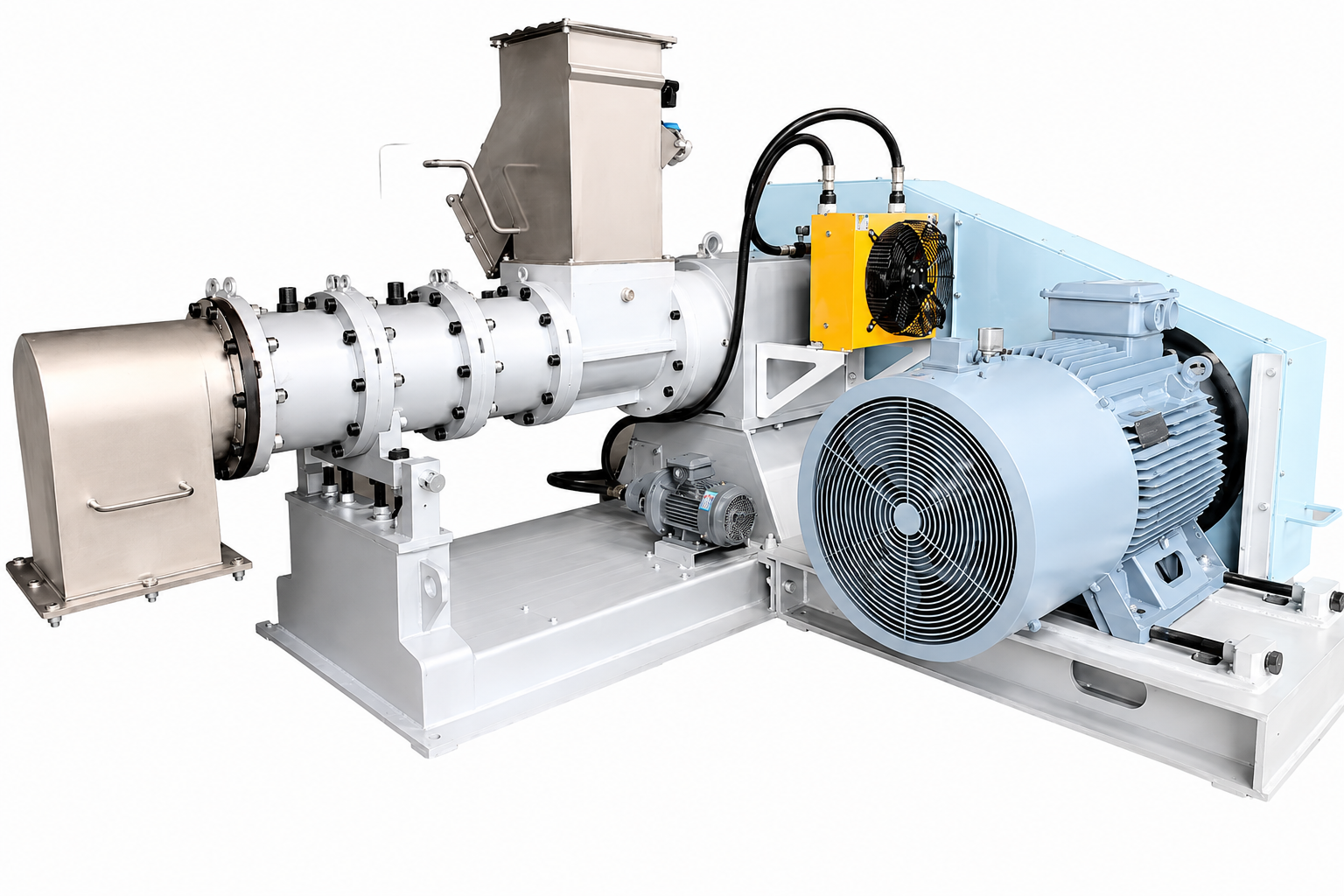
First of all, the efficient production equipment provided by Mufeng for Dade Aquatic Products is impressive. The high output of 80 tons of fish feed per hour not only meets the huge market demand, but also completes a large number of orders in a short time, bringing rich economic benefits to the company.

Secondly, advanced equipment ensures the stable quality of fish feed. The precise batching system, scientific mixing process and strict quality inspection equipment ensure that each batch of fish feed has accurate and uniform nutrients, providing sufficient guarantee for the healthy growth of fish.

Furthermore, the intelligent equipment is easy to operate. The automated control system monitors the production process in real time and adjusts parameters in time, which not only reduces labor costs and operating error rates, but also improves production efficiency.

Finally, reliable equipment has a long service life and low maintenance costs. High-quality materials and exquisite manufacturing technology make the equipment less prone to failure during long-term use, reducing the cost of repairing and replacing equipment, and laying a solid foundation for the sustainable development of the company.

The trainees of the training course have acquired a wealth of technical knowledge related to fish feed production here. They witnessed the modern fish feed production process with their own eyes and learned how to produce high-quality fish feed through scientific formulas and exquisite craftsmanship. This visit and study not only provided the trainees with valuable practical experience, but also laid the foundation for promoting agricultural cooperation and exchanges among the countries along the Belt and Road. I believe that in the future, Dade Aquatic Products will continue to play its advantages and make greater contributions to the development of the fish feed industry.


Share:
Related News
Vietnamese Clients Visit Henan Mufeng, Exploring New Opportunities for Biomass Pellet Production Line Cooperation
2026-06-30
Recently, Henan Mufeng Intelligent Equipment Co., Ltd. welcomed three client representatives from Vietnam for an in-depth exchange on the procurement and technical cooperation of biomass pellet production lines. The purpose of the visit was to conduct an on-site inspection of the company’s production capabilities, with plans to introduce a biomass pellet production line with a capacity of 1.5–2 tons per hour for local renewable energy projects.
Advantages and Applications of Mu Feng’s Specialised Aquafeed Retort in the Production of Shrimp and Crab Feed
2026-05-23
Pellet mills are still widely used in the production of shrimp and crab feed. Traditional feeds for white shrimp, Macrobrachium rosenbergii and freshwater prawns are still primarily produced using pelletisation processes. Meanwhile, in Central and East China, although extruded feeds for crayfish and crabs have seen significant development in recent years, pelletised aquatic feeds still hold a substantial market share. Furthermore, from the perspective of aquaculture farmers, it is easier to assess the quality of raw materials by inspecting the appearance of the pellets, which is why more farmers tend to opt for shrimp and crab feed produced using the pelletising process.
In Aquaculture: How Can You Tell Whether The Feed Has Good Digestibility And Utilization Efficiency?
2026-10-30
Aquaculture farmers should not judge feed quality solely by the labeled crude protein content, as this indicator cannot reflect the actual absorbable and usable protein for farmed animals. It introduces the essential distinction between feed digestibility and nutrient utilization efficiency, puts forward a complete 5-step practical evaluation system covering core indicator verification (prioritizing digestible protein, apparent protein digestibility, amino acid digestibility, energy digestibility and nitrogen retention rate rather than crude protein only), raw material and production process inspection, on-site feces and pond water quality observation, as well as final growth and production outcome validation, and emphasizes that the real performance of aquafeed should be comprehensively measured from digestible protein level, feces output, water quality deterioration rate, feed conversion ratio and nitrogen deposition status, rather than relying on superficial crude protein labels.
Get A Free Quote

    *

    *

    Production Line

    Production Capacity

    *Messages

    x