
1 Purpose: To establish operating procedures for the pellet mill and ensure standardized operation.
2 Scope: Applicable to the operation and safety protocols for the pellet mill.
3 Responsibility: The pellet mill operator (granulation technician).
4 Content:
4.1 Pre-startup Preparation
4.1.1 Steam Adjustment
4.1.1.1 Close the gate valve on the steam pipeline upstream of the conditioner; check and ensure that the steam trap valves for the conditioner and its jacket are closed.
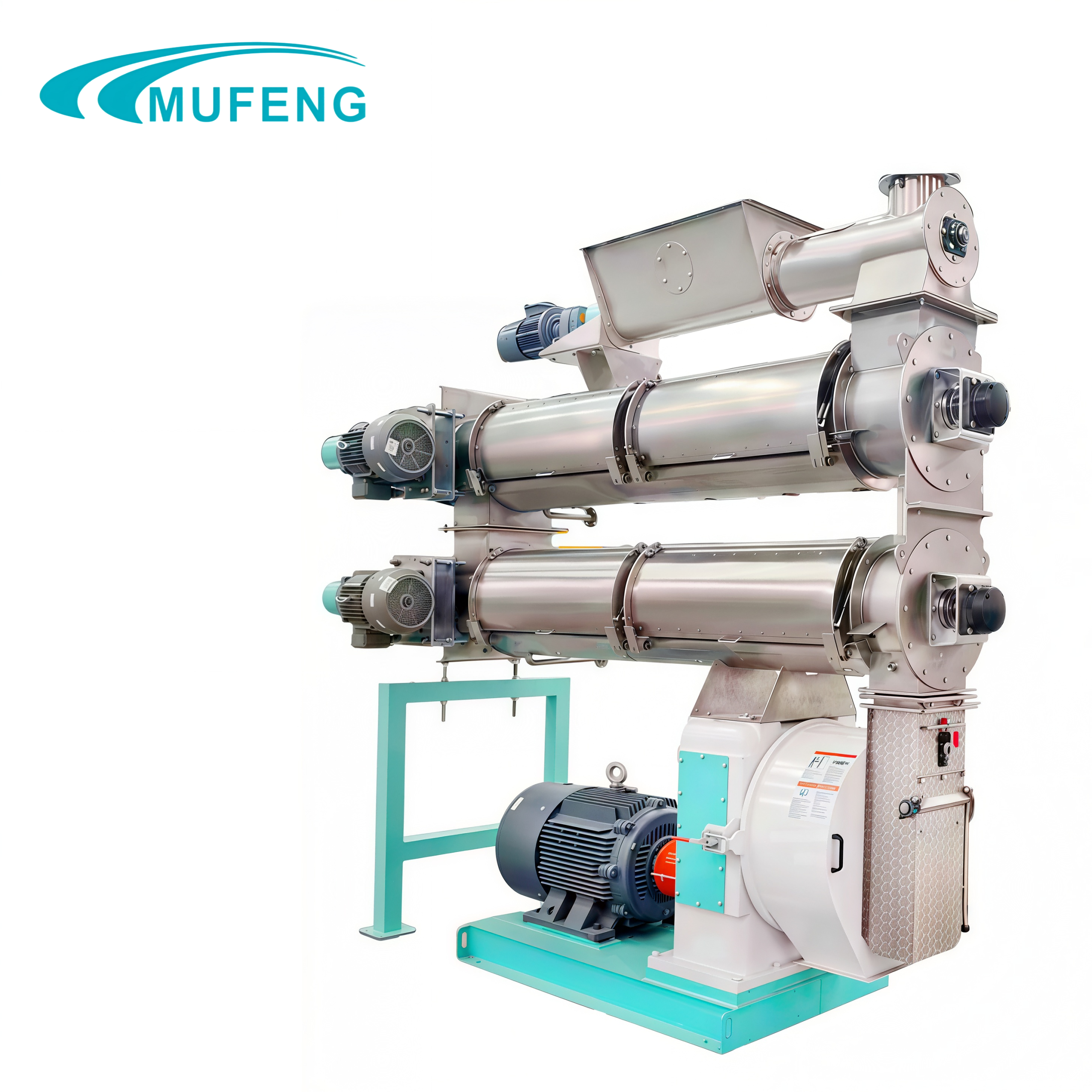 4.1.1.2 Close the steam inlet valves for the conditioner and its jacket.
4.1.3 Open the main steam inlet valve on the steam distribution manifold, then open the steam trap valve below the manifold. Allow condensate to drain for 2–3 minutes before closing the trap valve (duration may vary based on the moisture content of the steam).
4.1.1.4 Open the steam valve leading from the distribution manifold to the conditioner, then open the steam trap valve on the conditioner’s piping. Allow condensate to drain for approximately 1 minute, then close the trap valve (duration may vary based on the moisture content of the steam).
4.1.2 Inspect all fasteners on the pellet mill to ensure they are secure and reliable; pay particular attention to fasteners within the pelletizing chamber to ensure none are loose.
4.1.3 Install the appropriate ring die as required by the production schedule.
4.1.4 Check the wear level of the roller shells; replace them if they no longer meet operational requirements.
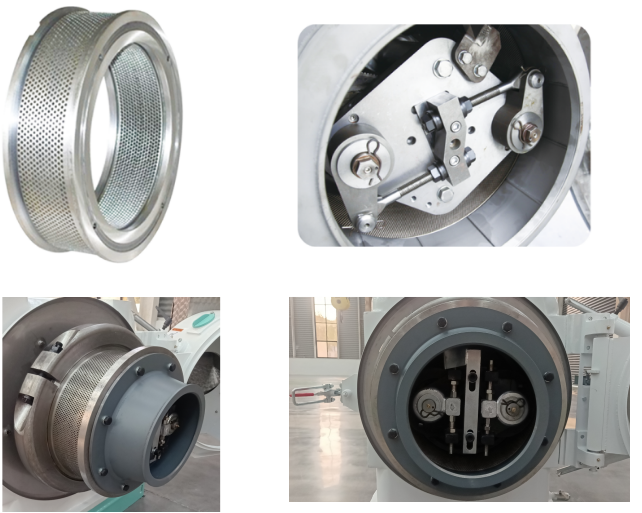 4.1.5 Verify that the gap between the die and the rollers is properly adjusted.
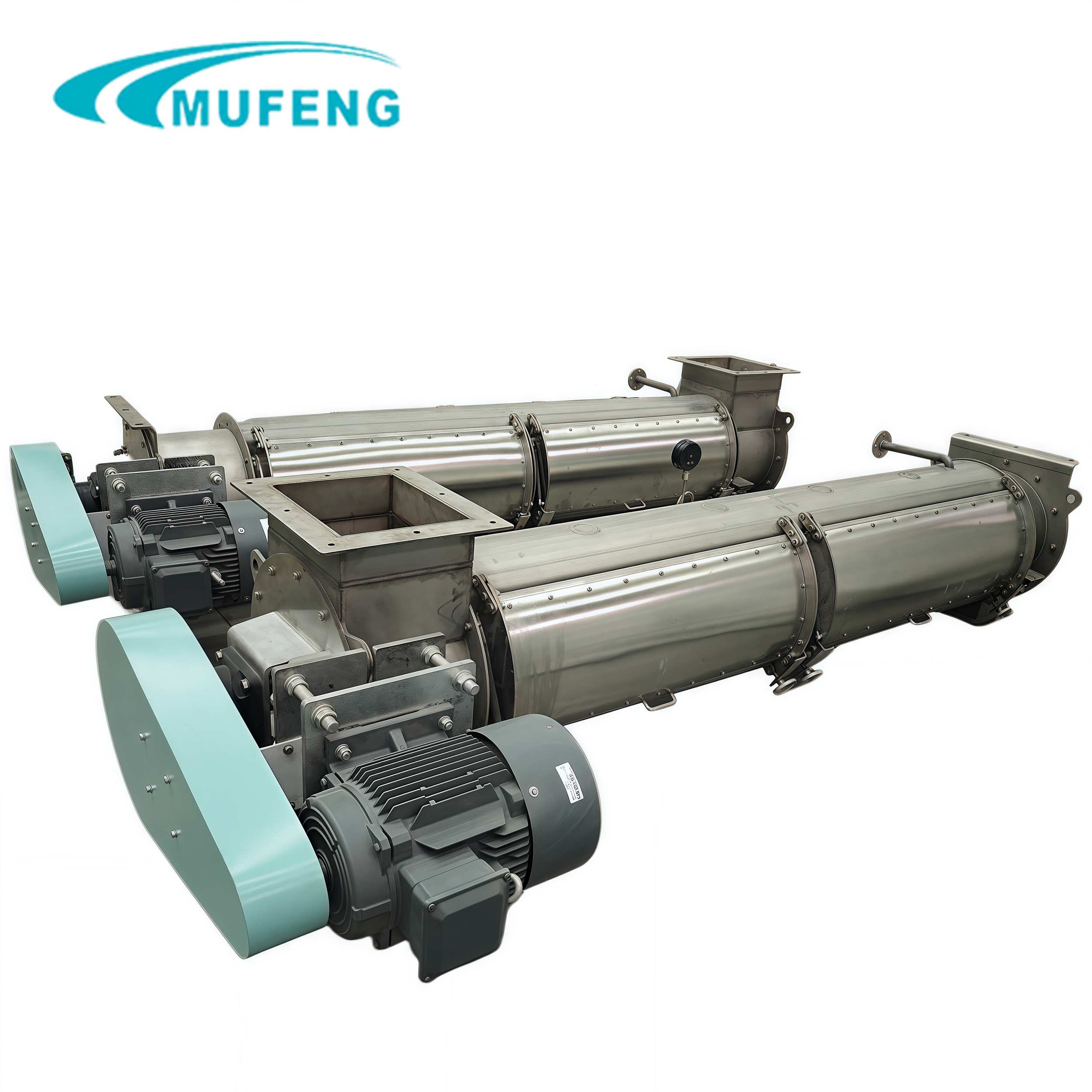
4.1.6 Inspect the pelletizing chamber, feed auger, and conditioner barrel for any foreign objects, such as hardened feed residue (“caked material”). Clean these areas thoroughly, then close the access covers for the pelletizing chamber and the conditioner.
4.1.7 Perform an initial adjustment of the cutter position to achieve the target pellet length for the finished product.
4.1.8 Apply lubricant according to the lubrication chart; ensure that the roller assemblies are lubricated prior to startup. 4.1.9 Check that the steam supply system is functioning properly; the pressure of the steam entering the conditioner should be determined based on the characteristics of the material to be pelletized.
4.2 Operating Procedures
4.2.1 Equipment Start-up
 4.2.1.1 Start the cooler fan suction system: activate the fan, adjust the air damper, and engage the airlock (rotary valve). Place a collection tray or position a three-way valve at the discharge outlet.
4.2.1.2 Open the pellet mill discharge door and start the main motor of the pellet mill.
4.2.1.3 Once the current of the pellet mill’s main motor has stabilized, start the conditioner (including the disintegrator/breaker), the retention vessel, and the conditioner feeder auger motor (following the “reverse-start, forward-run” protocol). Set the feeder speed to its minimum level.
4.2.2 Adjust the steam pressure and drain any condensate from the steam piping.
4.2.3 Open the discharge door and the steam inlet valve. Gradually increase the speeds of the feeder motor, the retention vessel, and the conditioner (disintegrator). Once the pellets being produced have a proper shape, close the discharge door and inspect the pellets on the collection tray to ensure their appearance meets process requirements.
4.2.4 Once the appearance of the pellets meets process requirements, adjust the steam valve and set the feeder motor speed to align with the steam input rate. Adjust the position of the cutter to ensure the pellet length meets process requirements, then clean and remove the collection tray.
4.2.5 Further adjust the feeder speed and the corresponding steam input rate to ensure the conditioned material reaches the appropriate temperature and moisture content.
 4.2.6 Shutdown
4.2.6.1 Close the discharge door, set the feeder auger speed to its minimum, and gradually close the steam inlet valve. 4.2.6.2 When the feed bin is observed to be empty through the inspection port, turn off the feeder motor. Once the material inside the conditioner has been fully discharged, turn off the power to the conditioner.
4.2.6.3 Introduce an appropriate amount of oily feed through the inspection port to push out the existing material from the ring die and ensure the holes of the ring die are completely filled with the oily feed.
4.2.6.4 Turn off the power to the main motor of the pellet mill.
4.2.6.5 Once the main unit of the pellet mill has come to a complete stop, open the access door, clear any accumulated material from the compression chamber, remove any metallic impurities from the magnet, and then close the door.
4.3 Operational Precautions
 4.3.1 The powdered feed entering the pellet mill must be free of foreign objects such as stones, iron debris, or twine.
4.3.2 When starting the machine, turn on the main motor first; when shutting it down, turn off the feeder motor first.
4.3.3 Before turning off the main motor, ensure that oily feed has been introduced—this is especially important when the machine is to be shut down for an extended period—to prevent the ring die from becoming clogged.
4.3.4 After the machine is shut down, promptly clear any accumulated material from the compression chamber.
4.3.5 Operate the equipment strictly in accordance with the operating procedures and precautions; do not exceed the rated load, and avoid incorrect operation that could lead to equipment failure.
4.3.6 It is strictly prohibited to open the compression chamber door while the pellet mill is in operation, as this could result in personal injury or fatalities.
4.3.7 Do not reach into the inspection port while the equipment is running to collect material or perform any other tasks; if material collection is necessary, use a specially designed, custom-made tool. 4.3.8 To ensure product quality and improve production efficiency, monitor the main motor current during operation. Adjust the feed rate and steam input based on current fluctuations to keep the main motor operating within its rated current range. Periodically open the inspection door on the feed chute to check the material conditioning status, ensuring the material reaches the appropriate temperature and moisture levels; also, continuously monitor the material discharge.
4.4 Post-Shutdown Procedures
4.4.1 Once the ring die has come to a complete stop, open the access door and remove any accumulated material from the pelletizing chamber.
 4.4.2 Remove any metallic impurities from the magnets.
4.4.3 Clean the work area and the pelletizing equipment; ensure all tools are returned to their designated storage locations.
4.4.4 Complete the pelletizing operation records and hand over duties to the next shift.
4.5 Maintenance and Servicing
4.5.1 Routine Maintenance and Servicing
4.5.1.1 Keep the exterior of the equipment clean and free from dust, powder accumulation, and oil stains.
4.5.1.2 Apply lubricant to all designated lubrication points in strict accordance with the lubrication chart. Specifically, apply high-temperature-resistant grease to the roller assembly via the main shaft end as specified.
4.5.1.3 Before each shift, check for any loose bolts, screws, or scrapers within the pelletizing chamber.
4.5.1.4 Before startup, check the gap between the die and the rollers; adjust as necessary to ensure the gaps are uniform across all rollers.
4.5.1.5 Regularly check for any oil, water, or air leaks and address them promptly.
4.5.1.6 Apply grease to the roller bearings every 4 hours of operation, and to the main shaft bearings every 8–10 hours (adjust frequency based on actual operating time and lubricant quality).
 4.5.1.7 Clean the feed auger and the conditioner once a week; if the equipment is to remain idle for a short period, it must still be cleaned before being put into standby. 4.5.2 Periodic Maintenance and Servicing
4.5.2.1 Check all fasteners and connectors weekly for any signs of loosening.
4.5.2.2 For the main transmission gearbox and the speed reducer, the oil must be changed after the first 500 hours of operation. Thereafter, the oil should be changed every six months of continuous operation. Use only the specified gear oil.
4.5.2.3 Bearings for the auger shaft, conditioner shaft, and motor should be removed, cleaned, and re-lubricated every six months.
4.5.2.4 Inspect the ring die drive key and the ring die backing ring (inner ring) weekly for wear, and replace them promptly if necessary.
4.5.2.5 An electrician should regularly check and verify the accuracy of the ammeters on the control panel; if any irregularities are detected, the instruments must be sent to a qualified metrological inspection agency for calibration.
(For reference only)