
MuFeng: Professional Intelligent Equipment

DATE : Nov 14th, 2023
Read :364

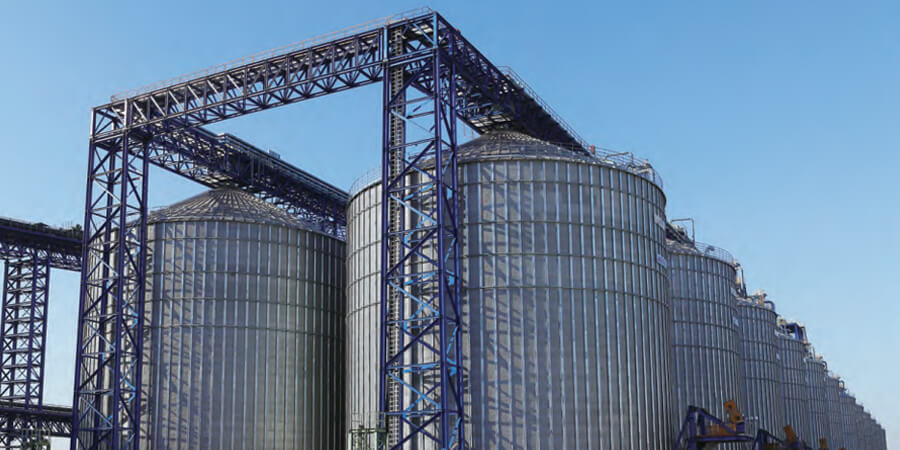
The green, safe and intelligent grain storage project sand table model adopts a tower layout factory building and covers a small area. It contains large silos and accompanying grain storage facilities. The storage system covers grain condition monitoring, mechanical ventilation, fumigation, pest control, etc. Automatic sealed discharge and conveying system, ventilation and dust removal, efficient cleaning. The air cushion belt conveyor is fully sealed and has low damage rate. The main panel is made of high-quality galvanized material, which has strong anti-corrosion ability and is specially developed for coastal and port areas. The model shows a continuous drying tower with high output, low consumption, energy saving and emission reduction. Intelligent operating systems include smart cards, multi-function detection, visualization platforms, etc. The application of digital intelligent technology comprehensively improves the operating efficiency of steel silos and bulk grain conveyors, and greatly helps grain storage and transportation achieve refined management and management. Excellent operation.
 

MuFeng: Professional Intelligent Equipment


Looking forward to the future, Mufeng will continue to focus on technological innovation, use intensive management and operations as the entry point to achieve digital intelligent empowerment, further strengthen digital intelligent manufacturing capabilities, continuously improve the level of digital intelligence in agriculture and animal husbandry, activate new development elements, and cultivate new industrial sectors. functions to promote the digital smart economy of agriculture and animal husbandry to develop deeper and wider areas, and achieve industrial transformation and development.
 

MuFeng: Professional Intelligent Equipment


Share:
Related News
Experience In Using Molasses as A Feed Additive
2026-03-28
This article provides a comprehensive overview of molasses application in feed production, covering storage, conveying, and five major addition technologies. Based on practical production experience, it analyzes the advantages, limitations, and suitable inclusion levels of each method, and emphasizes that improving molasses absorption is the key to achieving stable production and high pellet quality.
Extrusion Processing Technical Process: Common Operational Problems of Single-Screw Extruders During Operation
2026-04-15
Causes of Material Backflow to Extruder Feed Inlet Several factors may cause material to backflow into the extruder feed inlet, all of which ultimately stem from a reduction in the extruder's conveying capacity. The specific factors are as follows:a) Feed rate exceeds the maximum throughput capacity of the extruder screwIf the feed rate exceeds the screw’s handling capacity, material will eventually backflow to the extruder feed inlet. For single-screw extruders, theoretically, increasing the screw speed can enhance this throughput. However, the extruder’s transmission components, such as the gearbox, limit a significant increase in screw speed. Before drastically changing the screw speed, the adjustable range should always be verified.b) Excessive steam injectionWhen the steam injection rate is 1-4% of the dry material handling rate, it has no impact on the screw’s conveying capacity. If the injection rate exceeds this range, the injected steam may block material passage through the steam injection zone, leading to backflow to the feed inlet. Reducing the steam injection volume resolves this issue.c) Excessive resistance during extrusion processingHigh resistance is often caused by structural resistance of the screw before the die head or excessively small die plate perforation area. A sudden increase in resistance can be observed through the pressure reading before the die head, which causes over-filling of the extruder barrel and thus backflow. Increasing the die plate opening area solves this problem.d) Wear of screw elements and barrel linerWorn screw elements severely reduce conveying capacity. For example, a bald leading edge of the screw flight increases leakage flow, which raises barrel filling and eventually causes backflow. A worn or partially worn barrel liner also lowers screw conveying capacity, possibly leading to feed section blockage.
Fishmeal Replacement Analysis: Raw Material Selection & Formula Adjustment & Nutritional Balance
2026-04-30
In recent years’ persistently high fishmeal prices, coupled with raw material supply uncertainties, have plunged many feed enterprises and nutritionists into a dual dilemma of cost control and balanced feed formulation design. As the "golden raw material" in traditional animal feed, are there really no practical, cost-effective fishmeal replacement strategies that can be implemented successfully?
Get A Free Quote

    *

    *

    Production Line

    Production Capacity

    *Messages

    x