I. Feed Raw Materials
(I) Moisture Content of Raw Materials
In extrusion, the moisture content of raw materials is generally controlled between 15% and 27%. If the moisture content is too high, the shrinkage of the raw material will gradually increase, eventually leading to deformation; if the moisture content is too low, energy consumption and mechanical wear will continuously increase, and changes in the internal and external tissue structure of the product will be relatively obvious. The moisture content of the raw material should be adjusted based on factors such as the performance of the extruder, the diameter of the die holes, and the feed formula.
(II) Source and Content of Starch
The amount of starch in the feed, the structure of the starch, and the changes in starch during the extrusion process are closely related to product quality. To obtain good expanded products, it is sometimes necessary to add modified starch to improve product quality.
- Role of Starch in Extrusion
(1) Shaping: After the raw material is extruded through the extruder, the gelatinized starch molecules cross-link with each other to form a network-like spatial structure. This structure cools rapidly after extrusion and forms after flashing off a portion of the moisture, becoming the skeleton of the expanded feed structure and giving the product a certain shape. If the starch content is very low, a loose product structure will form.
(2) Bulk Density Control: Raw materials with high starch content expand easily after extrusion, resulting in low product bulk density. The higher the content of amylopectin and modified starch, the greater the expansion degree and the lower the bulk density of the product.
(3) Hardness Control: When the content of amylose and modified starch is high, the crushing strength of the expanded product is high, and the texture is relatively hard.
(4) Water Absorption Speed Control: Raw materials with high modified starch content produce a vitreous structure after extrusion. This structure can reduce the water absorption speed of the product, maintain the product shape for a longer time, prevent it from immediately becoming pasty, and improve water stability.
- Influence of Starch on Extrusion Processing
Starch from different sources has different particle sizes and structures, and their impacts on aquatic feed processing and quality also differ. Starch plays the role of expansion and binding and is the main factor affecting the sinking or floating of feed. The higher the starch content, the easier the feed is to expand. When the starch content is the same, different starch sources will produce different expansion effects. Therefore, appropriate starch sources should be selected according to the requirements of different types of expanded feed. Wheat flour (starch content 75%–82%), corn flour (70%–75%), and rice flour (81%) are all starch sources for aquatic feed. Tubers (such as potatoes, cassava, etc.) have higher amylose content and good binding properties, making them ideal starch raw materials.
Starch is mainly composed of amylose and amylopectin, and their molecular aggregation states and molecular structures are different. Amylopectin is a branched molecule, and the bonds between molecules break easily under high temperature. When the molecular mass of amylopectin is large, its chain-like branching structure can form a complex network structure after gelatinization. The material can withstand strong steam pressure during the expansion process, and the structure is not easily destroyed, making the sample easy to expand with a large degree of expansion. Amylopectin possesses characteristics such as thickening, high shrinkage, high water absorption, and strong anti-retrogradation, while amylose possesses excellent texture adjustment properties and gelability. The content of amylose and the ratio of amylopectin to amylose have an important impact on the texture of expanded feed.
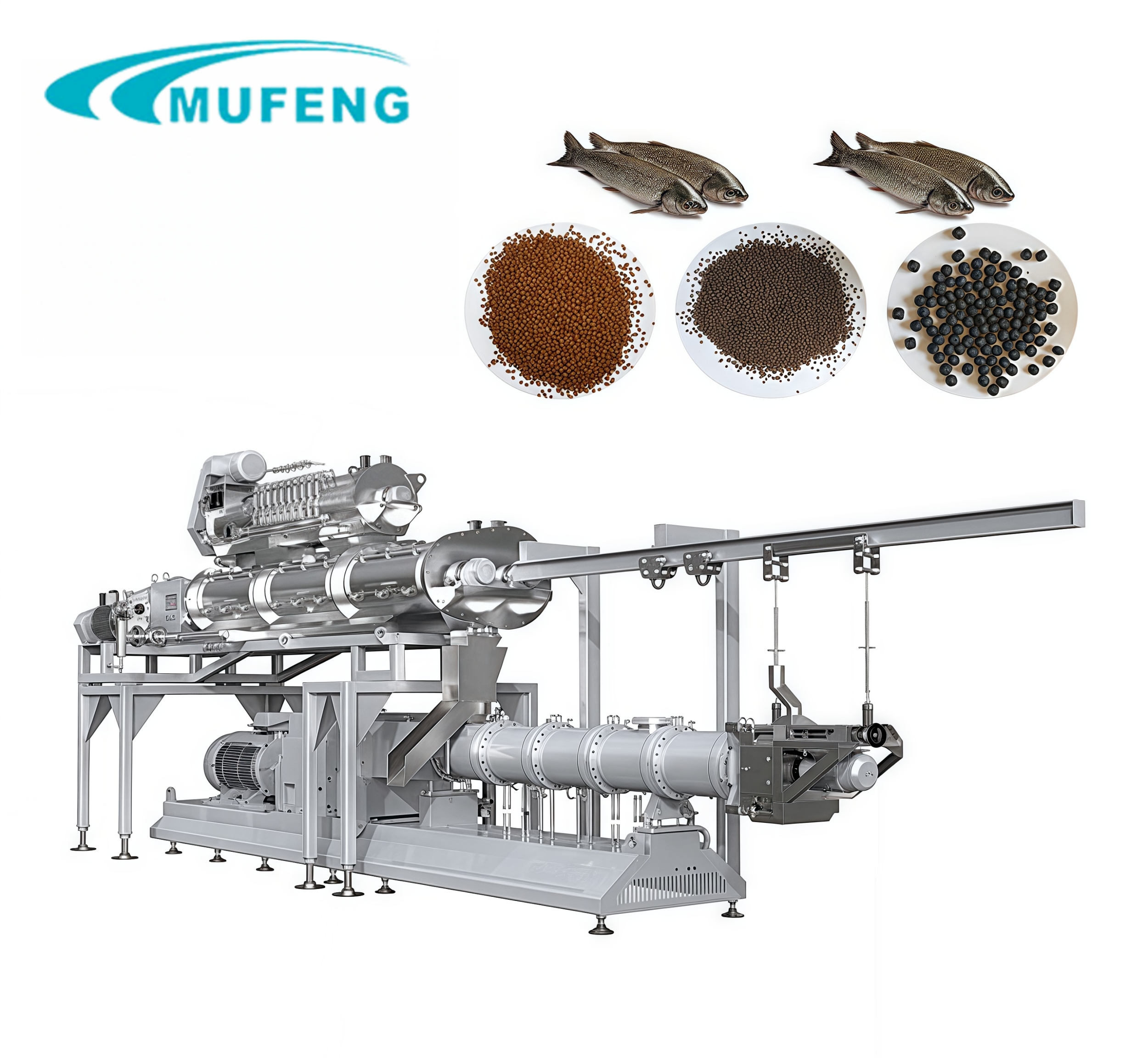
If the starch content in the formula is high, it is easy to expand, and the product bulk density is small. If the starch content in the formula is low or there is no starch at all, it is difficult to form a loose, porous structure. Among the contained starch, if the amylopectin content is high, the product expansion degree is large and the bulk density is small. The characteristic of aquatic feed sinking or floating in water can be achieved through the expansion characteristics of starch. Generally, sinking aquatic feed should contain a starch amount of 10%–15%, while floating aquatic feed should contain a starch amount of not less than 20%.
(III) Fat Content
Fat is the main energy raw material in aquatic feed, especially for sea water which requires large amounts of fat. In single-screw extruders, the upper limit for fat content in aquatic feed is 12%; in twin-screw extruders, the upper limit is 17%. When the fat content in aquatic feed and pet food is ≤12%, it has almost no effect on the quality of the extruded product; when the fat content is 12%–17%, for every 1% increase in fat, the bulk density of the final product increases by 16 kg/m³; when the fat content reaches 17%–22%, the product hardly expands, but the pellet quality remains stable; when the fat content reaches more than 22%, the stability of the final product is extremely poor. Usually, the fat content of expanded feed raw materials is controlled below 8% to reduce the impact of fat on processing quality. When the total fat content exceeds 8%, the excess oil should be applied by external spraying after forming to reduce the adverse effect of too high fat content on extrusion processing. Pellet hardness is closely related to the fat content of the pellets. When the fat content is 6%–14%, the hardness tends to increase; when the fat content exceeds 14%, the hardness decreases rapidly as the fat content increases. In addition, the oil contained in the feed raw material itself has less influence on the expansion processing than added oil. Therefore, using raw materials with high oil content to increase the dietary oil level is more conducive to the production of expanded feed.
(IV) Crude Protein Content
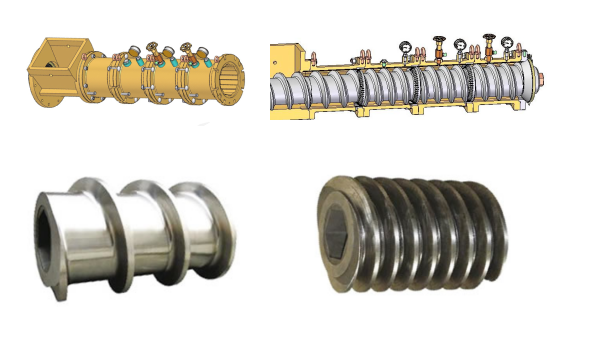
Aquatic animals have a large demand for protein, and protein raw materials account for 25%–60% of the feed formula. Protein acts as a structural skeleton in the finished expanded product. Similarly, the content and type of protein have a significant impact on the quality of expanded feed products. Plant protein raw materials have strong water absorption and binding properties, are easy to process and form, have good expansion effects, are rich in variety, widely sourced, and relatively inexpensive. However, aquatic animals have a lower digestibility of plant protein raw materials than animal protein raw materials, they occupy a large space in the formula, and plant protein raw materials contain other impurities, such as small amounts of cellulose and starch. The composition and proportion of proteins in plants vary greatly, and different proteins have different or even opposite processing characteristics. It is very important to reasonably combine animal and plant protein resources. Within a certain range, as crude protein content increases, the friction coefficient decreases, equipment wear decreases, product texturization improves, and viscoelasticity increases.
Raw materials with high protein content generally have a low degree of expansion during extrusion. To improve the expansion rate of the product, it is often necessary to increase the extrusion temperature and appropriately adjust the moisture content. If the protein content is high during the extrusion process, the viscosity of the material is high, and the energy consumption during the extrusion process is high. In addition, the greater the proportion of skin, hair, and shell raw materials in the formula, the more difficult the material is to pulverize, and the pulverization efficiency drops linearly, such as cottonseed meal and rapeseed meal. Their shape is also difficult to screen, which easily leads to die blockage and increased production failure rates. Bubbles generated during expansion are prone to rupture, resulting in poor product appearance.
II. Influence of Production Process
(I) Grinding Particle Size
Grinding particle size is one of the main factors affecting the expansion process. Raw materials with larger particles will reduce the expansion coefficient of the feed, easily block die holes, wear the inner wall of the machine, increase the loss rate, and produce expanded feed with a rough appearance. Therefore, before producing expanded feed, the grade and quality requirements of the feed should be fully evaluated, and a cost-effective grinding particle size should be selected. Freshwater fish feed requires passing through a 20-mesh grading sieve 100%, with not more than 30% on a 40-mesh sieve; river crab and shrimp feed require passing through a 40-mesh sieve 100%, with 80% passing through a 60-mesh sieve; eel and turtle feed require passing through a 60-mesh sieve 100%, with a 95% pass rate on an 80-mesh sieve. There are two purposes for this: one is to increase the surface area of the raw material to increase contact with digestive enzymes, which is conducive to digestion and absorption; the other is to increase the fineness of the raw material to improve the degree of starch gelatinization, thereby facilitating expansion and pelleting and increasing commercial value.
(II) Temperature
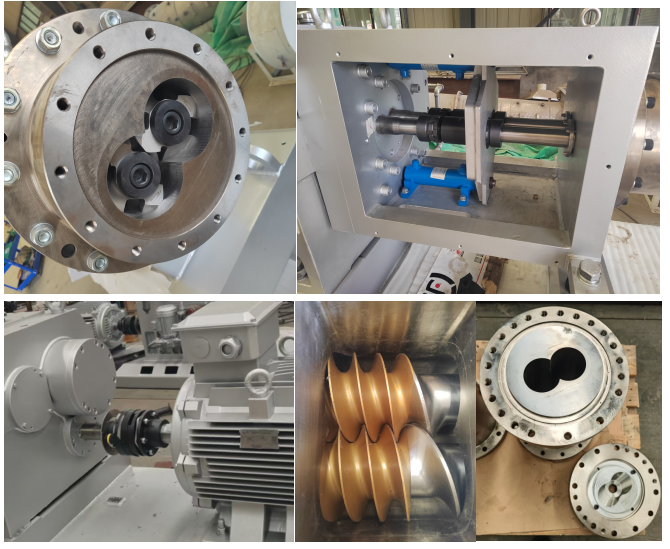
The temperature of the raw material in the expansion chamber is one of the important factors in extrusion. Temperature is a necessary condition for promoting starch gelatinization, protein denaturation, and cooking of other components, and for turning the raw material into a uniform fluid. When using a twin-screw extruder to process cereal raw materials, the temperature of the raw material in the expansion chamber is generally required to reach 120–180℃; when the temperature is 140–160℃, the effect is best. If the temperature in the extruder is too low, the starch cannot fully gelatinize, and the protein cannot denature, so there is less plasticization of the macromolecular material. The material possesses sufficient energy in the extruder, but when it is suddenly released to normal pressure, the degree of gelatinization increases insufficiently, causing the material to fail to fully expand; if the temperature is too high, the material obtains too much energy in the machine, and the force exceeds the mutual adhesion between the materials, making it prone to explosion. Therefore, only by controlling the appropriate temperature can the material obtain sufficient energy in the extruder and produce a good expansion effect when suddenly released.
(III) Steam
The amount of steam added varies for different raw materials. Usually, the steam addition for extruded soybeans is 7%–8%, and the steam addition for extruded corn is controlled at about 10%. Too much steam will increase the softness of the raw material, making the material viscous, which in turn affects the expansion quality. During the expansion process, the supply of steam needs to be maintained stable by pressure. Usually, the steam pressure entering the conditioner is 0.1–0.4 MPa. Different feed formulas have different demands for steam volume, and the steam supply volume is affected by the starch content in the raw material. Raw materials with high starch content require more added steam.
(IV) Conditioning Time
Under normal circumstances, the conditioning temperature is 65–90℃. The conditioning process needs to be controlled by time. For different formulas, the time required for conditioning is different. The length of conditioning time directly affects the degree of cooking of the material. Within a certain range, the longer the conditioning time, the better the cooking degree of the material, the better the binding property of the material, and the easier it is to expand. In addition, moisture can give expanded feed higher adhesion, but excessive use of moisture will affect the drying progress of the expanded feed.