Comprehensive Analysis of the Feed Pelleting Process: Control of Temperature, Moisture, and Hardness from Feeding to Finished Product
Feed pelleting is the core process in feed production. It transforms uniformly mixed powdered feed into structurally dense, nutritionally uniform, and easy-to-feed-and-store pellet feed through steam conditioning and extrusion molding. The final product quality of this process directly depends on the precise control of the three core parameters—temperature, moisture, and hardness—throughout the complete chain from feeding, conditioning/holding, to extrusion molding. This article will deeply analyze this process chain, exploring the key control points at each stage and their impact on final pellet quality.
I. Process Starting Point: Stability and Balance of the Feeder
Feeding is the “first mile” of the entire pelleting process, and its core task is to provide a stable and uniform material flow to subsequent processes. The stability of the feeding speed is crucial as it directly determines the smoothness of the pellet mill load. If the feeding speed fluctuates—fast and slow—it will cause a fluctuation in the amount of material entering the conditioner, leading to a disproportion in the steam addition ratio. This ultimately results in unstable conditioning temperature and moisture, producing inconsistent pellet quality.
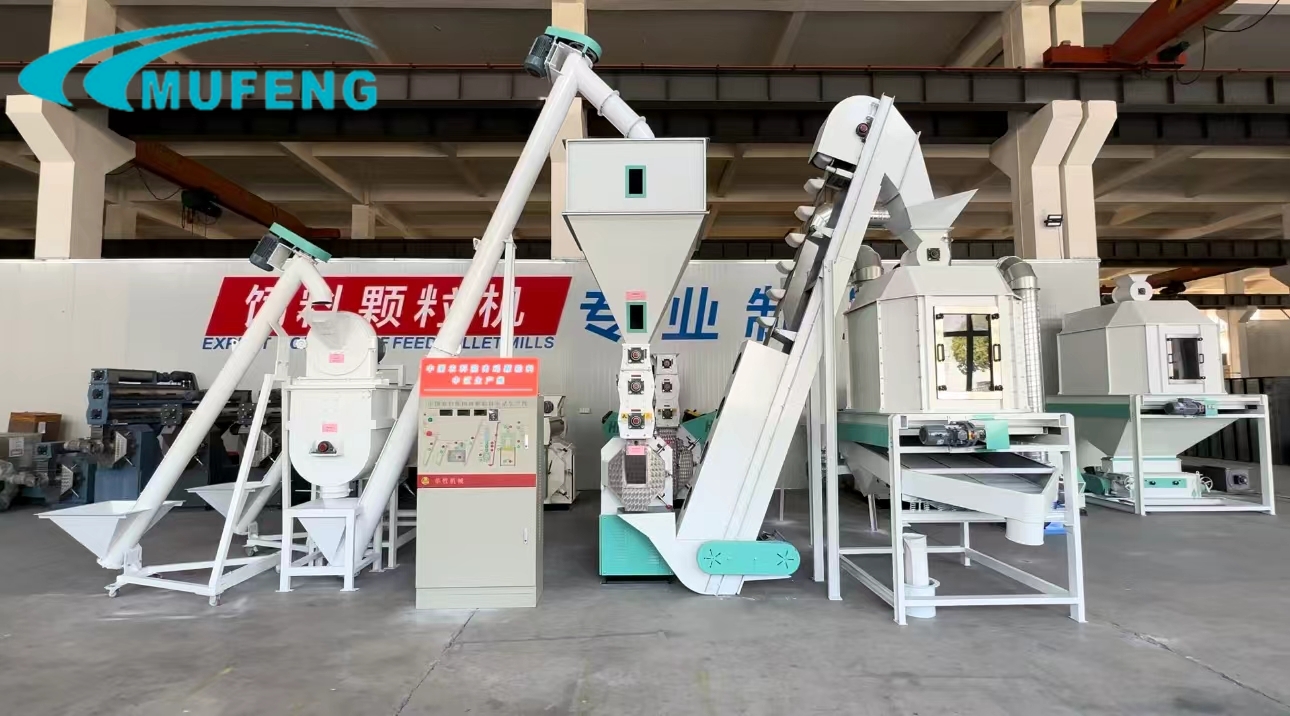
Modern advanced pelleting control systems can dynamically adjust feeding speed and steam valve opening based on target temperature and humidity, forming a closed-loop control. For example, when the system detects that the current material temperature is below the target range, the controller can command a reduction in feeding speed while increasing steam supply to quickly bring process parameters back to the set track. This precise control is the foundation for producing high-end feeds such as high-standard starter and piglet feeds.
II. Core Hub: The Wet Heat Art of the Conditioner and Holding Bin
Conditioning (or cooking) is the key link determining pellet quality, and its effect accounts for up to 20% of the influence on pellet performance. This process is mainly completed in the conditioner or holding bin by injecting saturated steam to heat and humidify the material.
1. Temperature Control: The Wisdom of Adapting to the Material
Temperature is the core driving force for starch gelatinization and protein denaturation. Starch easily gelatinizes under high temperature and high moisture conditions, acting as a natural binder. However, different feed varieties and formulas have significantly different requirements for temperature:
- Livestock and Poultry Feed: Conditioning temperature is generally controlled between 75~90℃.
- Aquatic Feed: To obtain higher water stability, more thorough gelatinization is required, so conditioning temperatures are usually higher, typically between 85~100℃.
- Feed Containing Heat-Sensitive Ingredients: For example, whey powder and milk replacers added in piglet feeds are prone to scorching at high temperatures, so the conditioning temperature must be strictly controlled, usually below 60℃ or 65℃. For such feeds, sometimes a “cold pelleting” process is even required to reduce pellet hardness.
2. Moisture Regulation: The Art of Balance
Moisture complements temperature. Steam provides both heat and water. The appropriate moisture range for conditioned material is usually between 15.5%~17%. If moisture is too low, the material’s ability to absorb steam is strong, but the temperature and humidity required for starch gelatinization may not be reached, making pellet formation difficult. If moisture exceeds 17%, the material becomes too soft, the binding force between particles decreases, and slipping is likely to occur in the ring die, which may lead to machine blockage. Also, pellet hardness will decrease.
The initial moisture of raw materials has a huge impact on conditioning effect. Generally, the material moisture before conditioning is required to be below 13%. If using raw materials with high moisture, such as new corn, problems like difficulty in adding steam and slow rise in conditioning temperature will occur, resulting in poor pellet hardness and high pulverization rate. In practice, the powder meal can be temporarily stored in an intermediate bin for 16~24 hours for homogenization and moisture transfer to improve its steam absorption capacity.
3. Conditioning Time and Equipment Evolution: From Conditioner to Holding Bin
The conditioning time of traditional conditioners is relatively short, generally 10~20 seconds. To pursue higher degrees of gelatinization and cooking effects, the application of holding bins (conditioners with extended retention) is becoming increasingly widespread. The main shaft of a holding bin rotates slowly, and the material residence time is long, resulting in higher gelatinization. For example, in some secondary pelleting processes for starter feeds, the first cooking time can reach 3-8 minutes, bringing material moisture to 14%-18%. Long-term conditioning can significantly increase starch gelatinization, making the pellet structure, denser and stability better, but it will also lead to increased pellet hardness.
III. Molding Key: The “Carving” of the Pellet Mill Ring Die and the “Setting” of Cooling
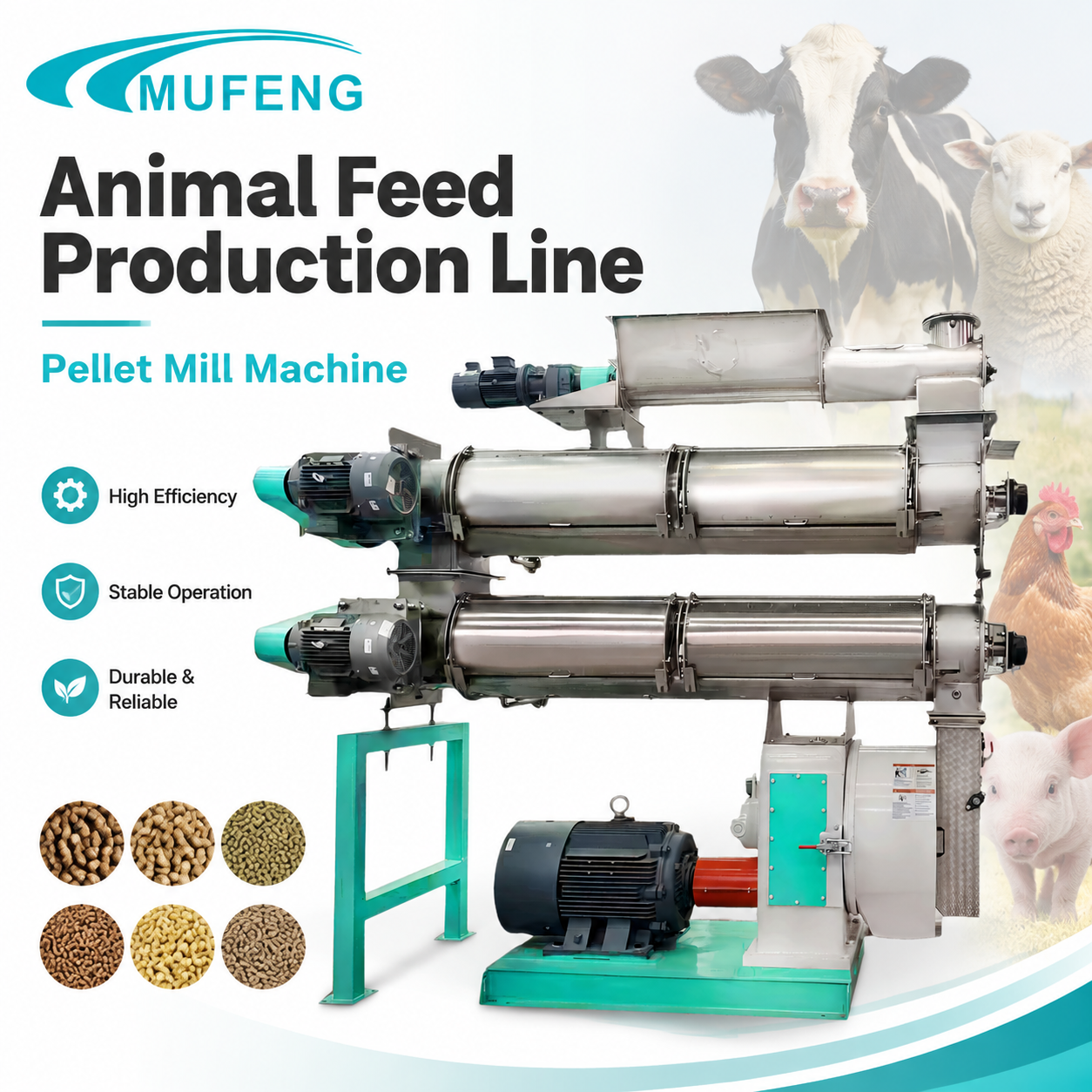
The conditioned material enters the pellet mill and is extruded from the die holes under the powerful squeezing of the ring die and rollers, and is cut into the required length by the cutter.
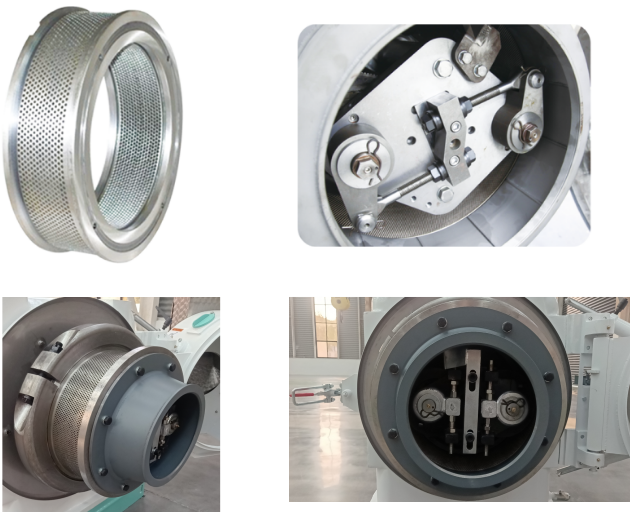
1. Ring Die Parameters: The “Design Blueprint” for Hardness
The ring die is the “mold” for pellets, and its parameters directly determine the basic physical characteristics of the pellets.
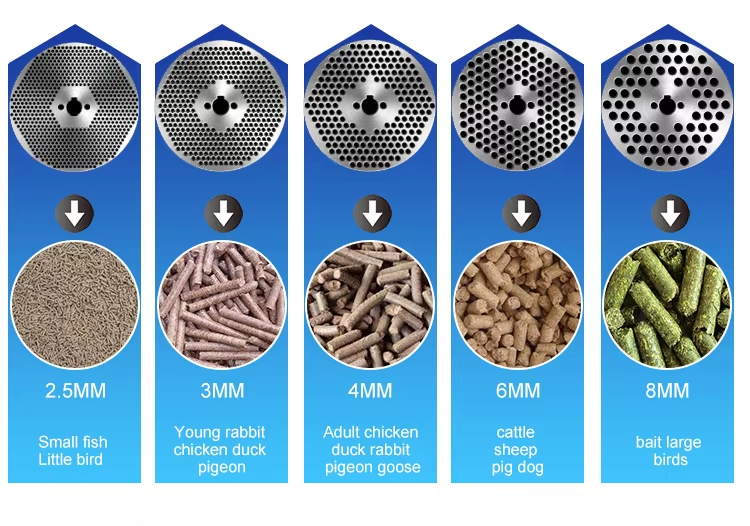
- Compression Ratio (Length-to-Diameter Ratio): This is one of the most significant factors affecting hardness. The larger the compression ratio, the longer the extrusion stroke of the material inside the die hole, and the denser and harder the pellet. For livestock and poultry feed, the die hole length-to-diameter ratio is usually between 1:9.5 ~ 1:12.5; for feeds requiring high water resistance like shrimp feed, it is as high as 1:18 ~ 1:23.
- Hole Diameter and Material: The smaller the hole diameter, the harder the pellet. Compared to ordinary steel ring dies, stainless steel ring dies can produce pellets with better appearance quality and more suitable hardness, especially suitable for products with high quality requirements like piglet feed.
- Roller Gap: It is usually adjusted so that when the ring die rotates, the roller is only driven by half. If the gap is too large, the material will slip, production will drop, and the pulverization rate will be high; if the gap is too small, wear will be aggravated, and the material is prone to dry knotting and blockage.
2. Cooling and Drying: Moisture Dissipation and Final Hardness Formation
The pellets fresh out of the pellet mill have a high temperature of 75~90℃ and moisture of 14%-16%. At this time, the pellets are soft and easy to break. The purpose of cooling is not only to lower the temperature but also to uniformly reduce moisture (usually to below 13%), thereby fixing the pellet structure, increasing hardness, and facilitating storage.
The key to the cooling process lies in balancing cooling time and air suction volume. Cooling time is generally 5~25 minutes. Small pellets have internal moisture and heat that diffuse easily, requiring a short cooling time; large pellets require a longer time. The air suction volume needs to match the pellet diameter. If the air volume is too large, the pellet surface will cool too quickly while the inside remains warm and wet, causing surface cracks, which actually reduces pellet hardness and wear resistance and increases the pulverization rate. Therefore, adopting a cooling strategy of “small air volume, long time” is conducive to uniform cooling inside and outside the pellets, obtaining finished products with ideal hardness and complete structure.
IV. System Synergy: The Triangular Balance of Formula, Process, and Equipment
The final pellet hardness is the result of the combined action of the formula, physicochemical properties of raw materials, and production process, with their influence proportions being approximately 40%, 30%, and 30%.
- Formula is the Foundation: High-starch formulas have high subject gelatinization under suitable conditioning, strong binding force, and hard pellets; protein raw materials have good plasticity after heating, which is beneficial for pelleting; but if the crude fiber content is too high (exceeding 10%), the binding force will be weakened; adding 1%-2% of oil has no significant effect on hardness, but adding more than 3%-4% will significantly reduce pellet hardness.
- Process is the Control Means: By adjusting grinding particle size (finer raw materials help improve hardness and molding rate), steam quality (high-quality dry saturated steam is crucial), conditioning parameters, and cooling conditions, the hardness of the final product can be targetedly regulated.
- Equipment is the Implementation Carrier: From the precise metering of the feeder, the full cooking of the holding bin, to the precise compression of the ring die and the uniform drying of the cooler, the stable operation and parameter optimization of every piece of equipment are the guarantees for transforming formula and process design into ideal products.
In summary, feed pelleting is by no means simple physical extrusion, but a refined craft that requires balancing heat, moisture, force, and time. Starting from the stability of feeding, experiencing the wet heat transformation of the conditioning/holding stage, setting shape through the extrusion of the ring die, and finally obtaining a stable product form through cooling and drying, the changes in temperature and moisture at every link are profoundly affecting the final hardness and quality of the pellets. Only by deeply understanding the dynamic relationship of these three in the entire process chain and achieving a high degree of synergy between formula, process, and equipment, can we continuously produce high-quality, high-stability pellet feed to meet the increasingly rising demands of modern breeding industry.