

Core Principles: Starch acts as the primary binding phase (via gelatinization); proteins serve as a secondary binding phase (through heat-induced denaturation and gel formation); fibers provide a structural framework, though excessive amounts can compromise integrity; fats and oils function as lubricants, but an excess hinders binding; minerals contribute little to no binding and accelerate die and roller wear.
Evaluation Criteria: Moisture absorption during conditioning, binding capacity, pelleting throughput, energy consumption per ton, Pellet Durability Index (PDI) / hardness, die-roller friction, risk of die blockage, and key process parameters.
I. Cereal-Based Energy Ingredients
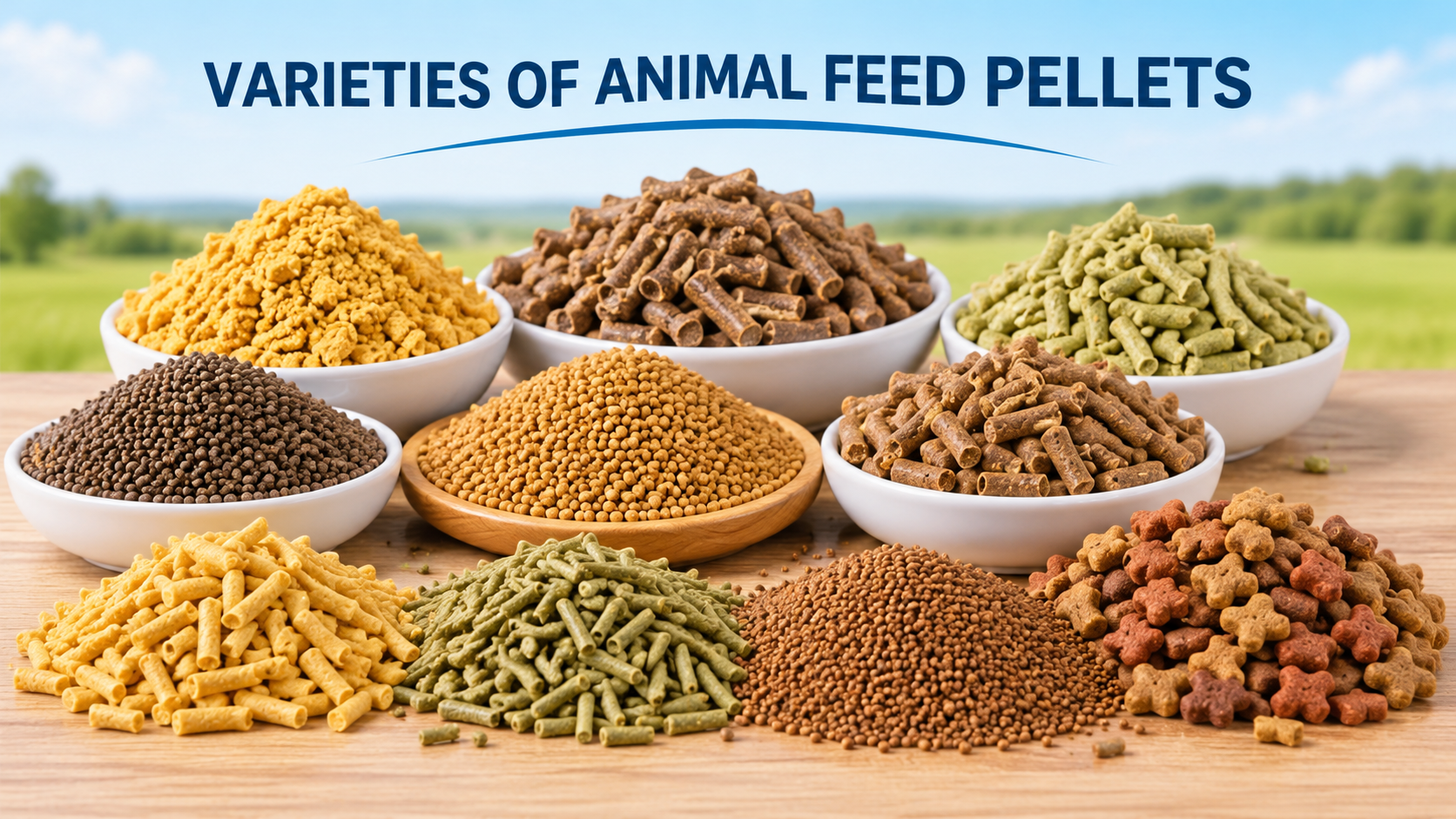
1. Corn (Maize)
(1) Characteristics: High proportion of horny (vitreous) starch with moderate amylose content; requires higher conditioning temperatures (80–85°C) and ample steam for gelatinization. Binding capacity is moderate—weaker than that of wheat—though it offers good flowability. Pellet quality is highly sensitive to fluctuations in raw material moisture. Heat-dried or pre-gelatinized corn exhibits reduced gelatinization potential, leading to poorer pelleting performance.
(2) Performance: High throughput with moderate energy consumption; pellets tend to be brittle, often resulting in higher fines content. Corn with high oil content further reduces the PDI.
(3) Process Considerations: Use moderate fine-grinding; maintain conditioning moisture at 15–16%. When corn constitutes a large portion of the formula, incorporate a small amount of wheat or wheat flour to enhance binding.
2. Wheat (including wheat flour and wheat middlings/shorts)
(1) Characteristics: Starch gelatinizes rapidly, coinciding with the formation of gluten proteins, providing the best binding properties among cereal grains. It possesses excellent water-holding capacity and responds quickly to conditioning. While it creates higher resistance during extrusion through die holes, it yields pellets with high hardness and superior PDI. Excessive inclusion can result in pellets that are too hard, difficult to break down, and increase the risk of die blockage.
(2) Performance: Pellet durability is significantly better than that of corn; pellets exhibit higher hardness at the same die-hole length-to-diameter ratio. Throughput is slightly lower than that of corn, with marginally higher energy consumption.
(3) Process Considerations: Avoid overly fine grinding; use a lower die-hole length-to-diameter ratio; a conditioning temperature of 75–82°C is sufficient.
3. Sorghum
(1) Characteristics: High content of vitreous (horny) starch and presence of tannins, resulting in poor binding properties; starch is difficult to gelatinize; high friction, leading to significant wear on dies and rollers; moderate flowability of the mash; pellets tend to be loose and exhibit a high rate of fines (breakage/crumbling).
(2) Performance: More difficult to pelletize than corn; lower production output; high percentage of fines in the final product.
(3) Process Considerations: Increase conditioning temperature and extend conditioning time; incorporate wheat or pre-gelatinized starch; carefully control the inclusion rate of sorghum.
4. Barley and Oats
(1) Characteristics: High $\beta$-glucan content, resulting in high viscosity; higher fiber content than corn; rapid water absorption; high pellet hardness. Oats, in particular, have a high crude fiber content, which increases friction and generates significant dust.
(2) Performance: Good Pellet Durability Index (PDI), but production capacity is relatively low; high inclusion levels of oats increase the risk of die blockage.
II. Plant-Based Protein Ingredients
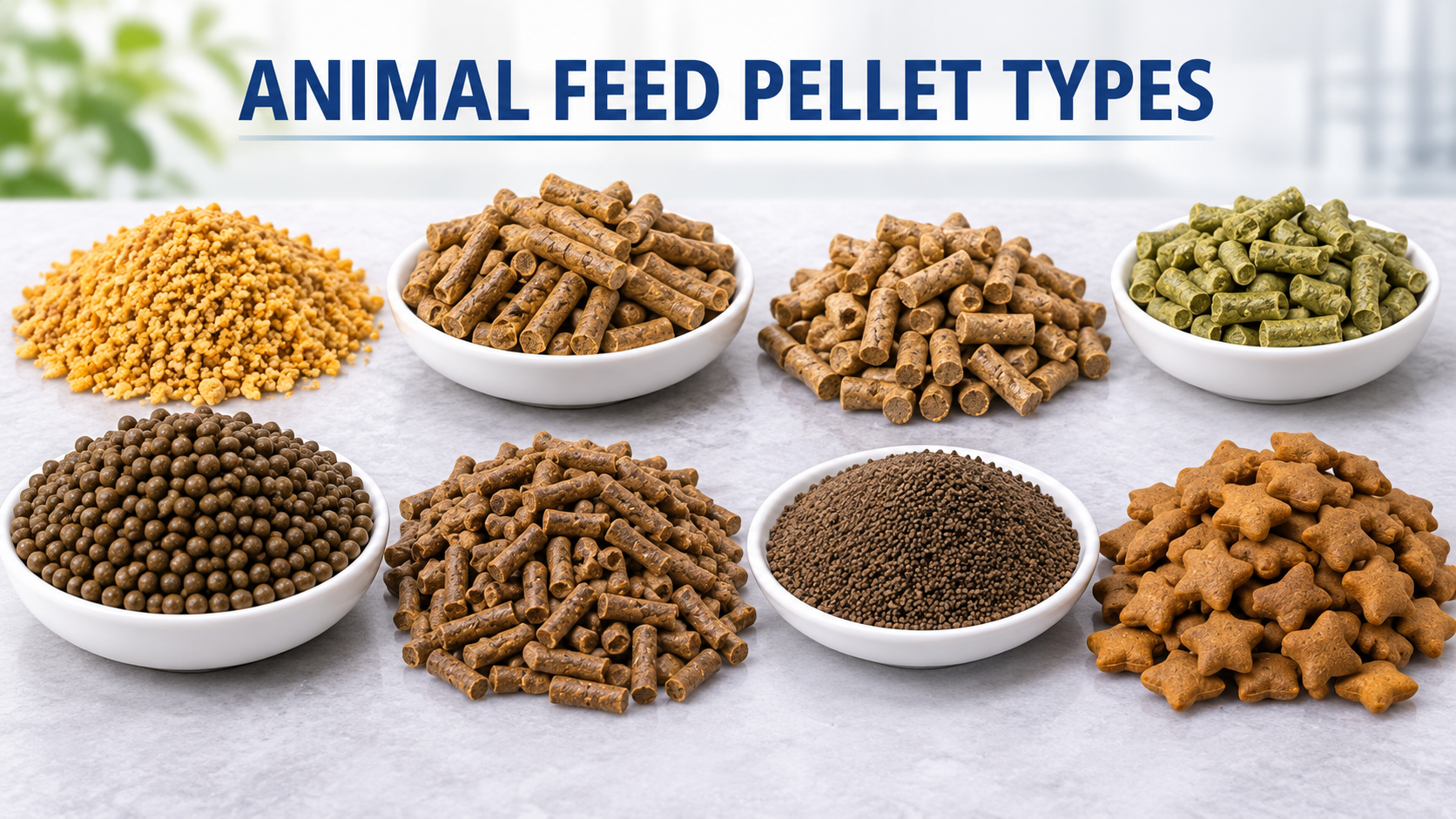
1. Soybean Meal (Dehulled/Soybean Meal)
(1) Characteristics: High water absorption capacity; proteins exhibit good thermoplasticity. After moderate hydrothermal denaturation, it provides excellent binding properties, making it one of the most “pellet-friendly” protein sources. Dehulled soybean meal has lower fiber content and produces better-formed pellets than standard (hulled) soybean meal. Excessive heat exposure reduces protein solubility and diminishes binding capacity.
(2) Performance: Low energy consumption; above-average PDI. However, a formulation consisting solely of soybean meal is difficult to pelletize; it must be combined with a starch source.
(3) Process Considerations: Avoid prolonged exposure to high-temperature conditioning; control the fineness of the grind; increase the proportion of starch-based carriers in formulations with high soybean meal content.
2. Rapeseed Meal (Canola Meal)
(1) Characteristics: High crude fiber content, low protein solubility, and poor water absorption; weak binding properties. Contains tannins and glucosinolates; absorbs water slowly during the conditioning process. Pellets tend to be loose with a low PDI; it is generally considered a difficult-to-pellet protein source. (2) Performance: Results in high levels of fines and places a heavy load on the pelletizing process; pellet durability drops significantly when inclusion rates are high.
(3) Process Considerations: Extend the conditioning/retention time; increase the inclusion of starch or flour; avoid using it alone at high inclusion rates.
3. Cottonseed Meal (including cottonseed meal and concentrated cottonseed protein)
(1) Characteristics: High crude fiber content; concentrated cottonseed protein has strong binding properties; standard cottonseed meal contains coarse fibers with a rigid structure, leading to high friction; moderate water absorption; produces hard pellets but causes significant wear on the die.
(2) Performance: Concentrated cottonseed protein offers excellent PDI (Pellet Durability Index); high inclusion rates of standard cottonseed meal lead to reduced production output and increased dust/fines.
4. Peanut Meal
(1) Characteristics: Good protein solubility and relatively high oil content; superior binding properties compared to rapeseed or cottonseed meal; high oil content is a drawback, as it weakens binding; moderate water absorption.
(2) Performance: Forms pellets well, but requires high raw material freshness; if the meal becomes rancid, both pellet quality and palatability deteriorate.
5. DDGS (Distillers Dried Grains with Solubles)
(1) Characteristics: High residual sugar and oil content; high fiber content; poor water absorption; oil coats the surface of particles, hindering starch gelatinization and binding; high inclusion rates often lead to loose pellets and a sharp drop in PDI; poor flowability, prone to bridging (clogging) in bins.
(2) Performance: A notoriously difficult ingredient to pelletize, resulting in low output and high levels of fines.
(3) Process Considerations: Limit the maximum inclusion rate; prioritize starch gelatinization during conditioning; apply oil via post-pelleting spraying rather than adding it to the mix before pelletizing.
III. Animal-Derived Protein Ingredients
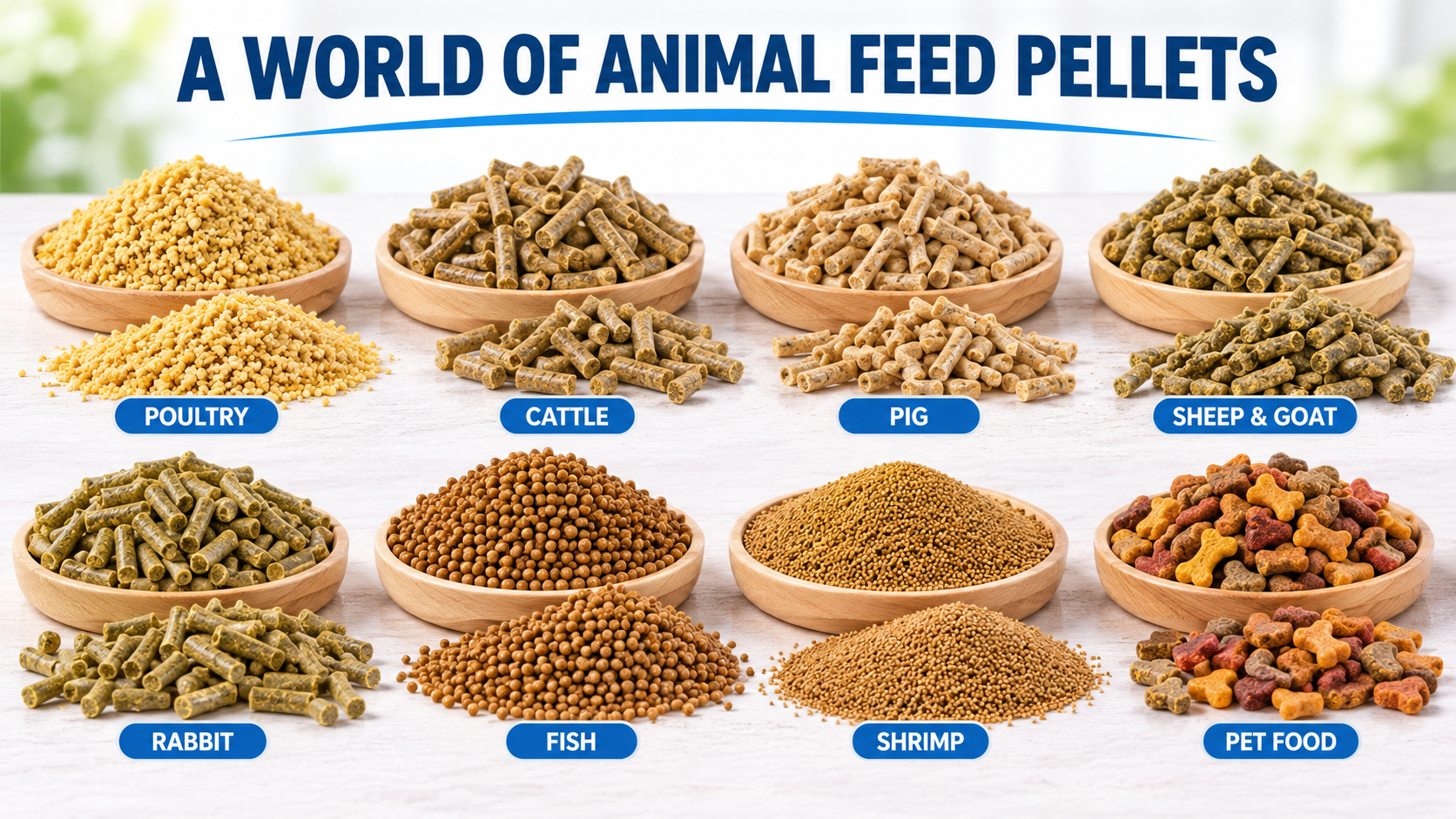
1. Fish Meal
(1) Characteristics: Proteins exhibit good thermoplasticity and high water solubility; absorbs water quickly, facilitating good pellet formation; high ash and salt content; fresh fish meal provides better binding than oxidized fish meal; excessive heat can cause protein denaturation, leading to sticky material that clogs the die or results in scorched feed; high cost, primarily used in aquafeed. (2) Performance: Pellets exhibit good water resistance; however, high inclusion levels increase adhesion within die holes, necessitating more frequent cleaning.
2. Chicken Meal, Meat and Bone Meal
(1) Characteristics: High variability in fat content and high ash content; moderate protein-based binding capacity. High-fat versions provide excessive lubrication, leading to pellet disintegration; high ash content accelerates ring-die wear; water absorption capacity is lower than that of soybean meal.
(2) Performance: Fat content is the primary variable. Defatted meat meal performs better during pelleting, while high-fat meat meal should be used with caution.
3. Plasma Protein Powder, Hydrolyzed Feather Meal
(1) Plasma Protein: Contains a very high proportion of water-soluble proteins, offering strong binding and good water resistance. However, it is expensive and prone to clumping at high temperatures, which can clog die holes.
(2) Feather Meal: Composed primarily of keratin, which is highly resistant to thermal denaturation and possesses virtually no binding capacity. It acts as an inert protein; adding it in isolation will reduce the Pellet Durability Index (PDI).
IV. Fibrous Ingredients (e.g., wheat bran, rice bran, rice hull/husk, straw meal, alfalfa meal)
1. Wheat Bran
(1) Characteristics: Contains a moderate amount of crude fiber, which can serve as a “structural framework.” Small amounts (3–6%) enhance pellet toughness and reduce brittleness. High inclusion levels (>10%) result in excessive fiber, low bulk density, slow water absorption, increased friction, higher resistance within die holes, fragile pellets, and a sharp rise in the proportion of “fines” (dust/powder). Furthermore, its loose, poor-flowing nature can lead to inconsistent feeding.
(2) Performance: Low inclusion levels are beneficial; high inclusion levels significantly hinder production capacity and increase power consumption.
2. Rice Bran, Defatted Rice Bran
(1) Full-fat Rice Bran: High oil content provides strong lubrication but poor binding, resulting in pellets that tend to crumble; also prone to rancidity.
(2) Defatted Rice Bran: High fiber and low oil content lead to increased friction; it offers better pellet formation than full-fat rice bran, though the PDI is generally moderate. 3. Rice bran/hulls, peanut shell powder, and rice husk powder
Characteristics: Extremely high crude fiber content, highly lignified, and virtually non-adhesive. These are classified as inert, hard fibers. They significantly increase wear on dies and rollers, cause die blockage, and result in high levels of “fines” (powdered material). They are suitable only for inclusion at low levels in ruminant feed and should be minimized in pelleted feed for livestock and poultry.
V. Fats/Oils, Molasses, Minerals, and Additives
1. Fats/Oils (soybean oil, palm oil, etc.)
(1) ≤1%: Lubricates the rollers and ring die, reducing wear and increasing production output.
(2) >2%: Coats the surface of the feed particles, hindering starch gelatinization and protein binding. This leads to a rapid decline in the Pellet Durability Index (PDI), causing pellets to crumble easily upon handling. High-fat formulations require post-pelleting oil application (top-coating).
2. Molasses
Provides strong binding and moisture retention; slightly improves pellet durability. However, high inclusion levels can cause stickiness during conditioning, bridging in the feeder, accumulation of material in die holes (leading to blockages), and moisture re-absorption (hygroscopy) after cooling.
3. Limestone powder (calcium carbonate), dicalcium phosphate, salt, and trace element premixes
These have no binding capacity. Due to their high hardness, they cause continuous wear on ring dies and rollers. Higher inclusion levels result in looser pellets and a lower PDI. Salt is hygroscopic, making the finished product prone to moisture re-absorption.
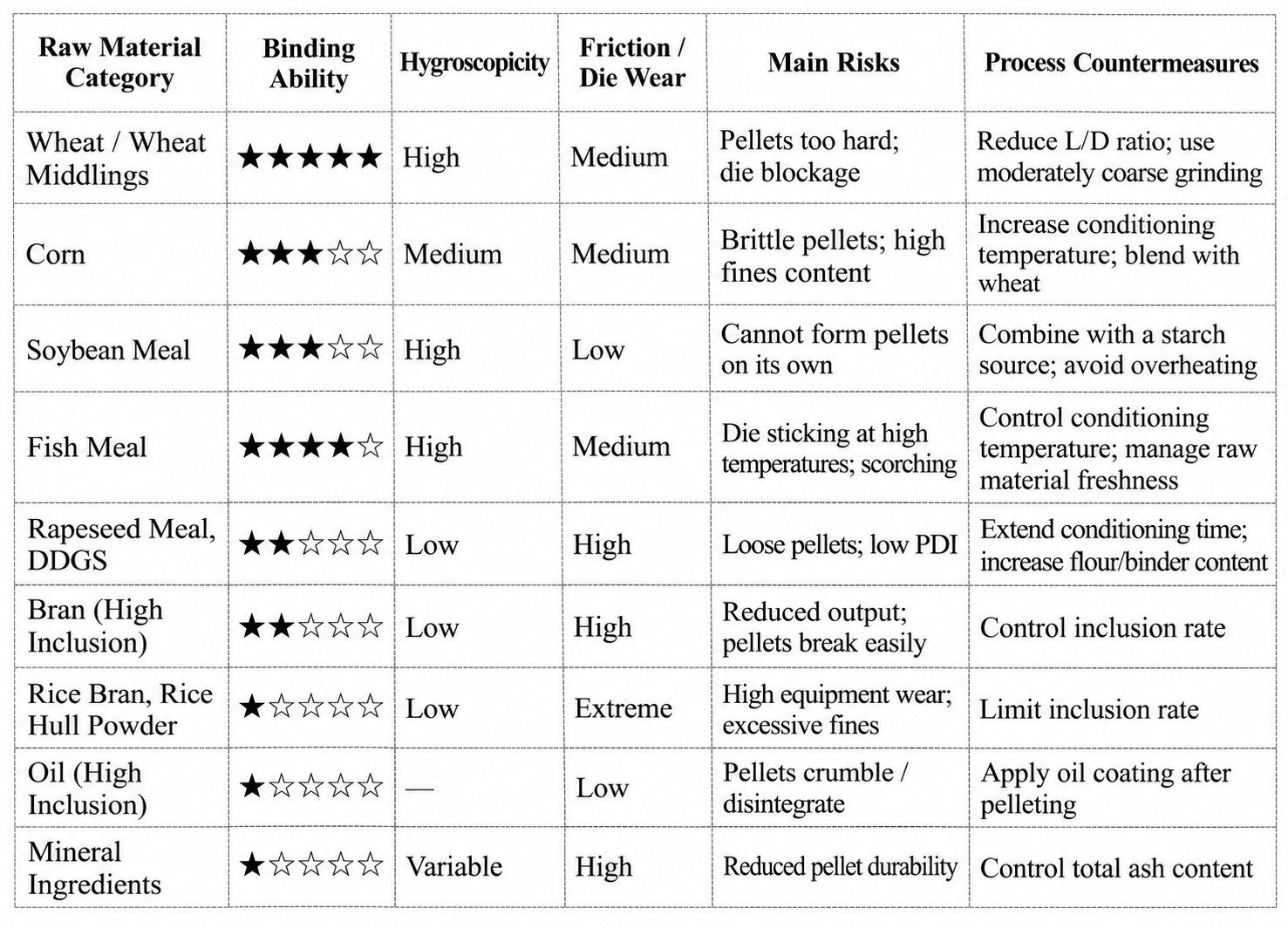
VI. Quick-Reference Table: Pelletizing Characteristics of Raw Materials and Process Adjustments
[Table]
VII. Summary of Production Practices
1. The binding matrix of a formula should primarily rely on cereal starches (wheat is best, followed by corn). Proteins serve as secondary binders. Fiber, in small amounts, can increase toughness, but excessive amounts compromise pellet integrity. Fats/oils are a “double-edged sword,” while minerals are “detrimental factors” regarding pellet quality.
2. For any given raw material, factors such as particle size (after grinding), moisture content, freshness, and pre-processing (e.g., pre-gelatinization, defatting, or thermal denaturation) often have a greater impact on pelletizing characteristics than the type of raw material itself. 3. For formulations that are difficult to pelletize (e.g., those with high levels of DDGS, rapeseed meal, wheat bran, or high fat content), choose one of the following solutions: ① Increase the inclusion of wheat, flour, or pregelatinized starch; ② Extend the conditioning retention time and increase the moisture content during conditioning; ③ Reduce the length-to-diameter ratio of the ring die.