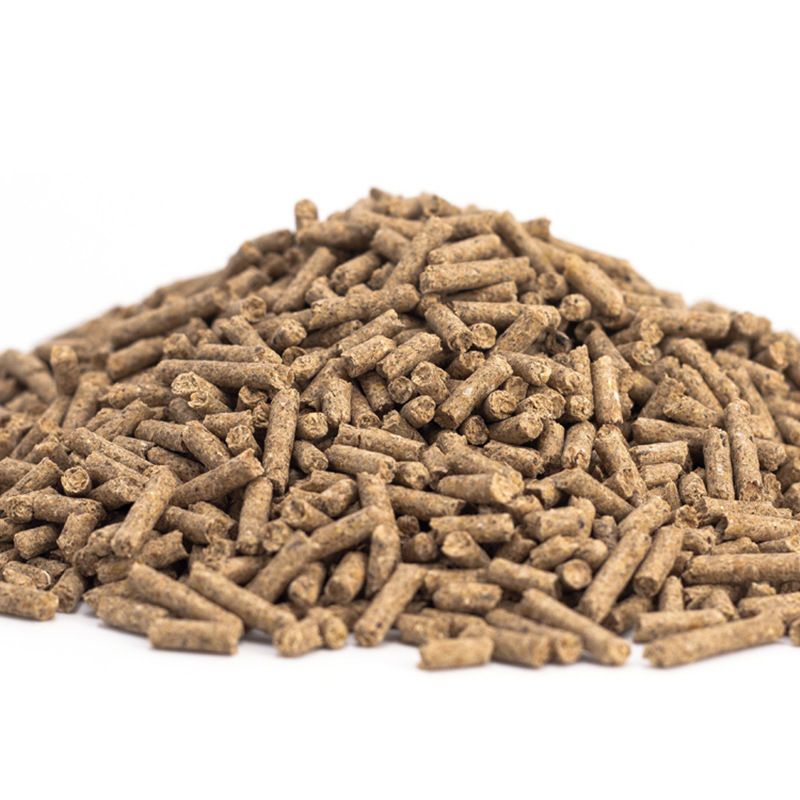

Significant Moisture Variation in the Four Corners of the Cooler (Specifically Between Two Corners on One Side and the Other Two on the Opposite Side) and How to Resolve It. This is a common issue we frequently encounter in our daily work. In feed mill production equipment, the cooler is a device that works in conjunction with the pellet mill to cool the material. Its main function is to cool the high-temperature pellets (approximately 85–95°C) formed from the uniformly mixed semi-finished product after conditioning with high-temperature, high-humidity steam in the conditioner and pressing through the pellet mill ring die. The goal is to bring the feed to a temperature close to ambient (±5°C) for subsequent storage. The cooling time of the cooler varies depending on its dimensions (length, width, height), material level settings (low, medium, high), and production capacity (tons per hour), typically ranging from 5 to 30 minutes. This data is for reference only.
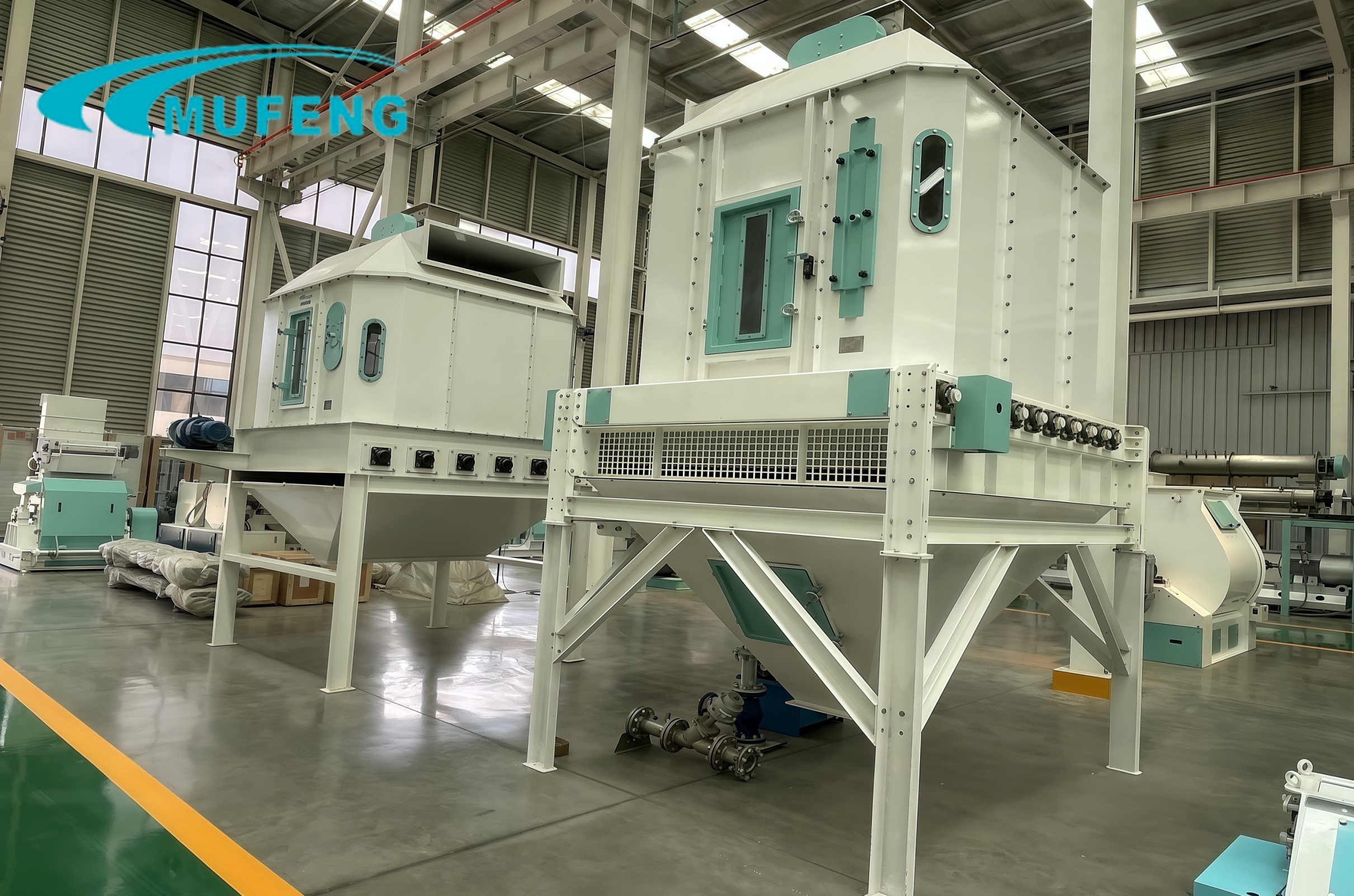
During routine monitoring of feed moisture, a frequent problem is that the moisture test results from the four corners of the feed cooler show significant variation. Under normal theoretical conditions, factors such as differences in raw material moisture, mixing uniformity, steam addition, and the discharge from the cooler all contribute to a certain range of moisture variation. The moisture difference between the four corners is generally not too large, typically within 0.5%. However, when the moisture difference between the four corners exceeds 0.5%, how should we address it?
Below, I will use the inverted cone distributor-type cooler as an example to explain. The structure of a feed cooler is actually quite simple. It mainly consists of an outer shell with a top stainless steel cover. At the exact center of the stainless steel cover, where it connects to the pellet mill discharge, there is a rotary valve feeder. Its function is to seal the air inside the cooler, preventing air from being drawn in from the pellet mill discharge, which would affect cooling efficiency. It also serves as a device for evenly feeding material into the cooler. Below this feeder, it leads directly into the interior of the cooler. Typically, deflector plates (also called flow guide plates) are installed on both sides of the discharge port to direct the high-temperature, high-moisture feed from the pellet mill straight toward the center of the distributor, ensuring even distribution within the cooler.
The distributor of the feed cooler is an inverted cone-shaped weight. Under normal theory, the center of its upper main body is aligned directly with the center of the feeder. This inverted cone distributor can be adjusted both vertically and horizontally to ensure the material forms a level plane from the center to the four corners. Vertical adjustment is to regulate the distribution of material after it impacts the distributor and the shell, ensuring the central point and the surrounding areas are as level as possible. Horizontal adjustment, on the other hand, is a crucial step. Its main function is to regulate whether the feed is evenly distributed to the four corners and to check for severe offset leading to uneven distribution.
In short, vertical and horizontal adjustments work together to balance the uniformity of material distribution from the center to the periphery of the cooler. They collectively manage the moisture during cooling. As mentioned in the text, when there is a noticeable moisture difference between the four corners, we often find that it is due to an offset in the horizontal adjustment. The difference between the corners on the left and right sides is relatively large. However, the moisture difference between the two corners on the same left side is not significant, and the same applies to the right side. Therefore, this indicates that the issue is caused by an offset in the distributor. We simply need to shut down the equipment, ensure no material is present, and completely disconnect the power. Then, open the cooler door, enter the cooler, locate the distributor, and adjust its position. After adjustment, observe whether the material columns in the four corners are roughly equal in height to confirm if the distribution is relatively even. At this point, we must not forget the center point. Check if the center point is too high or too low. If the center point is too high or too low, it indicates a problem with the vertical adjustment. If the center point is too high, the distributor is set too high; if it is too low, the distributor is set too low. By adjusting in this manner, we can achieve relatively uniform moisture levels at the five points: the four corners and the center. The discharge gates typically discharge material very evenly, so they generally do not affect the levelness of the material surface.
Phone:+86 130 7377 0763
Email: enquiry@mufengzhineng.com
Official website: www.mufengzhineng.com