一、Formulation Factors
- Low Starch Content or Insufficient Gelatinization: Starch gelatinizes (gelatinizes) during high-temperature and high-pressure conditioning, acting as a natural binder. This is the primary source of pellet hardness. If the proportion of starchy raw materials such as corn and wheat in the formulation is too low, or if the conditioning conditions are poor, the starch may not gelatinize sufficiently.
- Excessively High Protein Content: Excessively high protein content (especially plant-based proteins such as soybean meal) has a counterproductive effect when heated, reducing binding force and making the pellet structure loose.
- Excessively High Fat Content: Fat (whether inherent in the raw materials or applied later) acts as a lubricant in the pellets, significantly reducing pellet hardness. When the total fat content (especially added oils) exceeds 5%, the negative impact on hardness is very significant.
- Fiber content too high or too low: An appropriate amount of fiber acts as a “skeleton” during pelleting, enhancing hardness through interweaving. However, excessive fiber (such as a high proportion of bran or rice bran) lacks adhesiveness, reducing pellet durability. Insufficient fiber, on the other hand, lacks this skeletal support.
- Lack of binder: In certain special formulations (such as aquatic feed or starter feed) or when using special raw materials, without the addition of a dedicated pellet binder (such as lignin sulfonates, bentonite, colloids, etc.), the pellets will struggle to achieve the desired hardness.
二、Production Process and Operational Factors
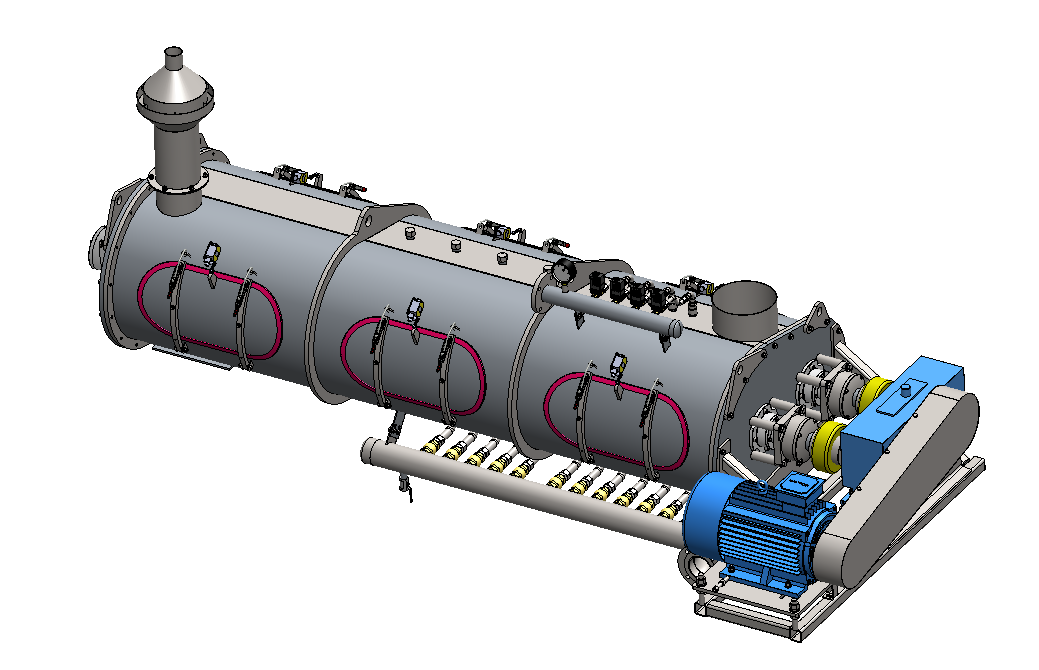
- Poor conditioning effect:
- Steam quality: Use dry saturated steam, not wet or superheated steam. Unstable steam pressure or excessive moisture content will affect the conditioning effect.
- Conditioning temperature too low: Temperature is crucial for starch gelatinization and protein denaturation. Insufficient temperature results in low gelatinization rates and naturally weak pellets.
- Insufficient conditioning time: Insufficient residence time of material in the conditioner leads to inadequate mixing of steam and material, resulting in insufficient maturation.
- Insufficient steam addition: Steam addition should typically account for 3%-6% of production; too low a amount will fail to provide sufficient heat and moisture.
- Ring die factors:
- Low ring die compression ratio: The compression ratio (the ratio of the effective length to the diameter of the ring die orifice) is a key parameter determining particle density. The lower the compression ratio, the less compression the material experiences within the die orifice, resulting in looser particles.
- Severe ring die wear: The die orifice of an old ring die becomes smooth due to wear, and may even develop a “funnel mouth” at the inlet, leading to insufficient extrusion pressure and decreased particle hardness.
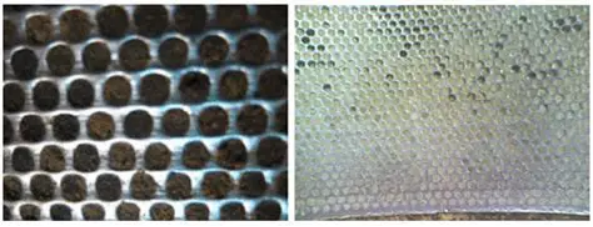
- Low ring die opening ratio: A low opening ratio affects the discharge speed and sometimes the degree of particle compaction.
- Inappropriate particle size:
- Overly coarse particle size: If the raw material is ground too coarsely, the contact area between particles is small, resulting in poor bonding force, making the produced particles easily broken and with low hardness.
- Excessively fine particle size: While fine powder is beneficial for adhesion, excessive grinding can sometimes affect the pellet mill’s capacity and energy consumption. Furthermore, finer is not always better; the optimal particle size needs to be determined based on the variety and die diameter.
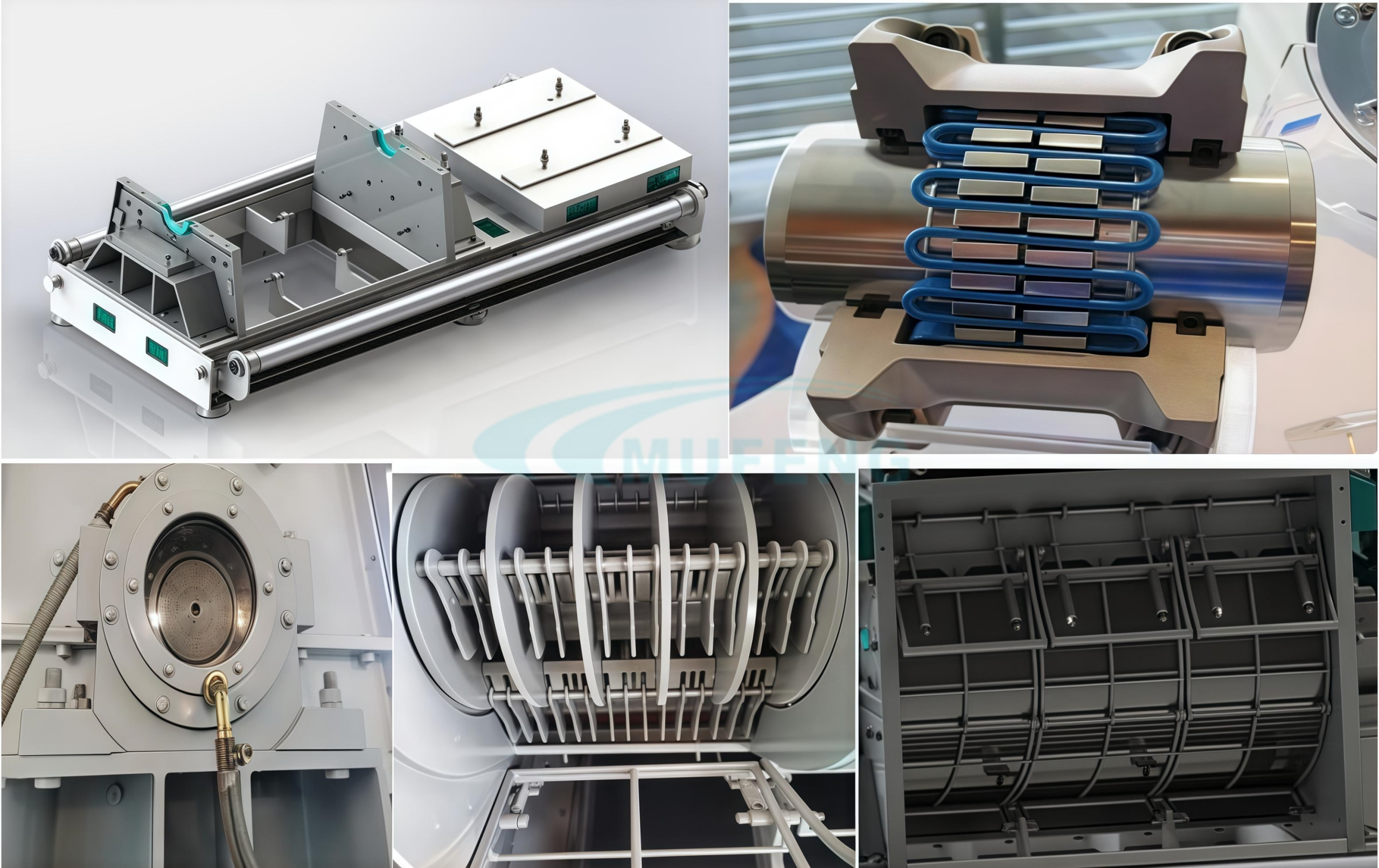
(The Mufeng hammer mill uses a special hammer-screen gap adjustment structure, which can be adjusted between 2-12mm to adapt to the crushing of different particle sizes.)
- Insufficient cooling and drying: Freshly extruded pellets are soft and hot, requiring a cooler to cool them and reduce moisture. Insufficient cooling time, insufficient airflow, or improper material level settings can lead to high internal moisture content in the pellets, resulting in a soft center and insufficient overall hardness.
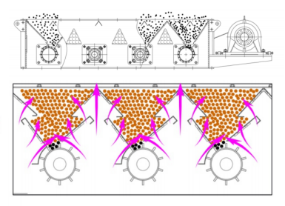
(In the Mufeng cooler, the cooling air moves in the opposite direction to the granular material, so that the material is gradually cooled from bottom to top, resulting in uniform cooling.)
三. Raw material factors
- Raw material freshness: Aged or moldy raw materials will alter their nutritional composition and physical properties, affecting pelleting performance.
- Raw material moisture content: Excessively high moisture content in the raw material will affect the addition and absorption of steam during conditioning, thus affecting gelatinization.
- Natural stickiness of the raw material: The same raw material from different sources (such as corn or soybean meal from different origins) may have different pelleting characteristics due to differences in composition.
四、Conclusion
In summary, the core of solving the problem of granule hardness lies in “optimized conditioning” and “matching the ring die.” Improving the gelatinization degree of starch and utilizing a suitable ring die for thorough extrusion are key to obtaining high-hardness granules.