
A Comprehensive Analysis of the Feed Pelleting Process: Controlling Temperature, Moisture, and Hardness from Intake to Finished Product
Feed pelleting is a core operation in feed production. It transforms a uniformly mixed, powdered feed—through steam conditioning and extrusion—into dense, nutritionally consistent pellets that are easy to feed and store. The quality of the final product depends directly on the precise control of three key parameters—temperature, moisture, and hardness—throughout the entire chain, from raw material intake and conditioning/retention to extrusion. This article provides an in-depth analysis of this process chain, examining critical control points at each stage and their impact on the quality of the final pellets.
I. The Starting Point: Ensuring Stable and Balanced Feeding
Feeding is the “first mile” of the entire pelleting process. Its primary task is to provide a stable and uniform flow of material to the subsequent stages. The stability of the feed rate is crucial, as it directly determines the consistency of the load on the pellet mill. Fluctuations in feed rate—whether too fast or too slow—cause variations in the volume of material entering the conditioner. This, in turn, disrupts the steam-to-feed ratio, leading to unstable conditioning temperatures and moisture levels, which ultimately results in inconsistent pellet quality.
Modern, advanced pelleting control systems can dynamically adjust the feed rate and steam valve openings based on target temperature and moisture levels, creating a closed-loop control system. For instance, if the system detects that the material temperature has fallen below the target range, the controller can automatically reduce the feed rate while increasing the steam supply, quickly bringing the process parameters back to the desired setpoints. Such precise control is fundamental to the production of high-end feed products, such as high-standard creep feed (pre-weaning feed).
II. The Core Hub: The Art of Hydrothermal Conditioning and Retention
Conditioning (or “cooking”) is a pivotal stage that determines pellet quality, accounting for as much as 20% of the overall impact on pellet performance. This process typically takes place in a conditioner or retention vessel, where saturated steam is injected to heat and hydrate the material.
1. Temperature Control: The Wisdom of Tailoring to the Specific Feed
Temperature is the primary driver for starch gelatinization and protein denaturation. Under conditions of high temperature and high moisture, starch undergoes gelatinization, acting as a natural binder. However, temperature requirements vary significantly depending on the type of feed and its specific formulation:
Livestock and poultry feed: Conditioning temperatures are generally maintained between 75°C and 90°C.
Aquatic feed: To achieve greater stability in water, more thorough starch gelatinization is required; therefore, conditioning temperatures are typically higher, ranging from 85°C to 100°C.
Feed containing heat-sensitive ingredients: Ingredients such as whey powder or milk replacers—often found in diets for piglets—can scorch or caramelize when exposed to high heat. Consequently, conditioning temperatures must be strictly controlled, usually kept below 60°C or 65°C. For such formulations, a “cold pelleting” process may even be necessary to reduce pellet hardness.
2. Moisture Control: The Art of Balance
Moisture and temperature are interdependent. Steam serves as a source of both heat and moisture. Following the conditioning process, the optimal moisture content for the material typically falls between 15.5% and 17%. If the moisture content is too low, the material may absorb steam readily, but it may fail to reach the temperature and humidity levels required for starch gelatinization, making it difficult to form pellets. Conversely, if the moisture content exceeds 17%, the material becomes overly soft, reducing the cohesive forces between particles; this can lead to slippage within the ring die—potentially causing blockages—and result in lower pellet hardness.
The initial moisture content of the raw materials significantly impacts the effectiveness of the conditioning process. Ideally, the moisture content of the material prior to conditioning should be below 13%. Using ingredients with higher moisture content—such as freshly harvested corn—can make it difficult to introduce steam and slow the rise in conditioning temperature, ultimately leading to poor pellet hardness and a high rate of fines (powdering). In practice, the mash can be held in an intermediate storage bin for 16 to 24 hours to allow for homogenization and moisture redistribution, which improves the material’s ability to absorb steam.
3. Conditioning Duration and Equipment Evolution: From Conditioners to Retentioners
Traditional conditioners offer a relatively short retention time, typically ranging from 10 to 20 seconds. To achieve higher degrees of starch gelatinization and improved cooking (ripening) effects, the use of “retentioners” (or long-term conditioners) has become increasingly widespread. A slower spindle speed in the conditioner results in a longer material retention time, leading to a higher degree of gelatinization. For instance, in certain two-stage pelletizing processes for creep feed (pre-weaning feed), the initial conditioning/cooking phase can last 3–8 minutes, bringing the material’s moisture content to 14%–18%. Extended conditioning significantly enhances starch gelatinization, resulting in a denser pellet structure and improved stability—though it also increases pellet hardness.
III. Key to Pellet Formation: “Shaping” via the Ring Die and “Setting” via Cooling
Once conditioned, the material enters the pellet mill, where it is forced through the holes of a ring die by the intense pressure exerted by the rollers, then cut to the desired length by a knife.
1. Ring Die Parameters: The “Blueprint” for Hardness
The ring die acts as a mold for the pellets; its specifications directly determine the fundamental physical properties of the final product.
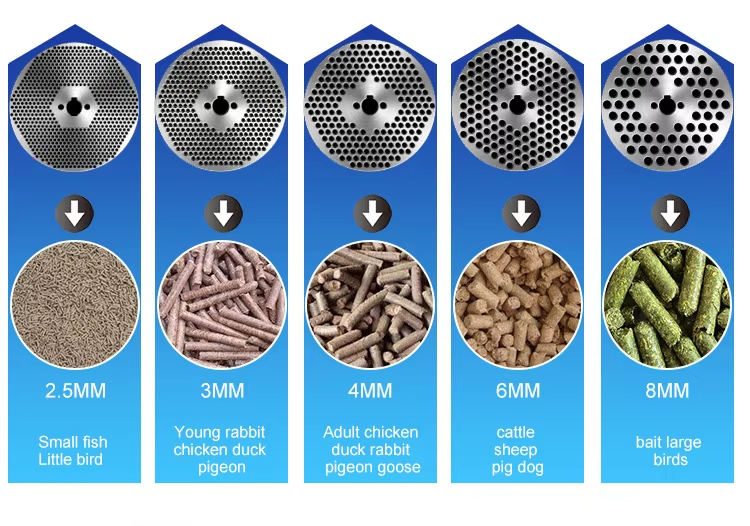
Compression Ratio (Length-to-Diameter Ratio): This is one of the most significant factors affecting hardness. A higher compression ratio means the material travels a longer distance under pressure within the die hole, resulting in denser and harder pellets. For livestock and poultry feed, the length-to-diameter ratio typically ranges from 1:9.5 to 1:12.5, whereas for feeds requiring high water stability—such as shrimp feed—it can be as high as 1:18 to 1:23.
Hole Diameter and Material: Smaller hole diameters yield harder pellets. Stainless steel ring dies produce pellets with superior surface quality and more appropriate hardness compared to those made with standard steel dies; they are particularly well-suited for high-quality products like creep feed for piglets.
Roller Gap: Ideally, the gap should be adjusted so that the rollers are only partially driven (rotated) by the movement of the ring die. An excessively large gap causes material slippage, leading to reduced output and a higher percentage of “fines” (crumbled particles). Conversely, a gap that is too small accelerates wear and tear, and can cause the material to dry out, harden, and clog the die holes.
2. Cooling and Drying: Moisture Loss and the Final Development of Hardness
Pellets exiting the pellet mill are typically at temperatures as high as 75–90°C with a moisture content of 14%–16%; at this stage, they are soft and prone to breakage. The purpose of cooling is not merely to lower the temperature, but also to achieve a uniform reduction in moisture content (generally to below 13%). This stabilizes the pellet structure, increases hardness, and facilitates storage.
The key to the cooling process lies in balancing the cooling duration with the airflow volume. Cooling typically lasts between 5 and 25 minutes. Smaller pellets allow for faster diffusion of internal moisture and heat, requiring shorter cooling times, whereas larger pellets require longer durations. Airflow volume must be matched to the pellet diameter; excessive airflow causes the pellet surface to cool too rapidly while the interior remains warm and moist. This leads to surface cracking, which actually reduces pellet hardness and durability, while increasing the rate of fines (powdering). Therefore, a “low airflow, longer duration” cooling strategy promotes uniform cooling throughout the pellet, resulting in a finished product with ideal hardness and an intact structure.
IV. System Synergy: The Triangular Balance of Formulation, Process, and Equipment
The final hardness of a pellet is the result of the interplay between the formulation, the physicochemical properties of the raw materials, and the production process—with each factor contributing approximately 40%, 30%, and 30%, respectively.
The formulation serves as the foundation: High-starch formulations, when properly conditioned, achieve a high degree of gelatinization and strong binding, resulting in harder pellets. Protein-rich ingredients exhibit good plasticity when heated, which facilitates the pelletizing process. Conversely, a high crude fiber content (exceeding 10%) weakens binding strength. Adding 1%–2% fat has a negligible effect on hardness, but exceeding 3%–4% will significantly reduce it.
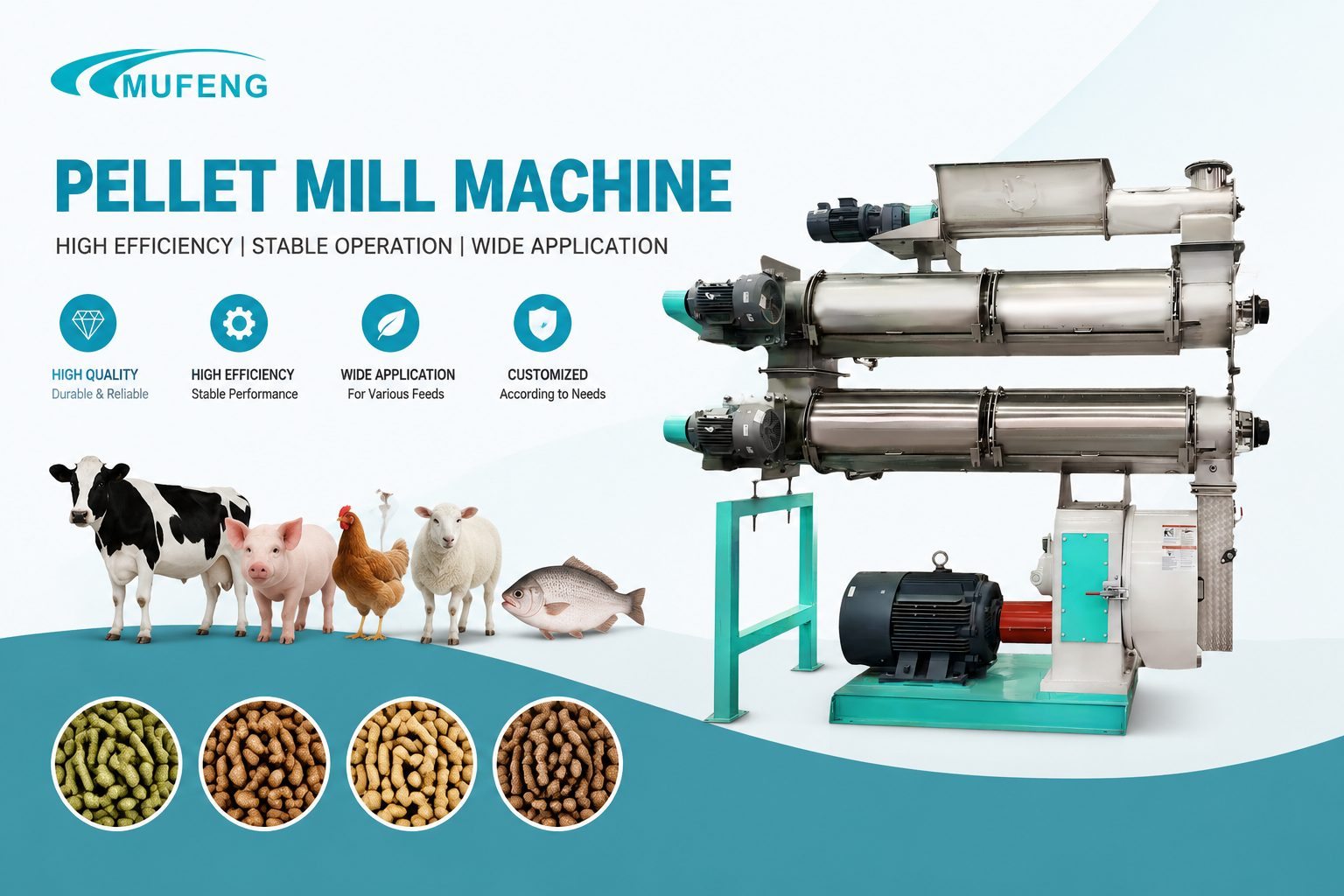
The process acts as a control mechanism: By adjusting factors such as grind size (finer raw materials contribute to higher hardness and better pellet formation), steam quality (high-quality, dry saturated steam is essential), conditioning parameters, and cooling conditions, one can precisely regulate the hardness of the final product. Equipment serves as the essential vehicle for production: from the precise metering provided by the feeder and the thorough conditioning (maturation) in the conditioner, to the exact compression within the ring die and the uniform drying in the cooler—the stable operation and optimized parameters of each piece of equipment are what ensure that the formulated recipe and process design are successfully translated into the desired final product.
In essence, feed pelletizing is far more than a simple physical extrusion process; it is a sophisticated craft that requires a delicate balance of heat, moisture, mechanical force, and time. Beginning with a stable feed supply, the material undergoes hydrothermal transformation during conditioning, takes its final shape through extrusion in the ring die, and is then stabilized via cooling and drying. Throughout this sequence, fluctuations in temperature and moisture at every stage profoundly influence the final hardness and quality of the pellets. Only by gaining a deep understanding of the dynamic interplay between these factors across the entire process chain—and by achieving a high degree of synergy between the recipe, the production process, and the equipment—can one consistently produce high-quality, highly stable pelleted feed that meets the ever-growing demands of modern animal husbandry.