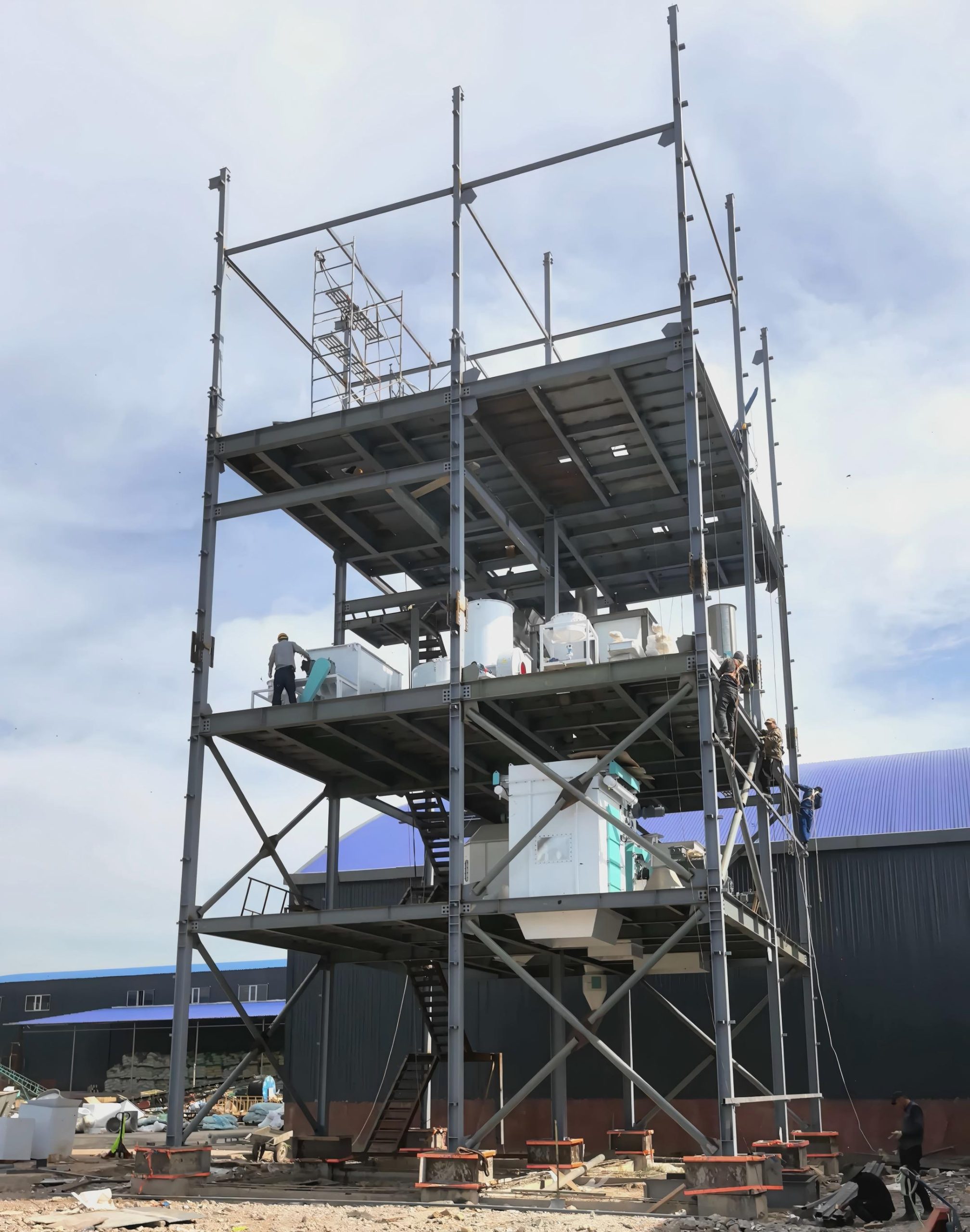
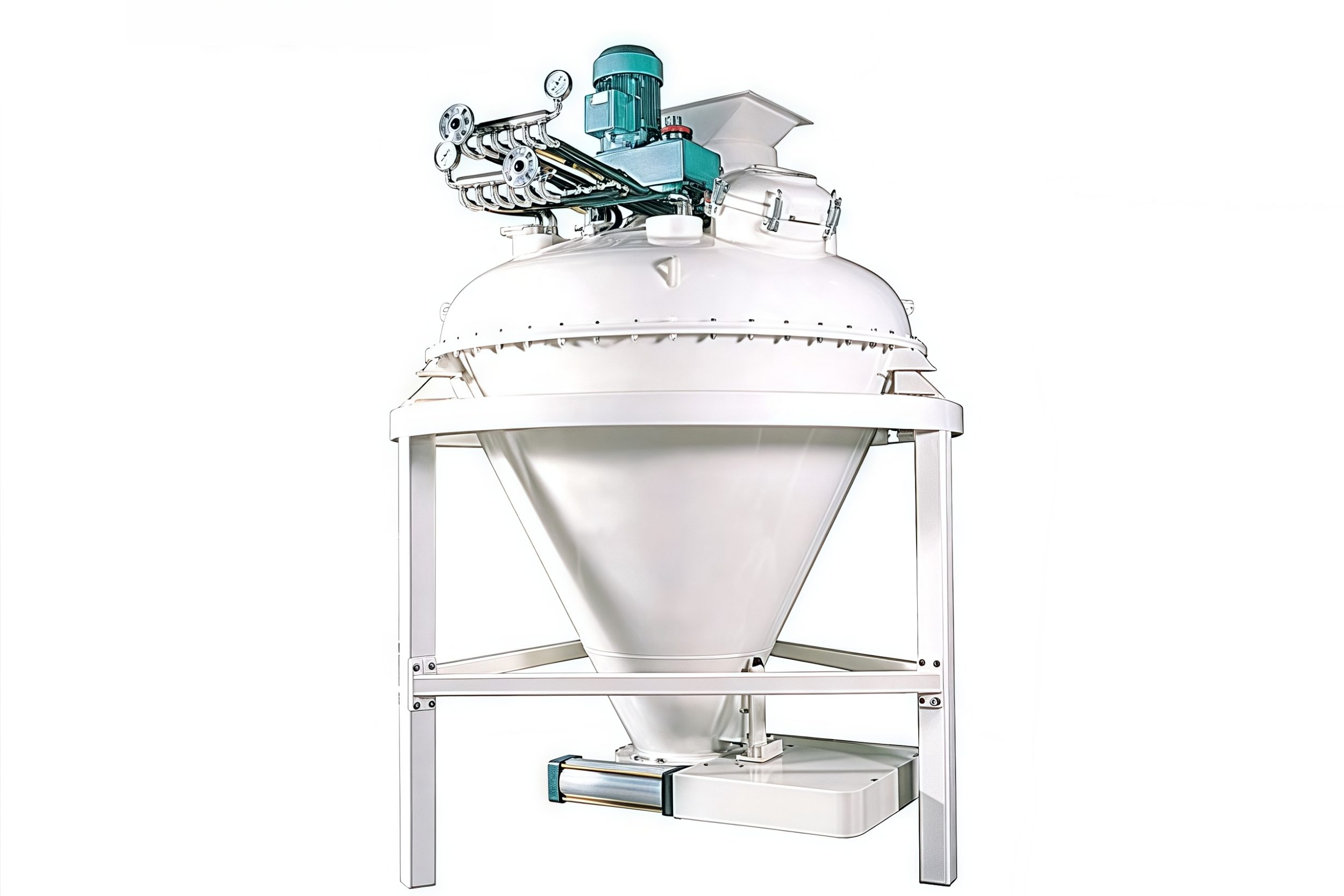
Dust explosions are caused by the high air pressure generated from the combustion of suspended dust in the air. The surface area of dust is much larger than that of the same amount of blocky materials, making it extremely flammable. If it is suspended in the air and reaches a certain concentration, it forms an explosive mixture. Once exposed to a spark, combustion may occur. During combustion, the higher the pressure and pressure rise rate, the greater the explosion risk.
1. Seven Types of Substances with Explosive Dust
Why do dusts explode? Dust is tiny particles of solid matter; if it is suspended in the air and reaches a certain concentration, it forms an explosive mixture that may cause rapid combustion or even explosion when exposed to a spark. Experts introduce that currently seven types of substances are known to produce explosive dust:
- Grains (e.g., wheat, starch);
- Feedstuffs(e.g., blood meal, fish meal);
- Agricultural and sideline products (e.g., cotton, tobacco);
- Forest products (e.g., paper powder, wood powder);
- Synthetic materials (e.g., plastics, dyes).
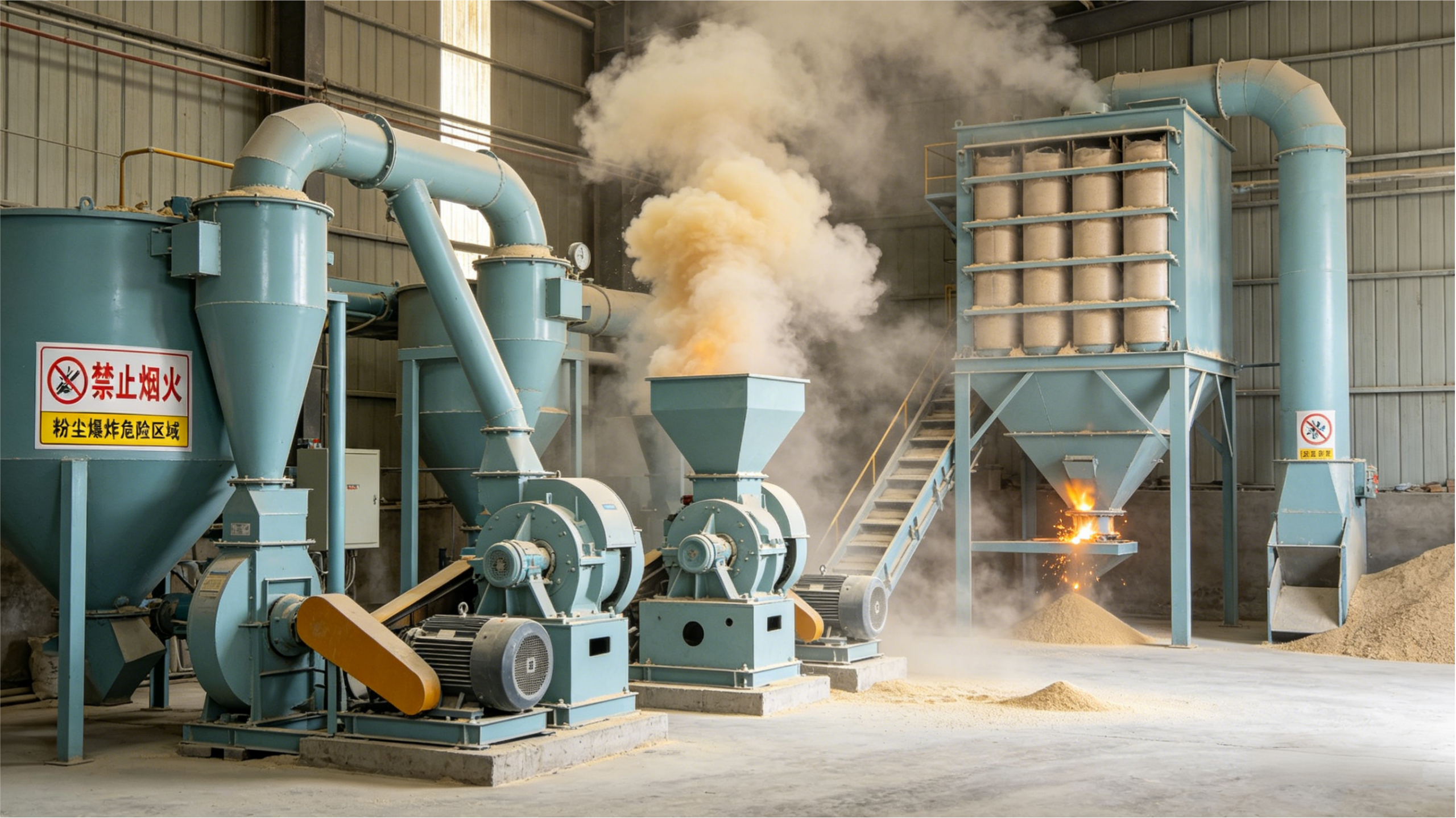
Dust fire and explosion accidents mostly occur in factories and mines such as coal mines, flour mills, sugar mills, textile mills, sulfur plants, feed processing plants, plastic factories, metal processing plants, and grain depots. What is little known to the public is that if the sugar concentration reaches about 10.3 grams per cubic meter, it may also explode. In daily life, a thunderstorm, even static electricity generated by friction from workers’ belts and chemical fiber overalls, can become a heat source sufficient to trigger a dust explosion.
2. Explosive Operations and Equipment in Production Links
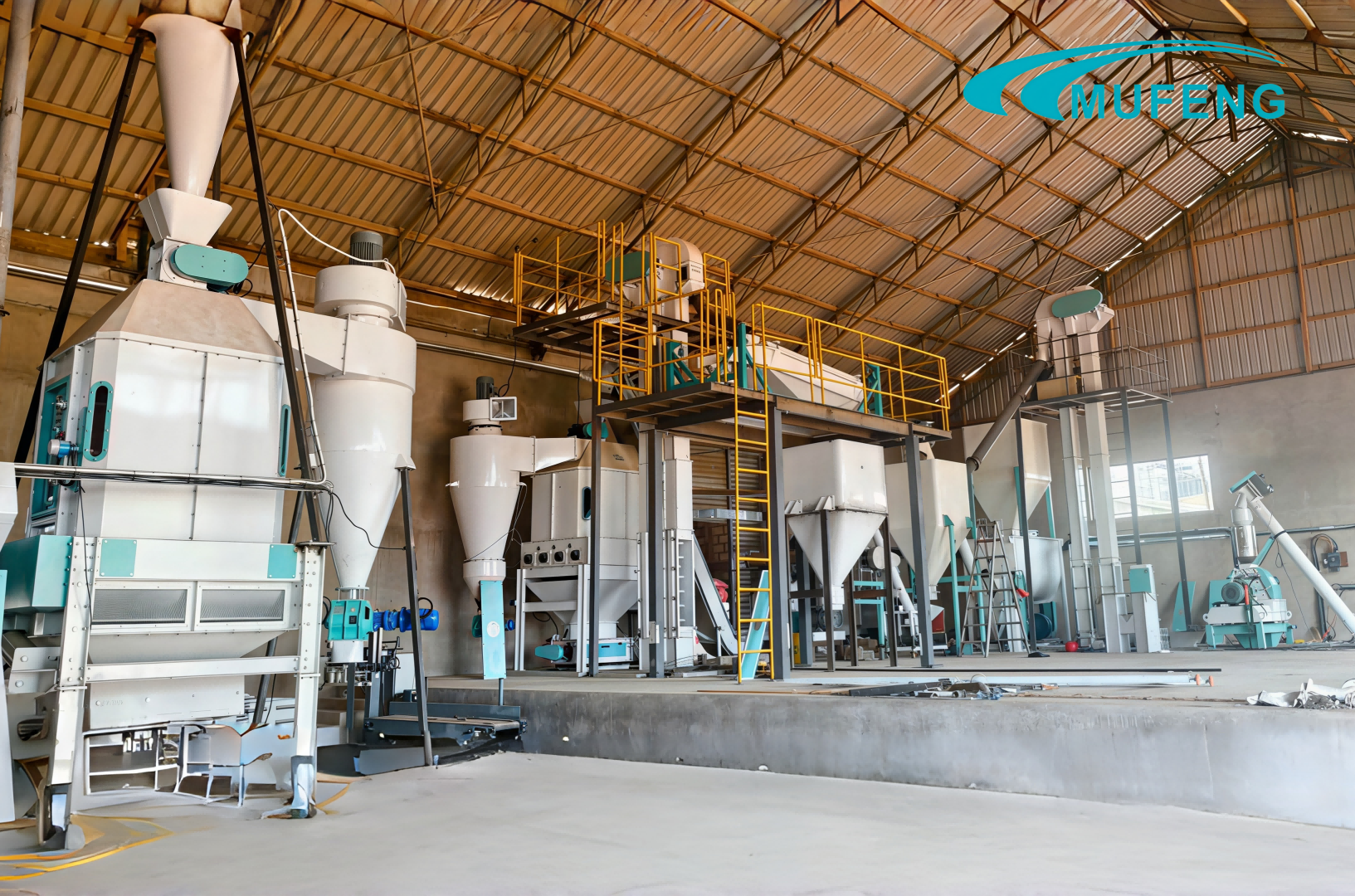
- Crushing link: A large amount of dust is raised by mechanical force, and the suspended dust in equipment is often within the explosion range. Moreover, various forces are more likely to generate friction, impact sparks, static electricity, and other ignition sources, leading to dust explosions.
- Dry dust removal link: Dust is suspended before dust removal, and the dust adhering to the filter material is also suspended during dust cleaning. If there is an ignition source with sufficient energy, a dust explosion accident may also occur.
- Conveying link: Dust is in a fluffy suspended state, which already meets the main conditions for dust explosion; as long as there is a suitable ignition source, it will be extremely dangerous. In addition, the conveying pipeline is connected to the dust removal equipment, which is very easy to cause a secondary explosionand cause greater losses.
- Cleaning link: If dust accumulates on the surface of factories and equipment and is not cleaned in time, it is easy to cause an explosion accident after reaching a certain concentration and flying up. During the cleaning process, it is also very easy for dust to fly and form a suspended explosion condition.
- Inspection and maintenance link: During inspection and maintenance operations, hot work is often carried out on-site, such as gas cutting, welding, and polishing. If there is explosive dust on-site, it is very easy to cause a dust explosion.
3. Common Causes of Dust Explosions
Operational Causes
① Inadequate risk awareness and insufficient ideological attention;② Operators lack dust explosion-proof awareness;③ Hot work permits for dust areas are not in place;④ Dust cleaning is not timely or there are dead corners;⑤ Defects in operating procedures;⑥ Operators violate operating rules;⑦ Lack of protective equipment;⑧ Lack of regular testing.
Technical Causes
① Unreasonable layout of dust areas, close to ignition sources or flammable and explosive places;② Poor equipment sealing, resulting in dust leakage;③ No shock absorption device for power equipment, causing dust raising;④ Equipment friction and collision generate heat energy and sparks;⑤ Anti-static grounding measures are not in place;⑥ Poor ventilation in dust areas.
4. Specific Measures to Prevent Dust Explosions
① Control Air Dust Concentration to Meet Sanitary Standards
- Feed processing and feed raw material storage and transportation equipment and devices must be operated in a closed manner. If there is any leakage or dripping, it should be repaired in time; if it cannot be repaired, it should be replaced in time.
- Operate the ventilation and dust removal air network well. During air network operation, check for air leakage and powder spraying in the air network frequently, especially check and clean the accumulated dust in horizontal pipes and elbows to avoid increased resistance and affect dust removal effects. The positions of gate valves, doors, and cleaning doors should be adjusted properly to avoid affecting system balance and dust removal effects.
- Adhere to the operating system that ventilation and dust removal devices start 15 minutes earlier and shut down 15 minutes later than production equipment.
- Strictly implement the regular cleaning systemto timely remove accumulated dust. The accumulated dust deposited on walls, beams, doors, windows, racks, and equipment in feed processing workshops and warehouses should be cleaned frequently, because this is one of the conditions that can easily constitute a secondary explosion. When cleaning, care must be taken to avoid dust flying; it is best to use fixed or mobile cleaning devices.
- Impurity dust removed from feed raw materials is prohibited from being returned to feed raw materials; it should be collected separately and sent to a special safe location for disposal.
- Regularly measure the air dust concentration at operating points in hazardous areas and parts. If it exceeds the standard, corresponding measures must be taken, necessary dust detection and monitoring instruments and equipment should be configured, and special personnel should be assigned to operate and manage them.
② Control Ignition Sources in Hazardous Areas
- Prohibit bringing matches, lighters, etc., into hazardous areas, prohibit smoking, and prohibit wearing shoes with iron nails and iron palms into hazardous areas. Prohibit using iron shovels to shovel dust on concrete floors (lead shovels should be used instead). Prohibit conducting open-fire welding and cutting operations in hazardous areas.
- Raw grains must pass through iron grid screens and magnetic separation devicesbefore entering the workshop to prevent metal or other hard blocks from entering transportation equipment and generating sparks that cause explosions. During production, metal impurities must be removed by magnetic separators before entering impact machinery, grinding machinery, bucket elevators, buried scraper conveyors, and other equipment.
- Prevent mechanical friction and physical heat energy generation. Bearings of equipment should be installed on the exposed part of the casing, and automatic temperature measurement should be carried out with temperature sensors to timely handle dangerous situations. All bearings should be inspected and lubricated regularly.
- Prevent transmission belts from slipping. Stall monitors should be installed on the upper and lower wheels of bucket elevatorsto prevent belt wheels from rotating slowly and slipping, causing friction and heat. The friction surface of the upper box head wheel of high-yield elevators should be provided with a protective layer (such as neoprene lining or resistance bars) as much as possible to prevent slipping. Prevent the bucket belt from running in a serpentine shape and colliding with the inner wall of the cylinder. Try to use plastic or polyurethane buckets instead of steel buckets to prevent sparks from colliding with machinery, and open explosion vents in the middle and lower parts.
- Belt conveyor belts should adopt vulcanized jointsinstead of bolt or belt buckle joints. Sliding pipes, pipe fittings, and racks in the workshop should be connected by bolts as much as possible to facilitate disassembly and maintenance and avoid welding operations.
- Electrical equipment in workshops and warehouses should be dust-proof; electrical equipment and appliances in humid and high-concentration dust areas should be explosion-proof; electrical lines should meet safety and explosion-proof requirements, and regular inspections should be carried out to prevent short circuits. Wire ends and contacts must be sealed with covers or tape and must not be exposed; prevent electrical equipment from overloading and overheating.
- All buildings, equipment, metal bins, hoppers, and pipelines must be groundedto avoid static charge accumulation; the resistance of the grounding circuit should be measured regularly; lightning protection devices should be installed on medium and high-rise buildings.
- At places where powdered materials are loaded and unloaded, automobile slope inclined platforms should be set upso that cars can leave without starting the engine.
- The internal lighting of silos should use low-voltage spotlights instead of portable lights; level sensors should be installed in silos and hoppersto grasp the amount of materials and prevent blockage accidents.
- Regularly check the integrity of fan blades to avoid sparks from falling blades causing explosions.

5. Enterprises Should Do a Good Job in Daily Dust Explosion-Proof Education
Enterprises should determine whether there are combustible dusts in their enterprises and which places may have explosive dust environments. Second, take measures to eliminate dust sources. In addition, enterprises should seriously carry out safety production and dust explosion-proof education, popularize dust explosion-proof knowledge and safety regulations, so that employees understand the danger level of dust explosion hazardous places in their enterprises and explosion-proof measures. Employees in dangerous positions should receive specialized safety technology and business training and be allowed to work only after passing the examination.