
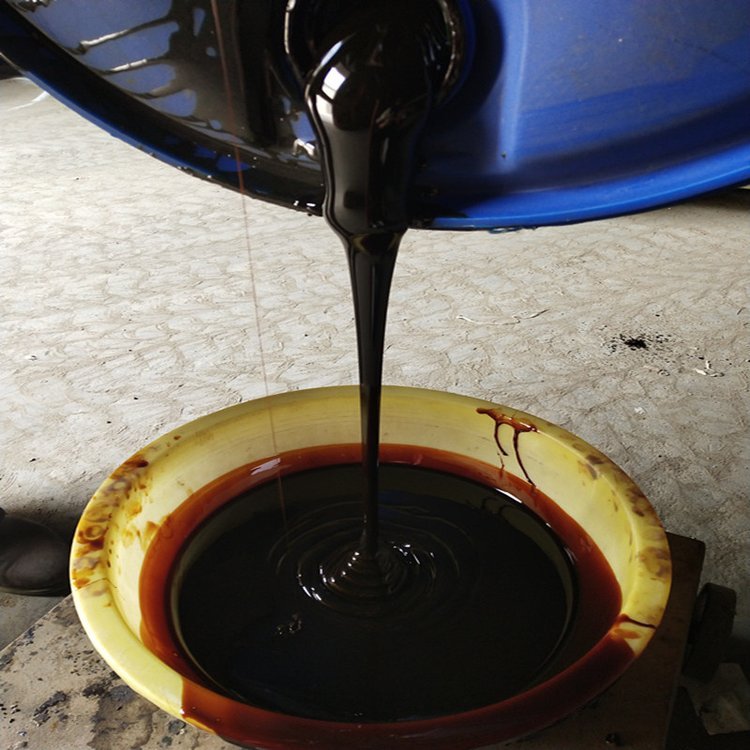
Molasses is a cost-effective and widely used feed raw material. It is not only an excellent energy source, but also offers advantages such as rapid digestibility, improved palatability, reduced dust, and enhanced pellet quality. In recent years, molasses has been increasingly adopted by feed mills in China.
However, the application of molasses presents a number of practical challenges. Based on long-term production experience, the following is a summary of molasses storage, conveying, and addition technologies.

Molasses is a viscous liquid with good fluidity at ambient temperatures. Outdoor storage at temperatures down to approximately –20°C does not significantly affect its usability. Therefore, conventional storage tanks can be used.
Due to its high moisture content and organic components such as sugars, molasses is corrosive to storage equipment. Stainless steel tanks are recommended, and in special conditions, hot water heating coils can be installed at the tank outlet to ensure smooth discharge.
As an industrial by-product, molasses contains relatively high levels of impurities. Its high viscosity also makes filtration difficult. Filters should be installed in the pipeline, with sufficient surface area to ensure the required flow rate. Since filters are prone to blockage, regular cleaning is essential.
Molasses is commonly conveyed using gear pumps; however, these pumps often suffer from short service life due to rapid wear of seals and gears. In high-volume conveying applications, pneumatic diaphragm pumps have proven to significantly improve operational stability.
At present, molasses is mainly added through the following methods: mixer addition, conditioner addition, molasses mixer addition, BOA compactor addition, and post-coating systems.
Mixer addition is the earliest method used, adapted from conventional liquid fat addition processes. This approach is simple and requires minimal modification to existing equipment, making it suitable for all types of feed products.
However, due to the low rotational speed of mixers, this method is only suitable for low inclusion levels (generally below 3%). It often results in poor mixing uniformity, high equipment residue, frequent cleaning requirements, and significantly reduced service life of conveyors and elevators.
Conditioner addition is mainly used for pelleted feeds. Molasses is added into the conditioner together with steam, where high-speed mixing enables effective blending with the feed material. According to equipment suppliers, inclusion levels of up to 10% are theoretically possible, while practical tests show that 5% is stable.
In pig feed production, molasses inclusion is typically around 2%. Higher levels may negatively affect pellet durability. Molasses inclusion is closely related to formulation composition, raw material moisture, conditioning time, and the pellet mill’s moisture tolerance. Although residue increases when adding molasses in the conditioner, it is significantly lower than with mixer addition.
A molasses mixer is a dedicated continuous mixing device specifically designed for molasses application. Its working principle is similar to that of a conditioner, using high rotational speed to ensure effective mixing while reducing residue.
In the production process, the molasses mixer is installed after the main batch mixer, enabling independent molasses addition. This eliminates many disadvantages associated with adding molasses in conventional mixers and allows for higher inclusion rates.
In theory, molasses inclusion can reach 10% or higher. In ruminant feed production, stable operation is typically achieved at around 4%. Excessive inclusion reduces material integration and increases residue in downstream equipment.
Different paddle configurations significantly affect performance. Larger paddles increase mixer load and residue but improve mixing uniformity and allow higher molasses inclusion with less downstream residue. Smaller paddles reduce load and residue in the mixer, improve efficiency, but limit molasses inclusion and increase downstream residue.
The BOA compactor, manufactured by PTN (Netherlands), is a conditioning and compression device consisting of a conditioning section and a compression section. After conditioning, material enters the compression zone, where rollers press the material through an adjustable annular gap before entering the pellet mill. This process involves high temperature and pressure.
Molasses is added during conditioning and further integrated during compression, significantly improving both molasses incorporation stability and pellet durability. This technology is widely applied in ruminant pellet feed production.
Post-coating technology has been widely and successfully used for liquid fat application, and recent years have seen increasing trials with molasses. In pellet feed production, a post-coating system is installed after the finished product bin outlet.
The system consists of molasses spray pipelines and a continuous ribbon mixer. Pellets are sprayed with molasses, mixed, and then conveyed to packing scales. This method is suitable for low inclusion levels and minimizes the impact on production efficiency and system residue. However, it requires high molasses quality and excellent system stability.
Molasses addition is essentially a liquid addition and mixing process, but its unique material characteristics make it more challenging. Based on years of experience, the key challenge is not molasses viscosity or spray uniformity, but rather its slow absorption by feed materials.
Technologies such as molasses mixers and BOA compactors do not merely improve spray distribution; instead, they enhance material integration by extending mixing time or applying compression. These methods significantly increase the likelihood of molasses absorption, thereby improving overall application quality.
When optimizing molasses addition processes, it is therefore recommended to focus on improving molasses absorption rather than solely on spray uniformity.