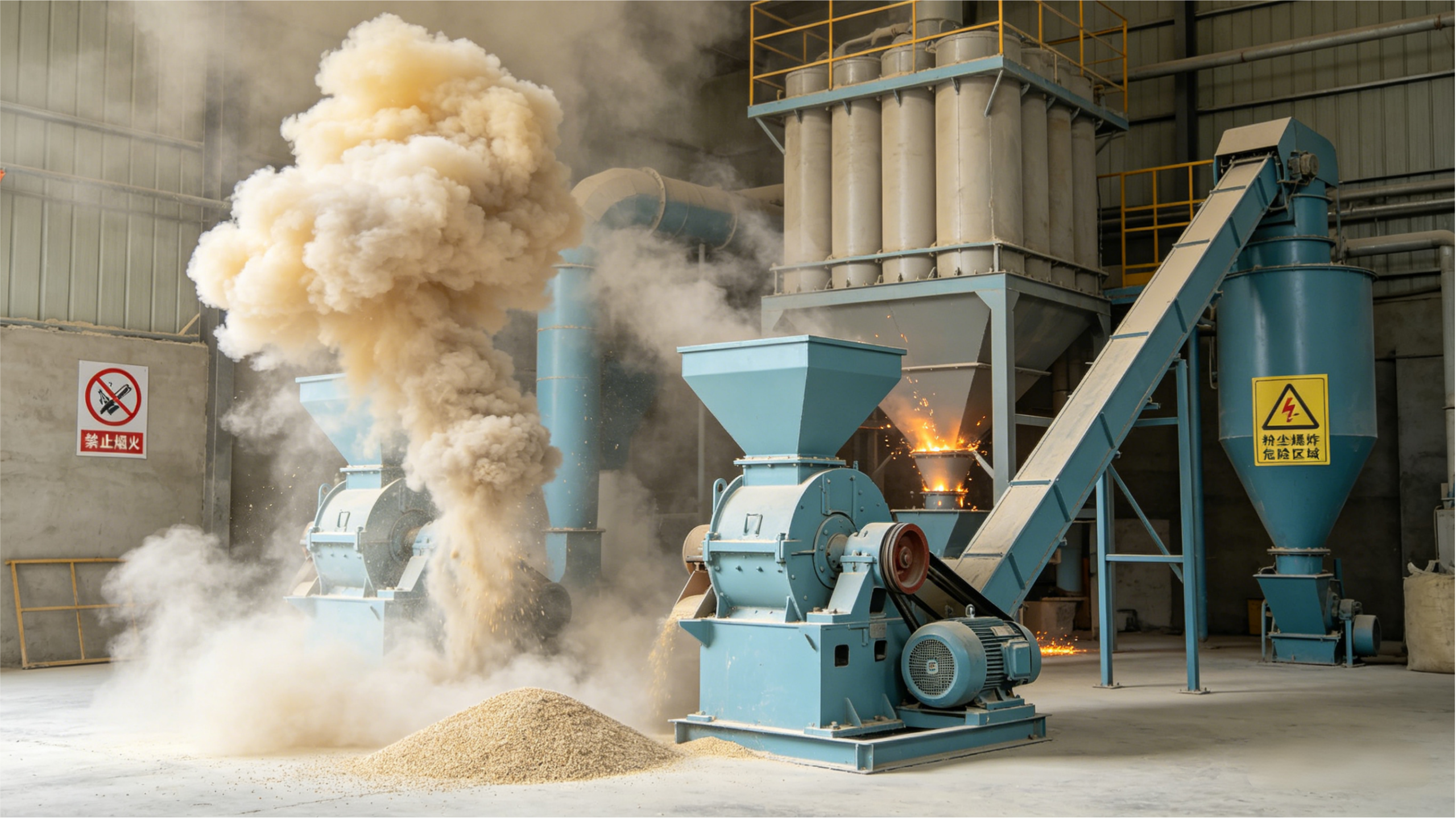

After feed products undergo pelleting or extrusion, the high temperature and pressure environment severely damages their nutritional components. Heat-sensitive substances, in particular, are almost completely degraded at temperatures above 80 degrees Celsius. For these substances, even large additions are insufficient to ensure the absorption of their beneficial components by the animals.
This is where post-treatment coating processes come in. Post-treatment coating involves spraying heat-sensitive substances onto the feed pellets after pelleting or extrusion to prevent nutrient loss during heat processing. Vertical vacuum sprayers and horizontal rotary vacuum sprayers are the two main types of equipment used in post-treatment coating of feed production.
To help you understand their key differences more clearly, the table below summarizes and compares them from multiple perspectives.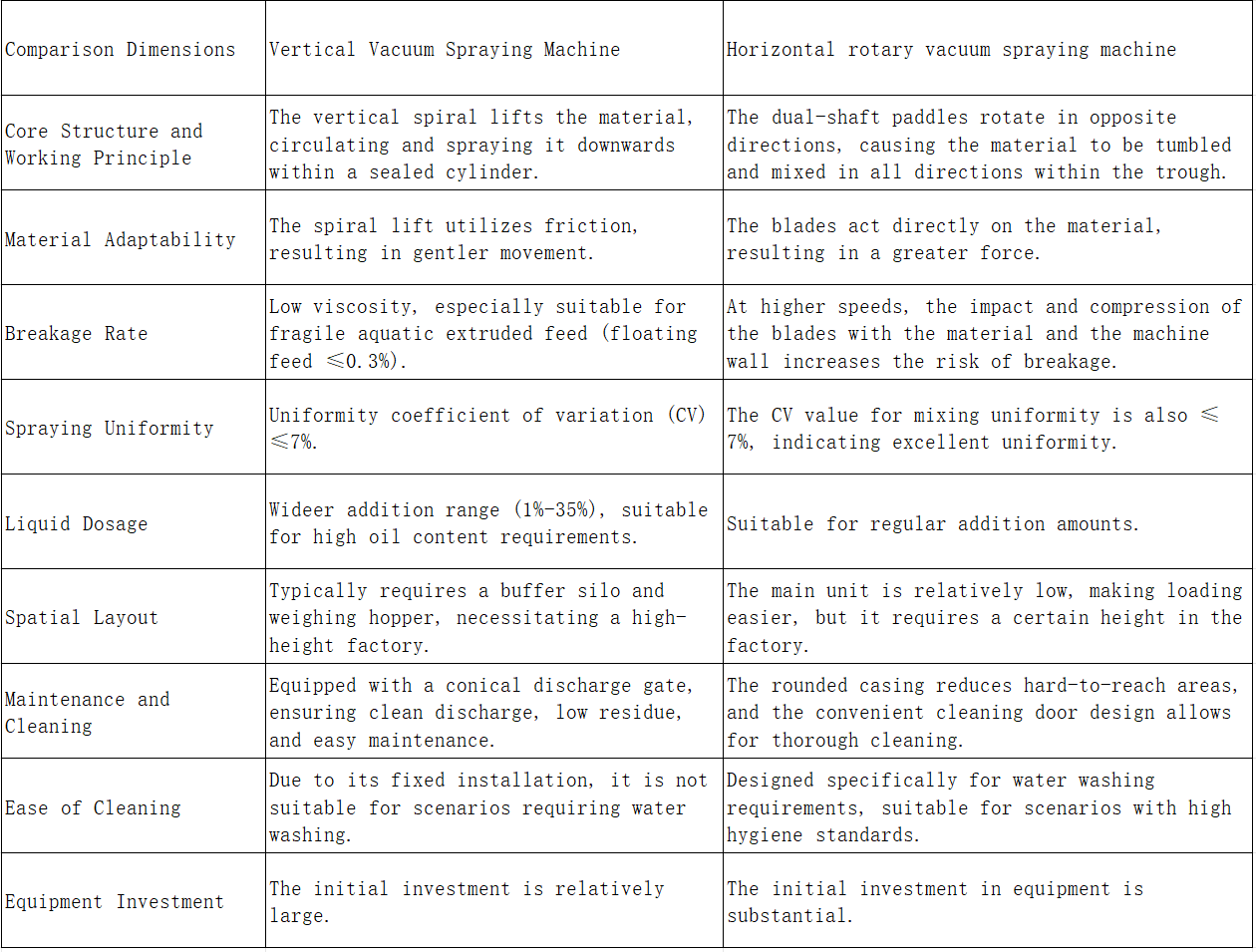
Vacuum spraying machines operate in a high-vacuum environment, performing a series of operations including mixing, spraying, secondary spraying, vacuum return, and powder coating. Therefore, the airtightness of the equipment is crucial. This also leads to relatively inconvenient cleaning, as the spraying materials are generally liquids and greases, inevitably resulting in adhesion. Long-term accumulation can cause quality and safety issues. The cleaning process for a typical vertical spraying machine is shown in the following diagram: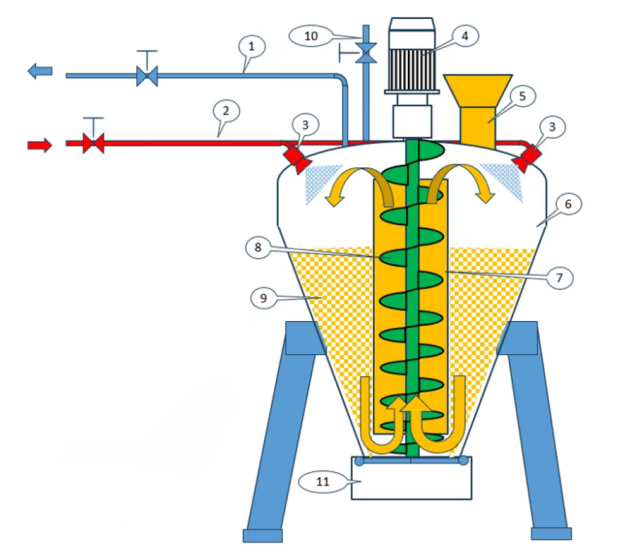
1-Vacuum pipe 2-Liquid material pipe 3-Sprayer head 4-Motor 5-Infeed valve 6-Pressure housing 7-Inner tube 8-Inner spiral 9-Material to be sprayed 10-Vent pipe 11-Unloading valve.
The cleaning fluid is added to the spraying machine through the #5 feed valve or the #3 nozzle, and after stirring, it is discharged through the #11 discharge valve. Due to its internal tubing, subsequent air drying or drying is relatively complicated. The structure of a horizontal rotary vacuum spraying machine is roughly as shown in the following diagram: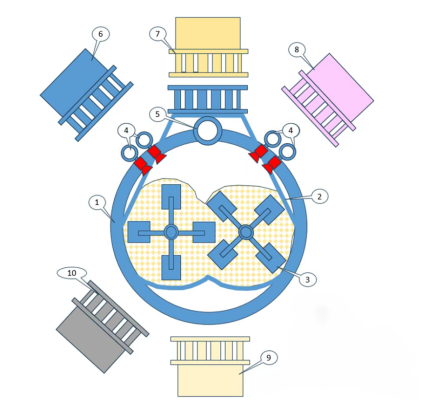
The horizontal rotary vacuum sprayer has only one feed inlet, which is more conducive to maintaining vacuum. During feeding, discharging, water intake, hot air intake, and wastewater discharge, operation can be performed according to the set rotation direction corresponding to the interface, as shown in the example diagram below.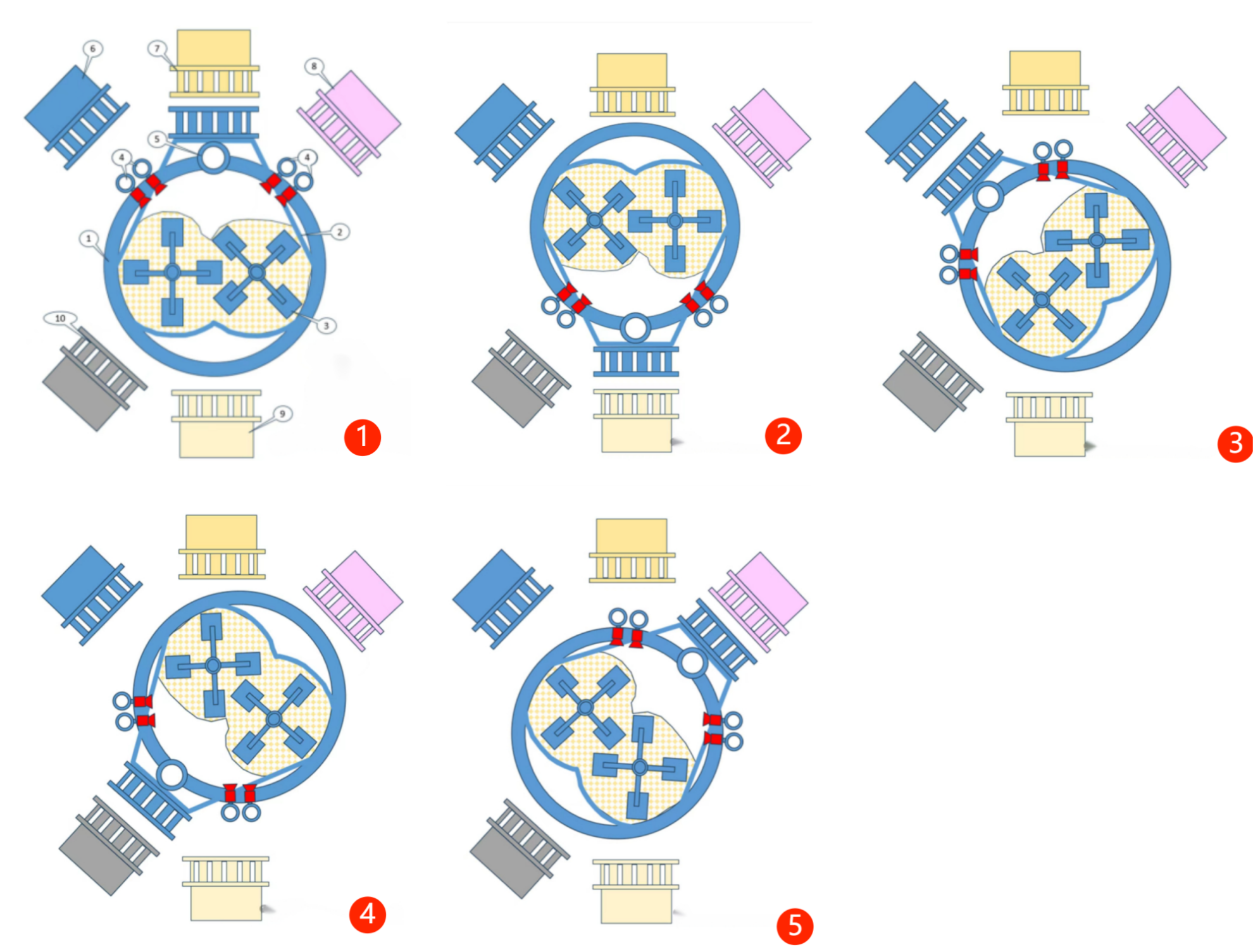
💡 How to Choose the Right Equipment
Scenarios for Choosing a Vertical Vacuum Sprayer:
1. Primarily producing expanded aquatic feed (especially high-value fish and shrimp feed), with extremely high requirements for breakage rate.
2. Formulas requiring a high liquid content (e.g., exceeding 10%), or requiring the use of high-viscosity liquids.
3. Large-scale production with ample vertical space in the factory.
4. Liquids that are relatively easy to clean or have low cleaning requirements.
Scenarios for Choosing a Horizontal Rotary Vacuum Sprayer:
1. Primarily producing pet food or ordinary aquatic feed with low breakage rate requirements.
2. Production processes requiring strong mixing and agitation capabilities, with high requirements for uniformity.
3. Factory height is limited, but length is sufficient.
4. Relatively high requirements for product hygiene standards. Different application scenarios require different equipment to better meet the specific needs of different situations. Choosing the right tool is more conducive to achieving product quality goals.