Introduction
Many aquaculture farmers tend to evaluate the quality of feed solely by looking at the “crude protein” content listed on the packaging. However, crude protein is merely a label; it does not represent the actual amount of protein that an animal absorbs and converts into muscle tissue. To accurately assess the digestibility and utilization efficiency of a feed, consider the following evaluation sequence: first, examine the core analytical data; next, review the raw materials and processing methods; then, conduct on-site observations of feces and water quality in the ponds; and finally, verify the actual growth and production outcomes.
Digestibility: The proportion of ingested nutrients that are absorbed by the digestive tract. In aquaculture, “apparent digestibility” is commonly used as a reference.
Utilization Efficiency (Deposition Rate): The proportion of absorbed nutrients that are actually converted into body mass (muscle). This is typically measured by the “nitrogen retention rate.”
High digestibility does not guarantee high utilization efficiency. Even if protein is well-digested and absorbed, factors such as an imbalanced amino acid profile, insufficient energy supply, or poor health of the animal’s liver and intestines can prevent the absorbed protein from being used for growth. In such cases, the nitrogen retention rate remains low, leading to high feed consumption but poor weight gain.
Step 1: Focus on “Digestible Protein,” Not Crude Protein
Calculation Formula: Digestible Protein = Crude Protein × Apparent Protein Digestibility
For a novel raw material with 48% crude protein and 72% protein digestibility, the digestible protein is only 34.6%.
For standard soybean meal with 44% crude protein and 88% protein digestibility, the digestible protein reaches 38.7%.
Consequently, a raw material with a higher crude protein figure may actually provide less protein that the animal can truly absorb and utilize.
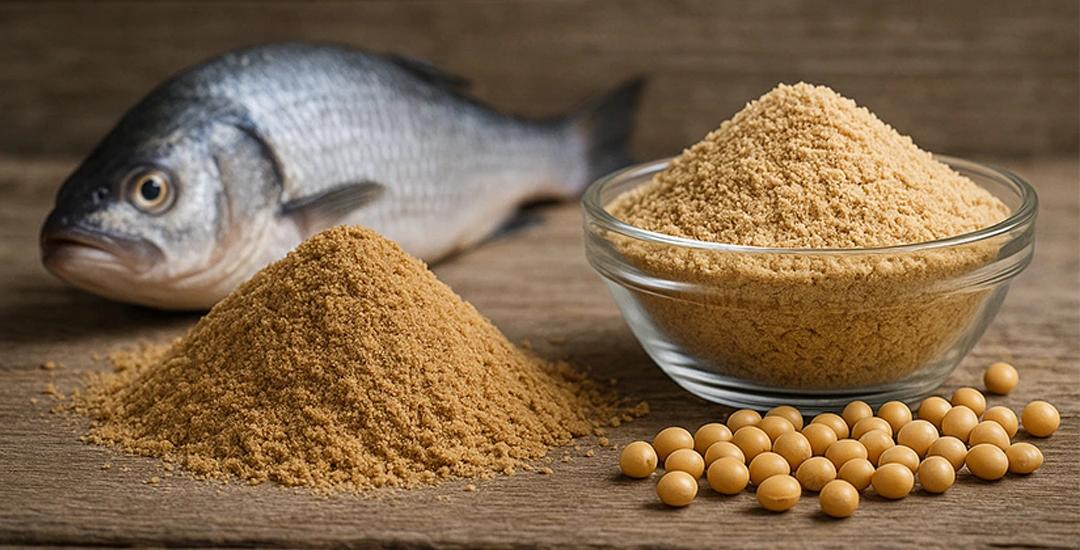
✅ Four Key Indicators to Prioritize:
👉 If a feed product only lists crude protein without providing data on digestibility, it is impossible to determine its true value. Step 2: How Raw Materials and Processing Methods Determine the Upper Limit of Digestibility
The choice of feed ingredients and the production processes employed directly dictate the upper limit of digestibility:
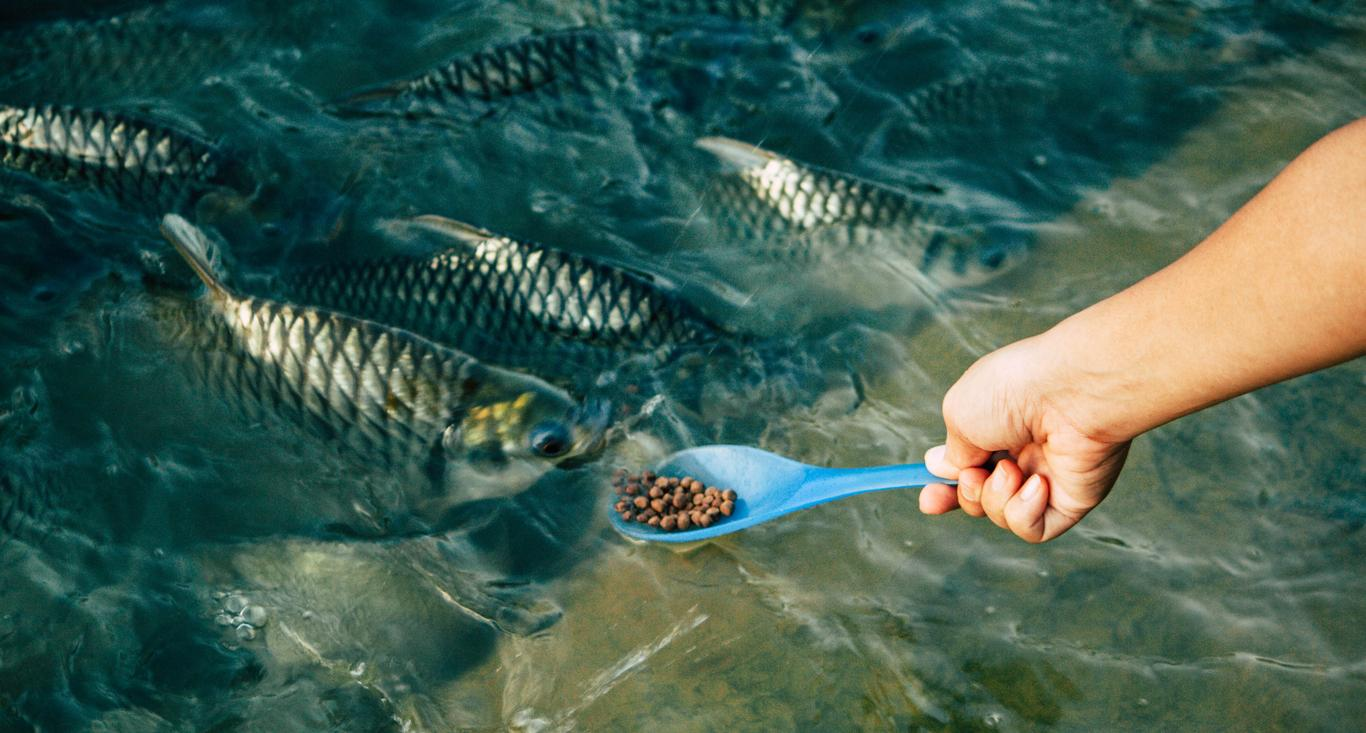
Digestibility is not a fixed value; it is influenced by the species being farmed, their size, water temperature, and the amount of feed provided.
Step 3: On-Site Observation—Examining Feces
Assuming the same feeding rate:
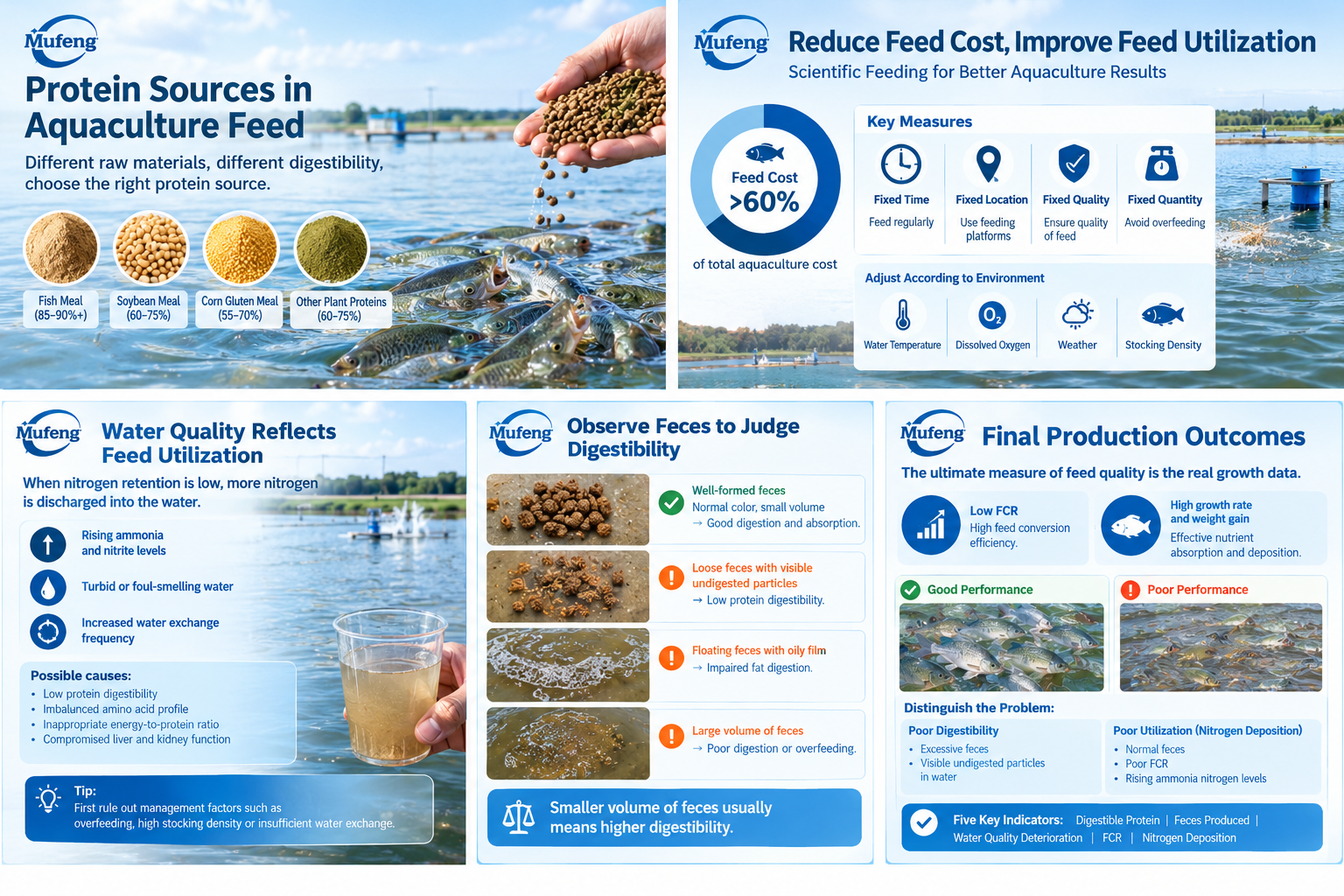
✅ Well-formed feces, normal color, and small volume → Good digestion and absorption.
⚠️ Loose feces containing visible, undigested feed particles → Low protein digestibility.
⚠️ Floating feces with an oily film on the surface → Impaired fat digestion.
⚠️ Large volume of feces, easily causing water turbidity → Poor digestion or overfeeding.
Generally, when feed intake is similar, a smaller volume of feces often indicates higher feed digestibility.
Step 4: Assessing Water Quality to Determine Nutrient Retention Efficiency
A low nitrogen retention rate indicates that the absorbed protein has not been effectively converted into body growth; instead, a significant amount of nitrogen is being released into the water through excreta. Assuming consistent stocking density, water exchange frequency, and feeding rates:
If ammonia nitrogen and nitrite levels in the pond rise rapidly,
the water becomes turbid or foul-smelling, and the burden of water exchange increases,
the primary causes are likely: low protein digestibility, an imbalanced amino acid profile, an inappropriate energy-to-protein ratio, or compromised liver and kidney function in the fish or shrimp.
When troubleshooting, first rule out management-related factors such as overfeeding, excessive stocking density, or insufficient water exchange.
Step 5: Verify Final Production Outcomes—Growth Metrics
Under identical rearing environments and management practices:
✅ A low feed conversion ratio (FCR) indicates high feed conversion efficiency and superior overall digestibility and utilization.
✅ High specific growth rates and weight gain rates indicate effective nutrient absorption and protein deposition.
👉 If the crude protein content is high but the FCR remains persistently high, it is highly likely that there is a deficiency in digestible protein or poor protein utilization.
Distinguishing between these two types of issues:
Excessive feces or visible undigested particles in the water suggest poor digestibility.
Normal-looking feces combined with a poor FCR and a tendency for ammonia nitrogen levels to exceed safe limits suggest issues with nutrient utilization (nitrogen deposition).
Common causes of low utilization include: amino acid imbalances, an improper energy-to-protein ratio, a sub-optimal health status in the fish or shrimp, or an excessive metabolic burden on the liver and kidneys.
To evaluate the quality of a feed, focus on five key indicators: the level of digestible protein, the amount of feces produced, the rate at which water quality deteriorates, the feed conversion ratio (FCR), and the extent of nitrogen deposition.
Digestibility determines whether nutrients can be absorbed by the digestive tract, while utilization determines whether those absorbed nutrients are effectively converted into flesh. Ultimately, the final growth data serves as the most authentic measure of a feed’s performance.