
With the popularization of aquaculture technology, the aquaculture industry has developed rapidly, which has led to an increase in the demand for aquafeeds. There are various types of aquafeeds available in the market currently. Protein source is an indispensable nutrient source in aquafeeds. Fish and shrimp have a relatively high demand for protein in compound feeds during their growth period, which is 2 to 4 times that of livestock and poultry animals. Protein raw materials in fish feeds are mainly divided into three categories: plant-based, animal-based, single-cell, and new-type proteins. Different raw materials for aquafeeds differ in amino acid composition, digestibility, anti-nutritional factors, and cost, and their application prospects are also different. The following is an introduction to protein raw materials for aquaculture feeds and their development prospects.
Protein Raw Materials for Aquaculture Feeds and Their Prospects
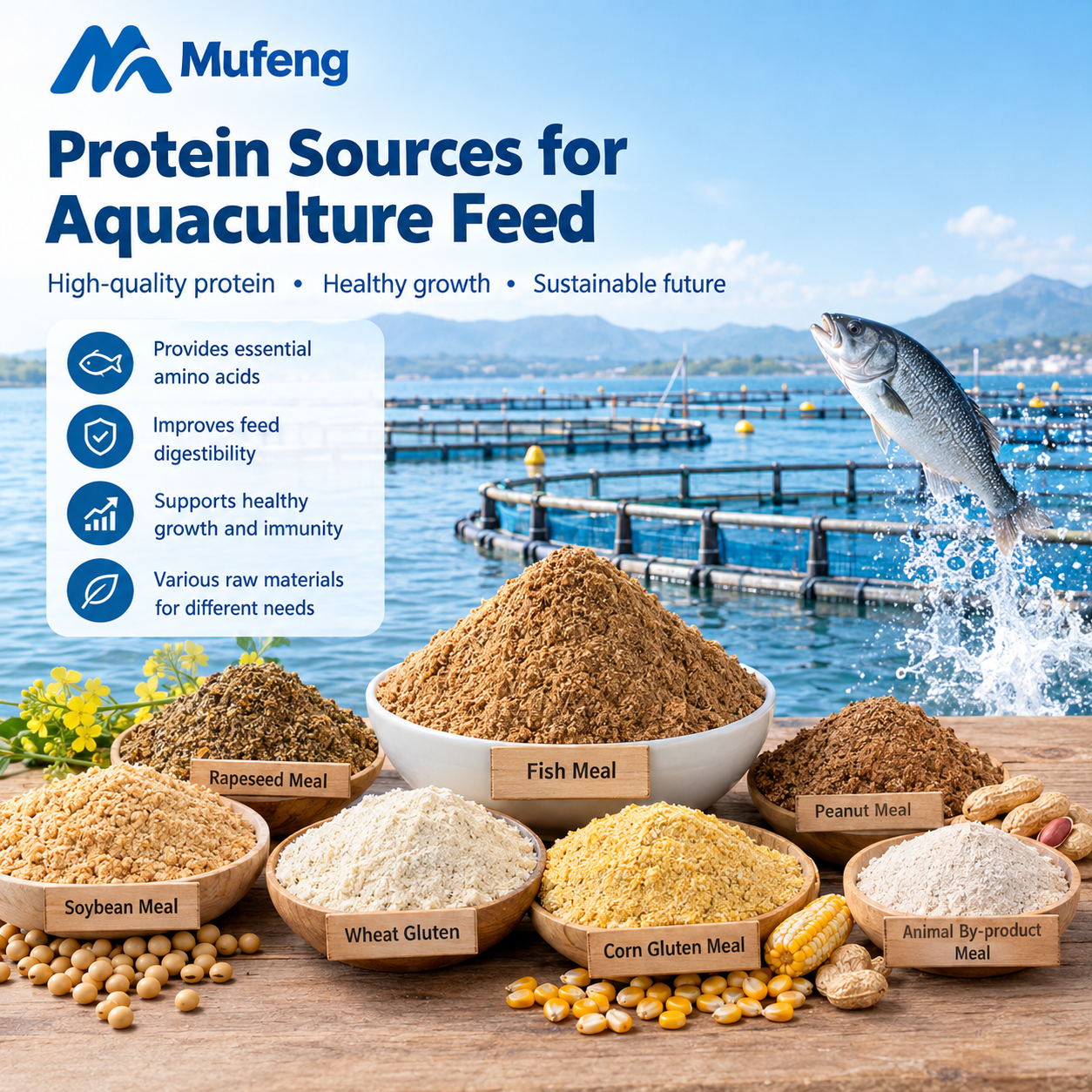
Fish meal: Fish meal is characterized by a crude protein content of 60% to 72%, balanced amino acids, good palatability, and contains unknown growth factors. It is recognized as “the best protein source for aquafeeds, bar none”. However, it faces issues such as limited resources, high price with large fluctuations, and its sustainability has been questioned. In terms of application prospects, it is still an important raw material for high-end seedling feeds and carnivorous fish, but its dosage will gradually decrease, and it will be partially replaced by other protein sources with the development of science and technology.
Soybean meal and soy protein: Soybean meal and soy protein are characterized by a crude protein content of 43% to 48%, relatively balanced amino acids, but insufficient methionine, and contain anti-nutritional factors such as trypsin inhibitor and soybean antigen. At present, it is the mainstream alternative protein source for fish meal. Fermented soybean meal, enzymatically hydrolyzed soybean meal, and soy protein concentrate can improve digestibility and reduce anti-nutritional factors, so it has broad application prospects.
Rapeseed meal: Rapeseed meal is characterized by a crude protein content of 35% to 40% and relatively high methionine content, but it contains glucosinolates, erucic acid, tannin, phytic acid and other anti-nutritional substances. Double-low rapeseed meal and fermented rapeseed meal can partially replace fish meal and soybean meal, and it has a good application prospect in feeds for herbivorous and omnivorous fish in aquaculture.
Cottonseed meal: Cottonseed meal is characterized by a crude protein content of about 40%, low lysine content, and contains gossypol. Detoxified cottonseed protein from cottonseed meal can be used in limited quantities, and it needs to be supplemented with lysine, which is suitable for mixing with soybean meal and rapeseed meal.
Peanut meal: Peanut meal is characterized by a crude protein content of 45% to 50%, but low lysine and methionine content, and it is easily contaminated by aflatoxin. When used in aquafeeds, it needs to be mildew-proof and detoxified, and used in combination with amino acids, and can be used as a regional protein source.
Corn gluten meal and wheat gluten: Corn gluten meal has a crude protein content of about 60% and high methionine content, but low lysine and tryptophan content; wheat gluten has a crude protein content of 75% to 80%, good palatability and cohesiveness, but low lysine content. Corn gluten meal and wheat gluten are often used to supplement methionine or as binders, and need to be matched with lysine, which is suitable for special aquatic feeds.
Animal by-product protein: Animal by-product protein includes meat and bone meal, blood meal, feather meal, silkworm pupa meal, etc. Its characteristics are as follows: meat and bone meal has a protein content of about 50%, but high ash content; blood meal has high lysine content but poor digestibility; feather meal has high protein content but needs hydrolysis; silkworm pupa meal has a relatively good amino acid composition. In terms of application prospects, after hydrolysis, fermentation and enzymatic hydrolysis, it can partially replace fish meal, but attention needs to be paid to amino acid balance, hygienic safety and regulatory restrictions.
In conclusion, fish meal as a nutritional protein for aquaculture feeds still cannot be completely replaced at present, and its proportion will decline with the development of technology. Plant-based protein, amino acid balance, fermentation and enzymatic hydrolysis are the mainstream solutions for feed enterprises in aquafeed nutrition. No matter how the development of nutritional protein for aquaculture feeds goes, as long as it can bring benefits to aquaculture, it is a feed welcomed by farmers.